










We here at Sprudge are no strangers to the video game series Coffee Talk, from Toge Productions. We’ve covered the first two games in the series and have been eagerly waiting for the latest edition, Coffee Talk Tokyo. And when it comes to video games, the track record shows, I’ve played more quirky Japanese coffee games than coffee simulators, so to be passed the baton to cover this episode is a great honor to review.
If you’re like me and can’t be bothered by perfecting a cup of pixelated coffee, I invite you to bring your mediocre pouring skills and curious mind to the Coffee Talk Tokyo.
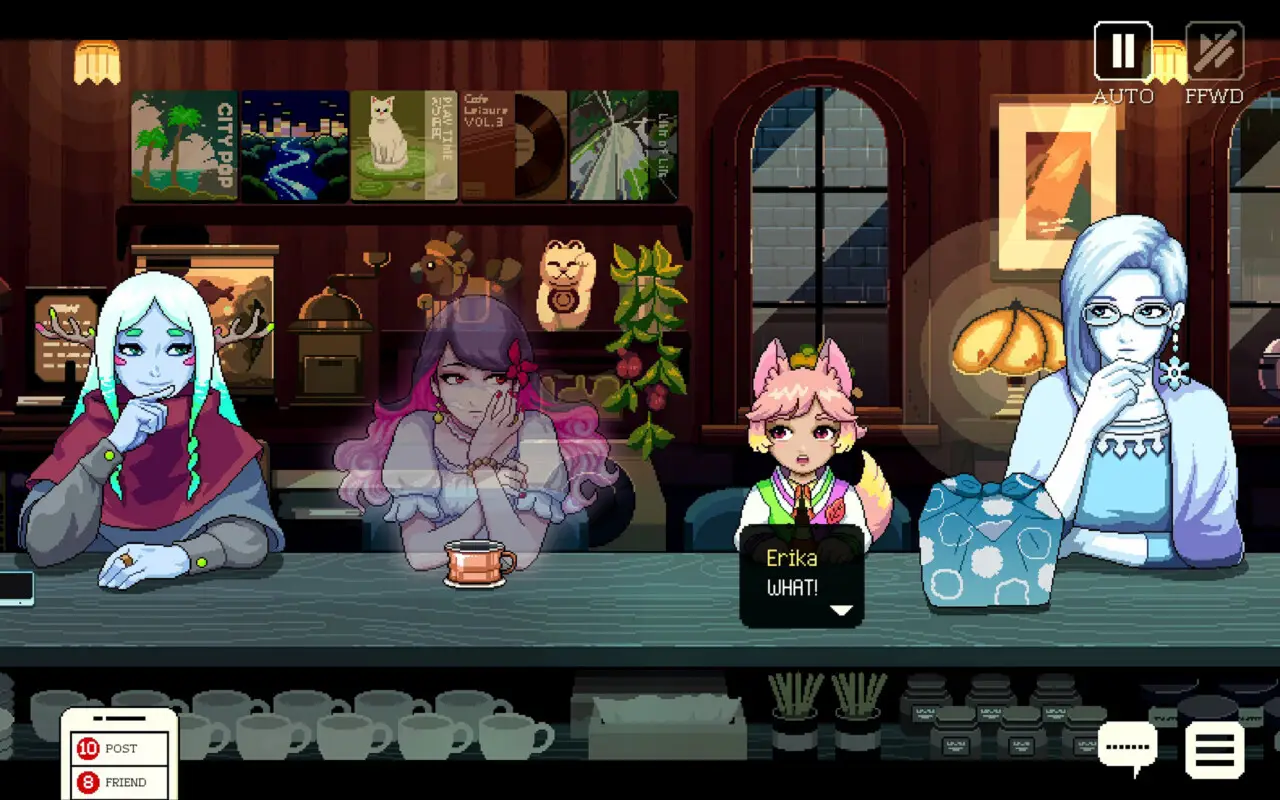
An heir to the super chill original Coffee Talk game, set in Seattle, this newly released volume focuses on Japan’s beloved Jazz Kissa culture and omotenashi, Japan’s style of anticipatory hospitality. The game is set in the year 2026, in a quiet corner of Tokyo. Over the 17 chapters of gameplay, during the sweltering weeks from July 31 to August 15th (ending on the last night of the Obon holiday), you get to know a cast of yokai, humans, a restless ghost, and even a surprise visit from Seattle Coffee Talk regular, Hendry. All walks of life (and death) have a reason to visit, whether it’s to catch a break on their days off, in search of someone, or looking for a listening ear. You, as the shop owner, are here as the constant to your regulars’ busy, challenging days, and their moments of celebration.
The formula of Coffee Talk has stayed the same, but this time, the story and characters’ lives feel even deeper and more thoughtful than before. And the pixel art feels elevated with the work of cro_iz, combined with a fully City Pop-inspired soundtrack.
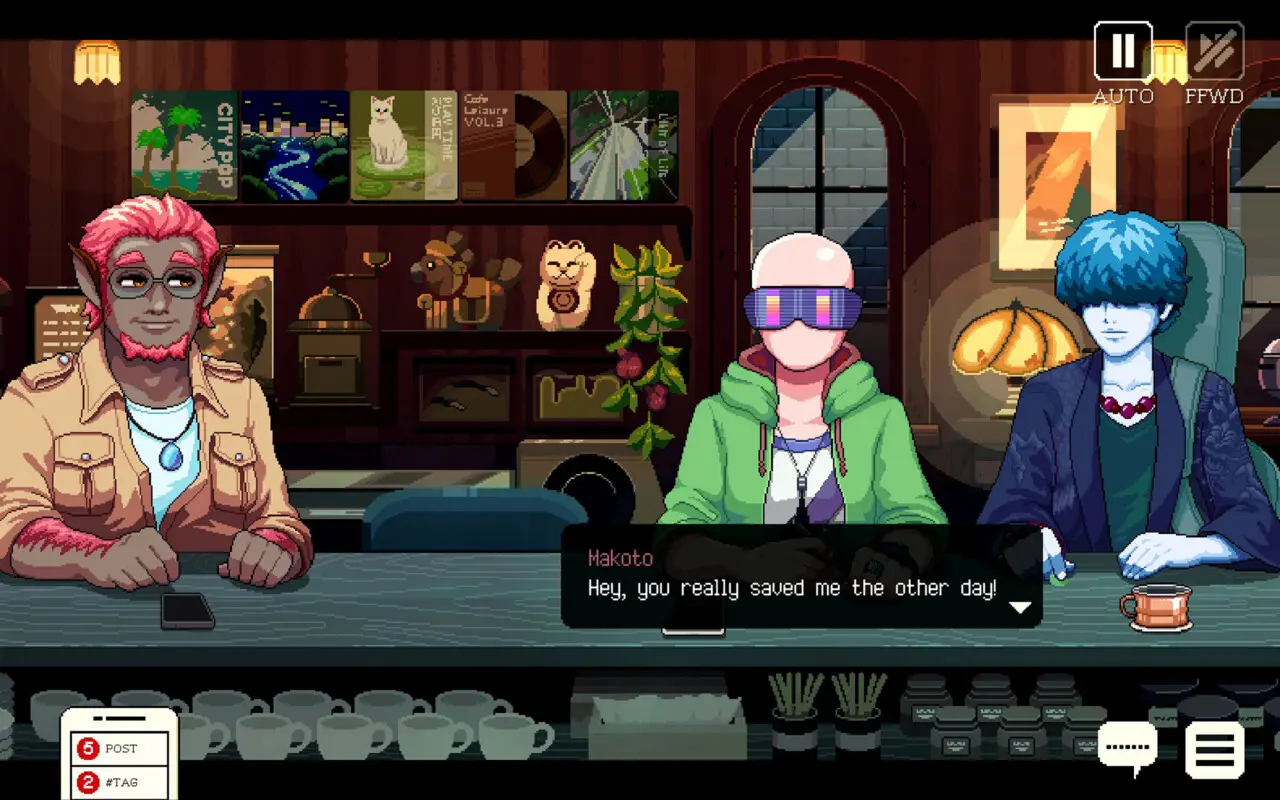
This is the quintessential coffee game set in Japan. You start the shift talking with Vin, your nonbinary assistant, who is eager to help and becomes your sounding board during the opening hours. Not without their own worries in the game, Vin is a warm presence to each patron and pushes through their chronic pain to ensure each guest leaves feeling better than when they first arrived. The developers kept the tradition going by using its colorful cast to shed light on Japanese societal issues, allowing us, the players, to explore ideas beyond our own background and recognize the shared humanity we have with our neighbors, all starting with a shared cup of coffee.
Besides the visual novel aspect, there’s the coffee pouring mechanic… which was not my strong suit. Let’s not look at the number of “this is not quite what I ordered…” reactions I received in this edition. At first it was easy, but then the orders progressively stumped me. Espresso? Easy, that’s coffee, coffee, coffee. Hotto Yuzu Mitsu? My Japanese schooling is paying of; that’s tea, yuzu, and honey! But for the love of kami, what’s a pink skiff?
Besides failing at slinging drinks, the regulars kept coming back, kindly reminding me that I would get it next time. I can’t write home about my drink-making skills during this playthrough, but for the determined, there is an “Endless” mode where you can continue to pour over and over, or put your latte art to the test. While I gave my best effort, a sloppy steamed milk pour was easily fixed by slapping on a chocolate stencil art of a torii gate.
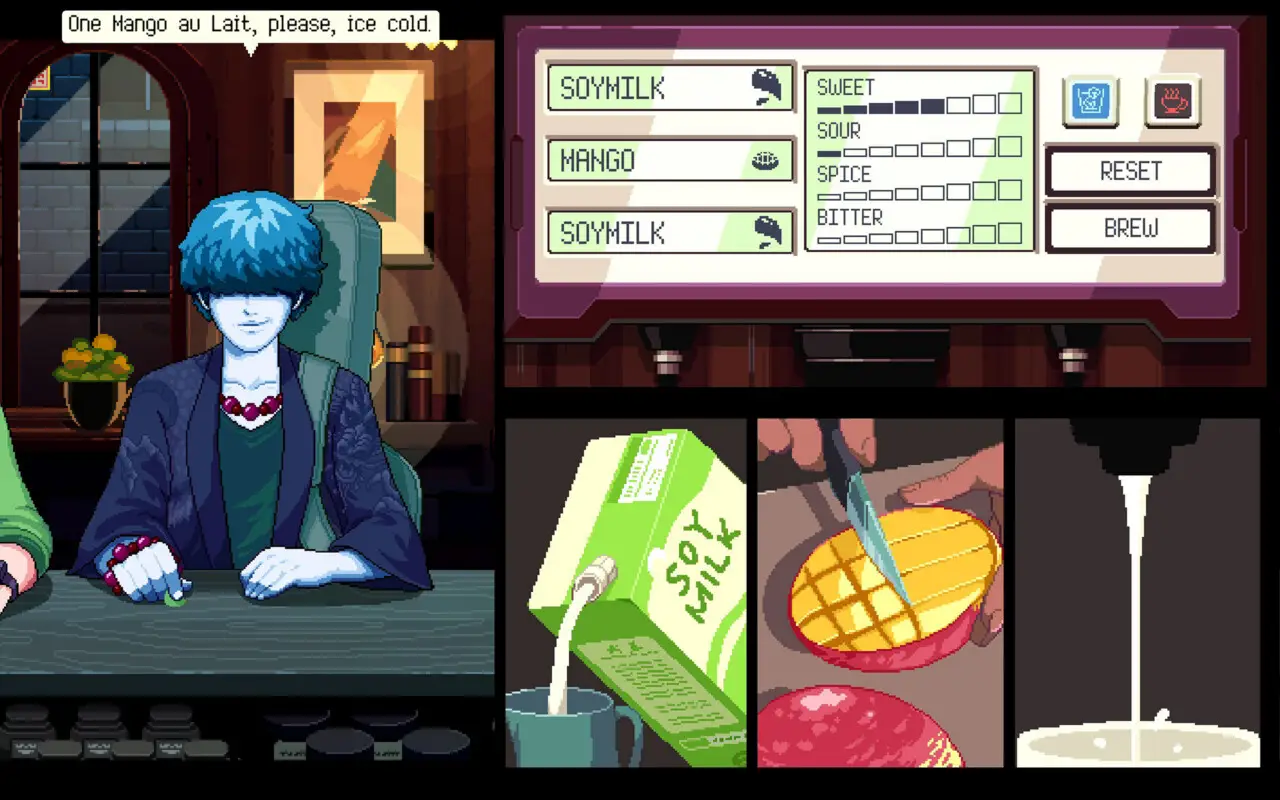
I was expecting to enjoy the dialogue, but I also got hit with a wave of nostalgia while playing. The aesthetics, conversations, and music brought me back to Tokyo. Even finding comfort in noticing some similarities to my favorite book series, Before the Coffee Gets Cold by Toshikazu Kawaguchi, to the dynamic with the yurei character, Ayami.
This late-night digital refuge reminded me of the evenings I would look for a caffeinated escape from my Tokyo sharehouse. The closet shop, Caress, was unassuming, offering a backdrop of wooden interiors and trinkets filling up a bookshelf, slouchy couches to sink into, and the speakers often played soft jazz and city pop in the background. The cafe owner would quietly concoct drinks while occasionally chiming in to ask what I was studying. This warm feeling hit me once again, as I played the role of the game’s cafe owner.
Coffee Talk Tokyo is like a great pour-over. It slows you down just enough to savor all the complexities in its cup, offering a few moments of respite from our busy and occasionally complicated day-to-day. An experience I know I won’t have every day, but one that I look forward to each time. ~Ahh~
Brianna Fox-Priest is a freelance journalist in Japan covering coffee, video games, and Japanese pop culture. Read more Brianna Fox-Priest on Sprudge.
Photos courtesy of Chorus Worldwide