




In the heart of Vietnam’s coffee-growing region you’ll find the city of Buon Ma Thuot. Located to the north of Hanoi, in the province of Dak Lake, this region has long been coffee country, but more recently it’s also home to the World Coffee Museum. More than a symbolic architectural work, the museum is a part of a broader vision to position the city as a global coffee capital and to present coffee as a shared cultural heritage.
That vision began a thousand miles away in Hamburg, Germany. In 1927, Erich Burg founded Burg’s Kaffee Rosterei, a small coffee roastery later run by his son Jens Burg. The expansion of industrial coffee companies in the second half of the 20th century led to the disappearance of the artisan roasters, along with the tools, equipment, and stories that defined their craft. To preserve that material culture, Jens spent more than two decades collecting coffee artifacts, eventually transforming his collection into the Coffee Museum in Hamburg in 2000.
A decade later, more than 10,000 artifacts of Jens Burg’s collection were transferred to Vietnam after Trung Nguyen Legend Group’s founder, Dang Le Nguyen Vu, acquired the museum. This transfer laid the foundation for the World Coffee Museum—a place not only to preserve coffee history but also to reinterpret it through Vietnam’s perspective as one of the world’s leading coffee-producing nations.
Instead of a name that celebrates Vietnam’s coffee heritage, such as Vietnam Coffee Museum or Buon Ma Thuot Coffee Museum, the museum was named World Coffee Museum—a decision that signals its original ambition. The museum’s name describes its point of view, not merely the geographical origin of the collection. Rather than asking you to see how Vietnam fits into the coffee’s history, the museum invites you to consider that history through a perspective shaped by one of the world’s coffee nations.
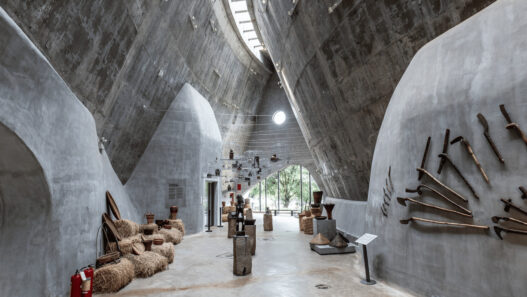
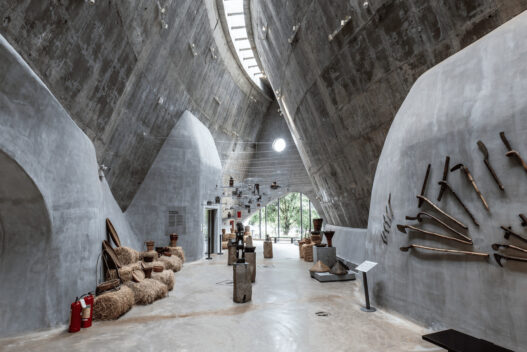
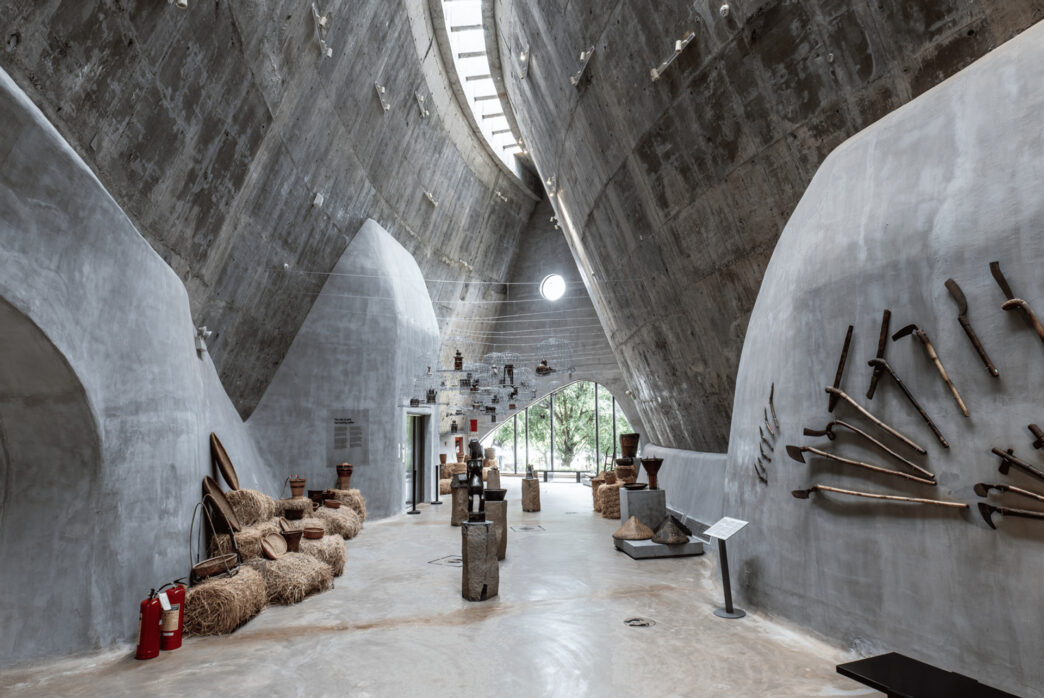
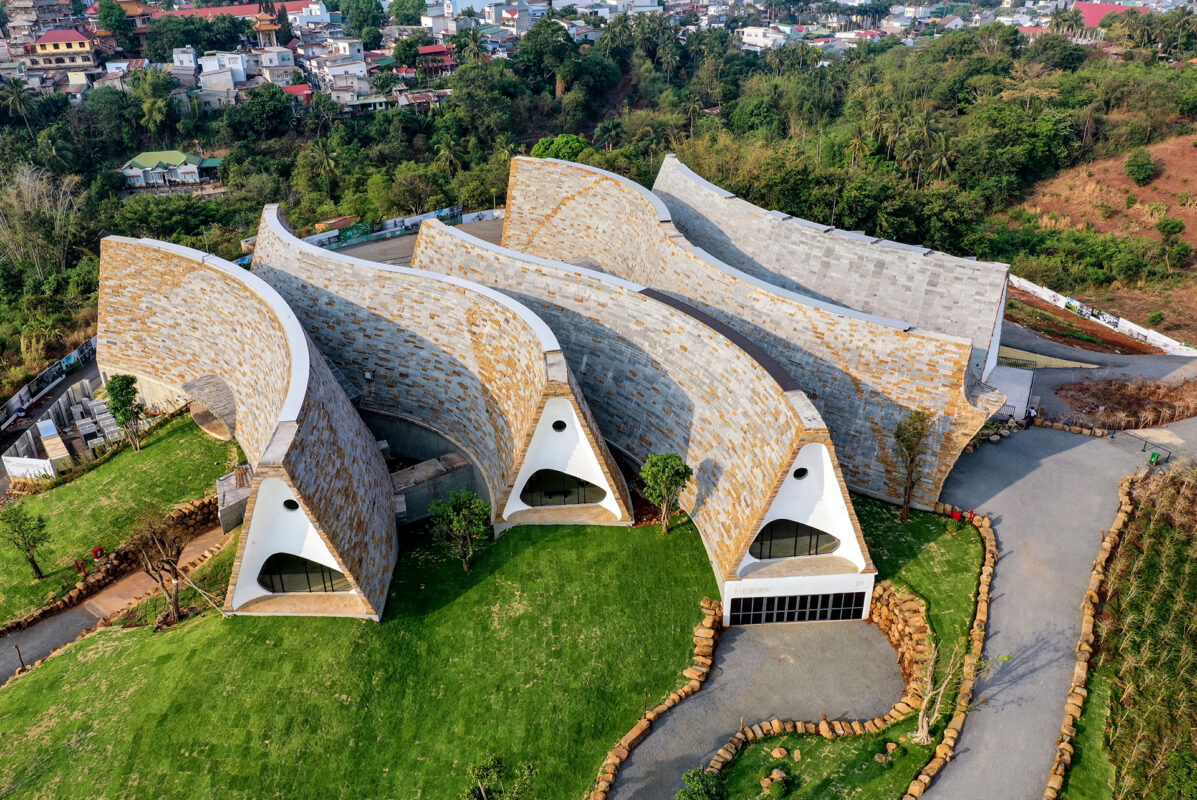
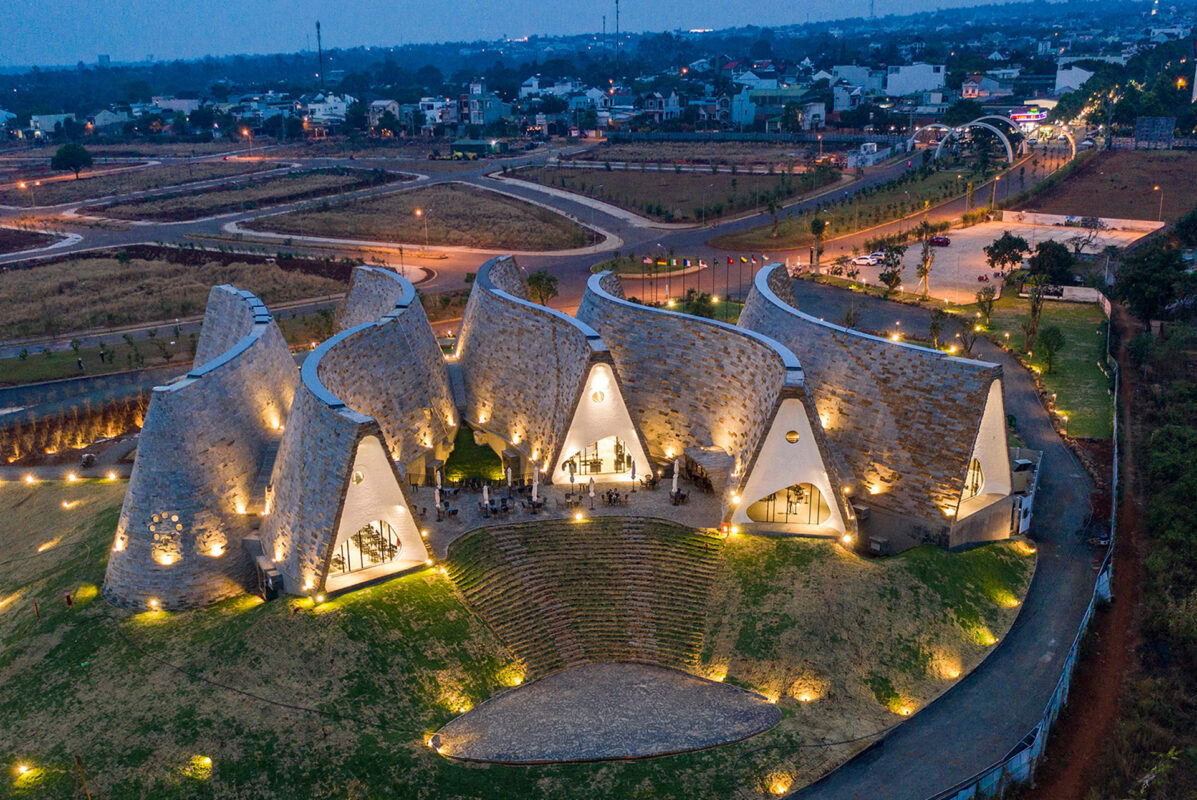
To understand how it attempts to do that, it’s necessary to explore the way the museum constructs its exhibitions and how the experience is designed. Inspired by the long house of the Ede people, a Vietnamese ethnic group in the Central Highlands region, the museum includes a series of curved volumes that appear as separate buildings at first glance. But inside, these structures are connected through intersecting passageways, leading you to move from one space to another as a continuous journey.
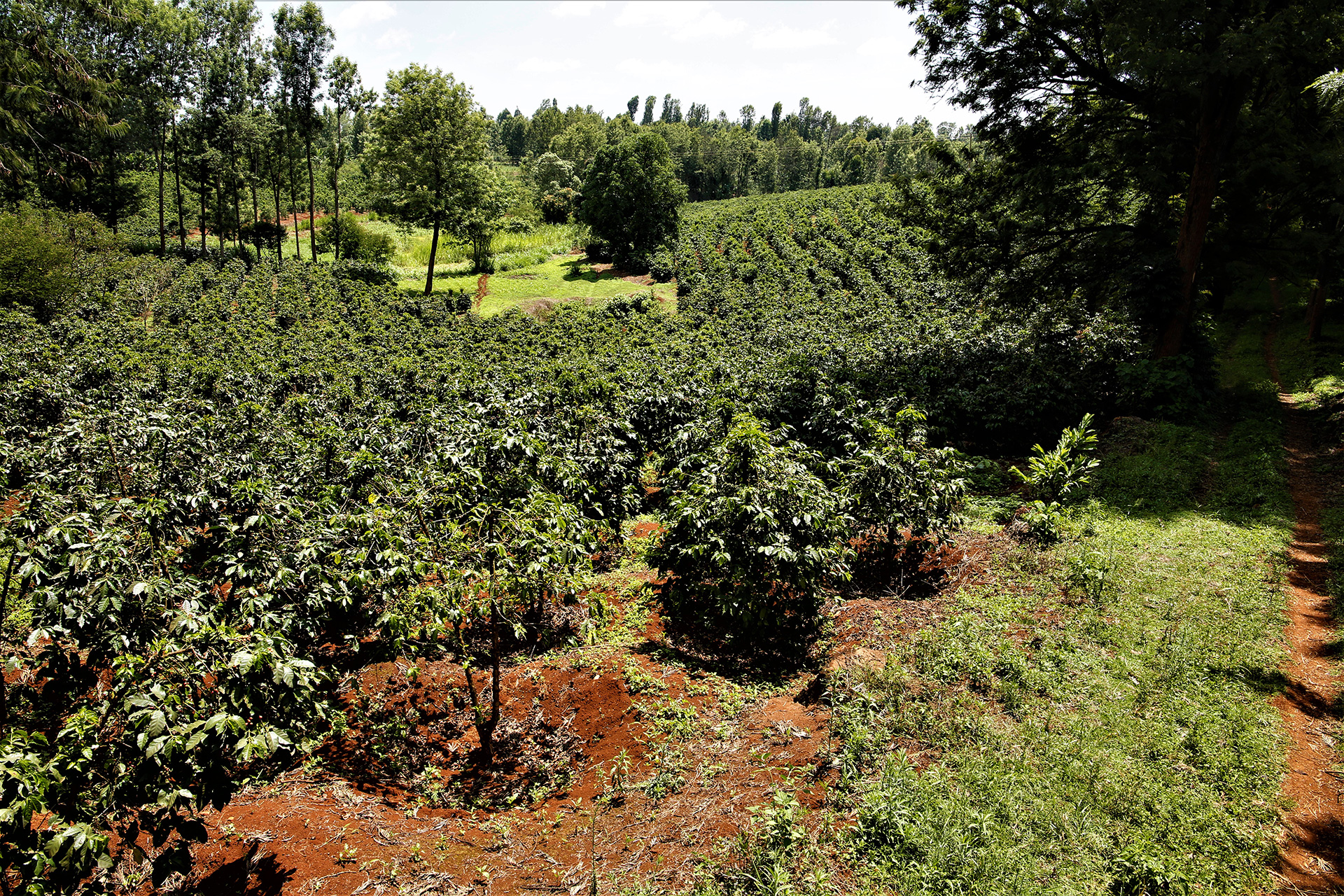
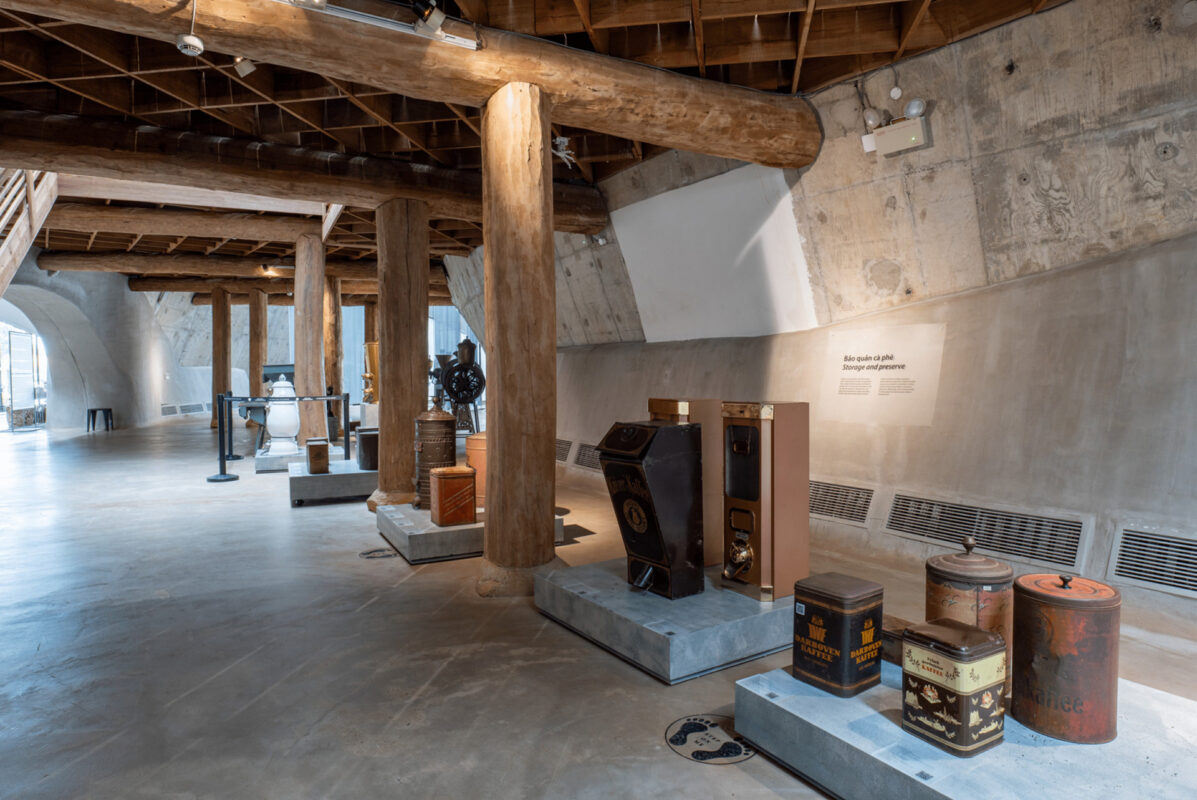
Describing itself as a “living, open, and interactive museum,” the World Coffee Museum moves beyond the traditional function of preserving artifacts to encourage you to engage with coffee’s living cultural practice. You will begin your experience with coffee-growing regions, tracing the landscapes and communities where coffee takes root. The displays continue with areas for roasting, grinding, harvesting, and storage. Each topic is framed as part of the relationship between people and coffee, from an agricultural product to a cultural practice including human knowledge, labor, and ritual.
The highlight of the journey is a gallery dedicated to coffee appreciation. Here, the focus shifts from how coffee is produced to how it is experienced across different cultures. Instead of organizing the exhibition around producing countries, the museum introduces the idea of “coffee civilizations,” inviting you to see coffee through different cultural traditions and philosophies, including Ottoman, Roman, and Thien (Zen). The Ottoman coffee civilization was formed along with the growth of the Ottoman kingdom, representing the Islamic world. Coffee in this civilization was considered a social and spiritual practice. Coffee shops were not just a place to enjoy coffee but a place where people from different ethnicities, classes, and professions come to connect, communicate, discuss social issues, and exchange information.
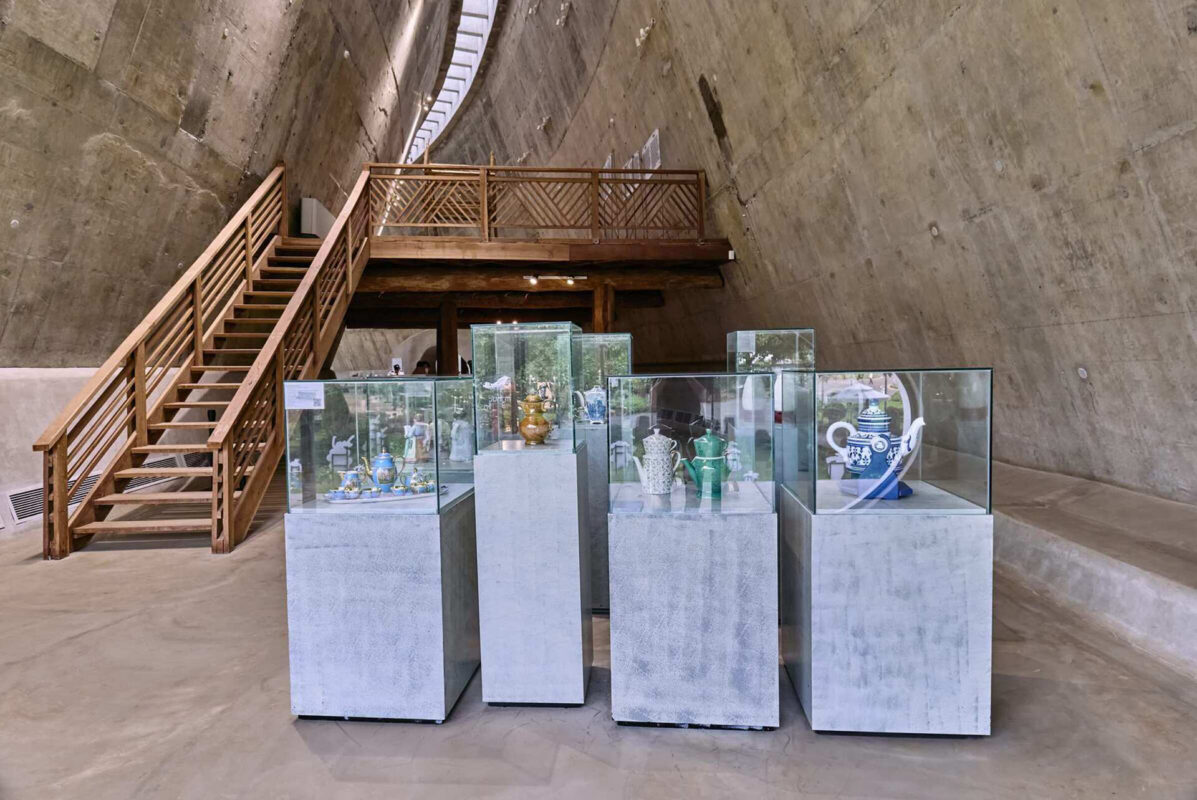
The Roman coffee civilization has been famous since around the 17th century, after coffee was introduced to Europe, represents the Western scientific and technological applications. While the Ottoman civilization prepared coffee entirely by hand, the Roman civilization contributed to the coffee development by inventing a machine that used steam pressure to extract the essence and aroma of the coffee beans in the fastest time. This innovation changed the way coffee is prepared and experienced.
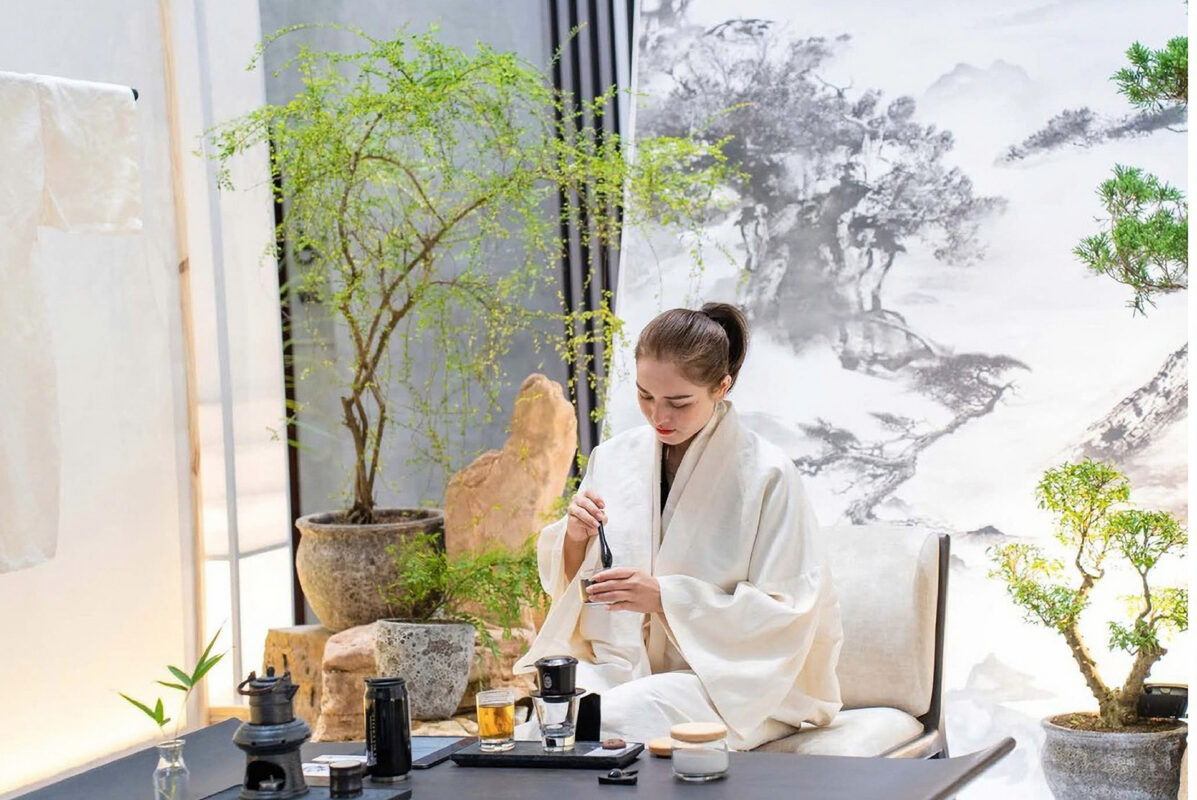
The third interpretation, Thien (Zen) coffee civilization, is where the museum shows its perspective most clearly. Drawing inspiration from Vietnamese cultural elements and Eastern civilizations’ philosophies, the concept presents coffee as an opportunity for reflection and personal connection. Enjoying and experiencing Thien coffee helps participants approach the ways humans interact with coffee, understand the meaning of life in each action, and encourage them to pursue true success and happiness.
As one of the world’s largest coffee producers, Vietnam has long been recognized for the scale of coffee production and exports. By presenting coffee through civilizations, the World Coffee Museum shows its distinctiveness in positioning Vietnam not only as the source of coffee, but also as an active participant in shaping how coffee is understood around the globe. It offers the proposition that producing countries can also contribute ideas, interpretations, and cultural narratives to coffee’s history.
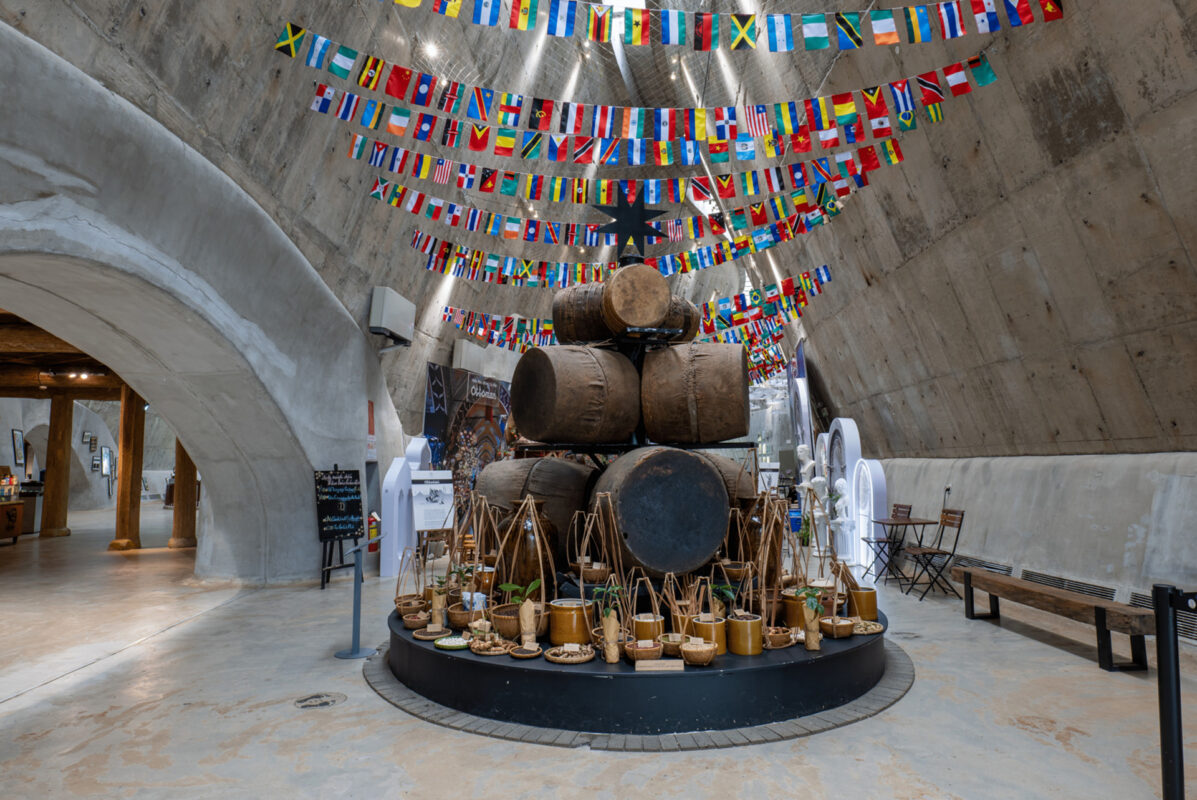
The World Coffee Museum describes itself as a “museum of the future,” moving beyond the conventional role of collecting and preserving artifacts. Walking through the museum’s galleries, you can feel that ambition is more approachable than just a slogan. You are encouraged to engage with coffee history through what you see, hear, smell, taste, and touch. What the museum has already achieved is not just an introduction to Vietnam’s coffee heritage—it suggests the way a coffee-producing nation contributes to the stories about one of the world’s most popular drinks.
Huyen Nguyen is a freelance journalist based in Hanoi. Read more Huyen Nguyen for Sprudge.