





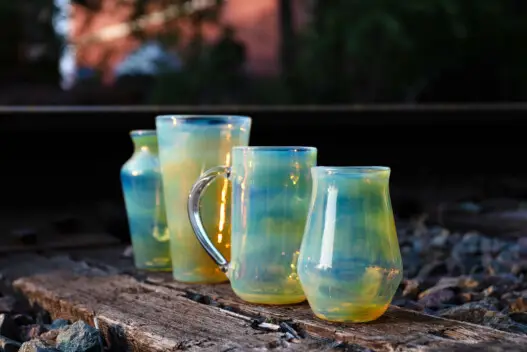
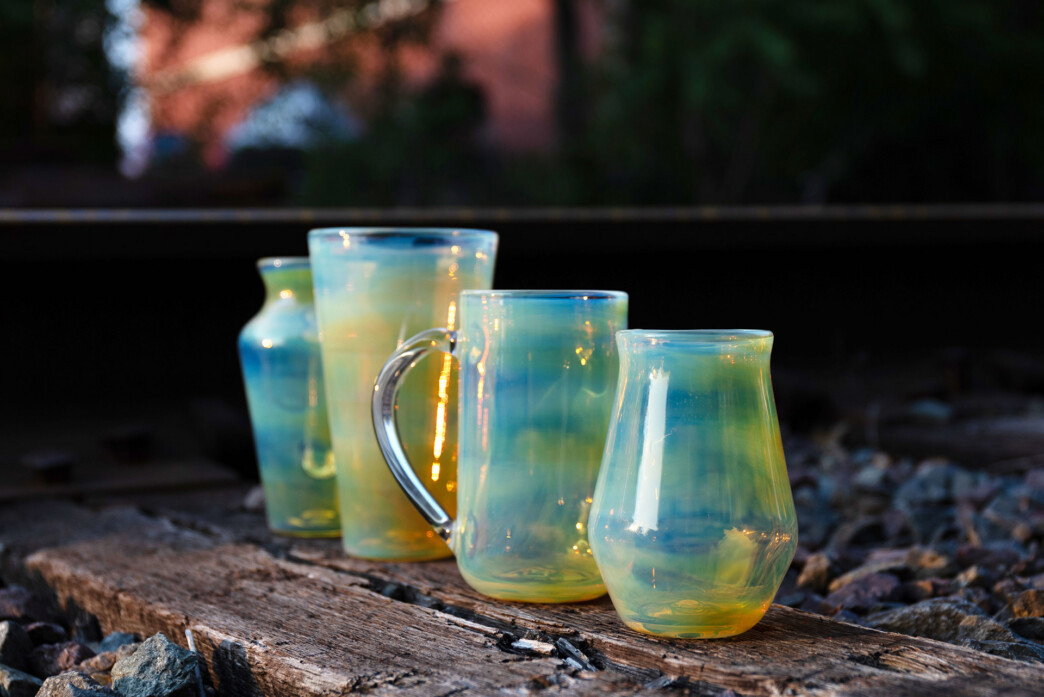
It is a mesmerizing experience watching a liquid blob transform into an object before your eyes. From handled carafes to goblets to coffee makers, glass has been ever-present in the world of coffee.
The first time I saw glassblowing in a furnace, it was during a demo in a glass museum. For some reason, I never thought about the creation of glass. It’s one of those arts where the more you learn about it, the more you realize how much work goes into making one object. And it’s never only the start to finish of one piece, but rather the years of learning the skill that guides the glassworker to that moment.
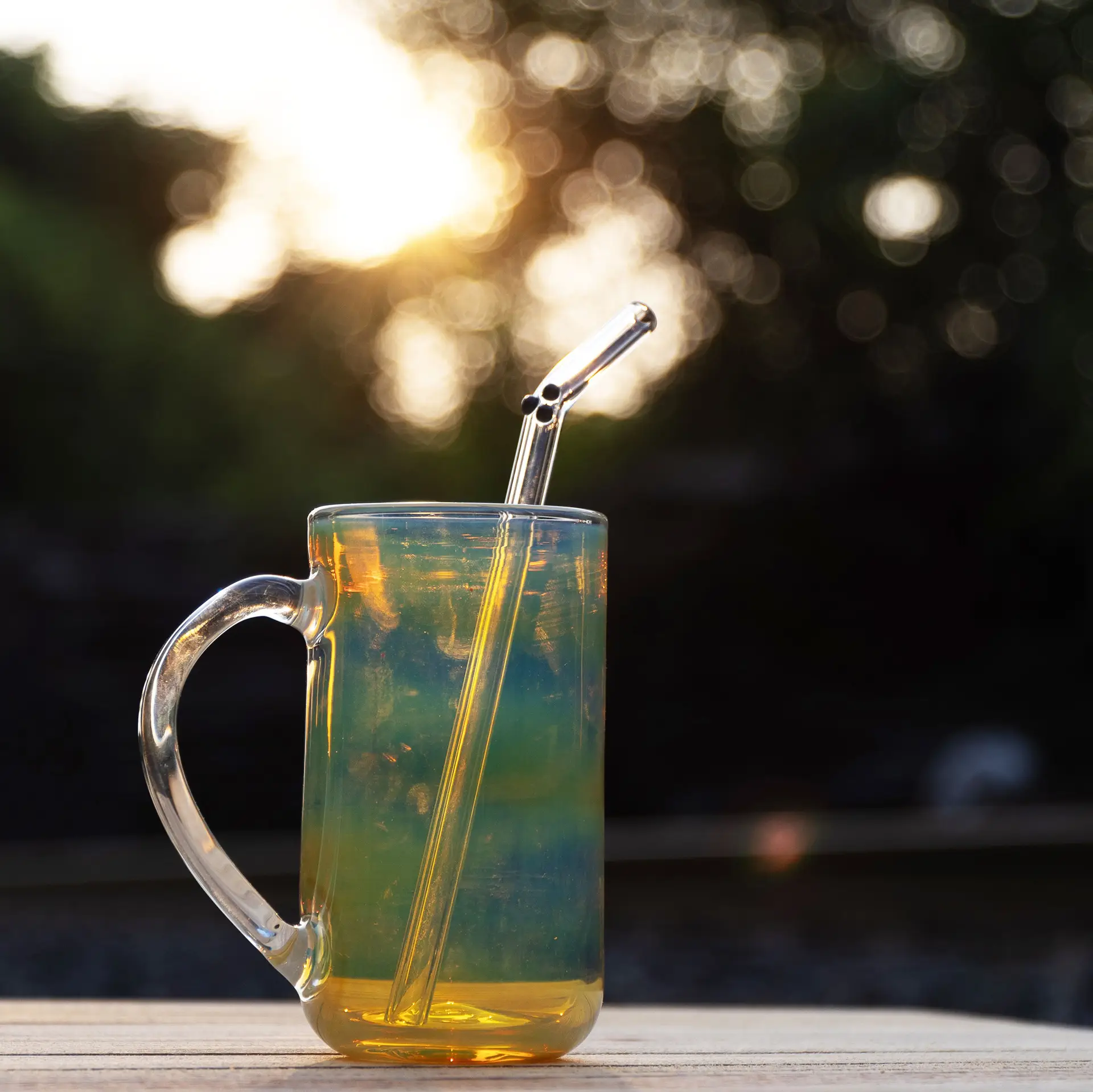
When you’re holding a glass decanter, filled with coffee, how often do you stop and think about how it’s made? How did that handle get attached to the bowl? Anything with a stem or handle was done with multiple parts, with one area gently reheated for the part to attach properly.
Glassblowing dates back over 2,000 years in Syria when an unknown craftsperson discovered the bubble that appears when you blow glass through a pipe, and glass drinkware quickly followed. One of the most well-known shapes in coffee equipment is the Chemex. The company has maintained a handblown line since its founding and produces them in small lots in Croatia, handblown by skilled glassblowers.
I once took a glassblowing class and went in believing it would be difficult, but at least I got to leave with something. The actual difficulty level was many times higher than expected. I definitely didn’t have the lung capacity for glassblowing—unchanged, I guess, from my childhood recorder days—nor the physical strength to hold all the equipment through the motions. There’s a reason why a glassblower is handling it all for you and telling you when to blow into the pipe.
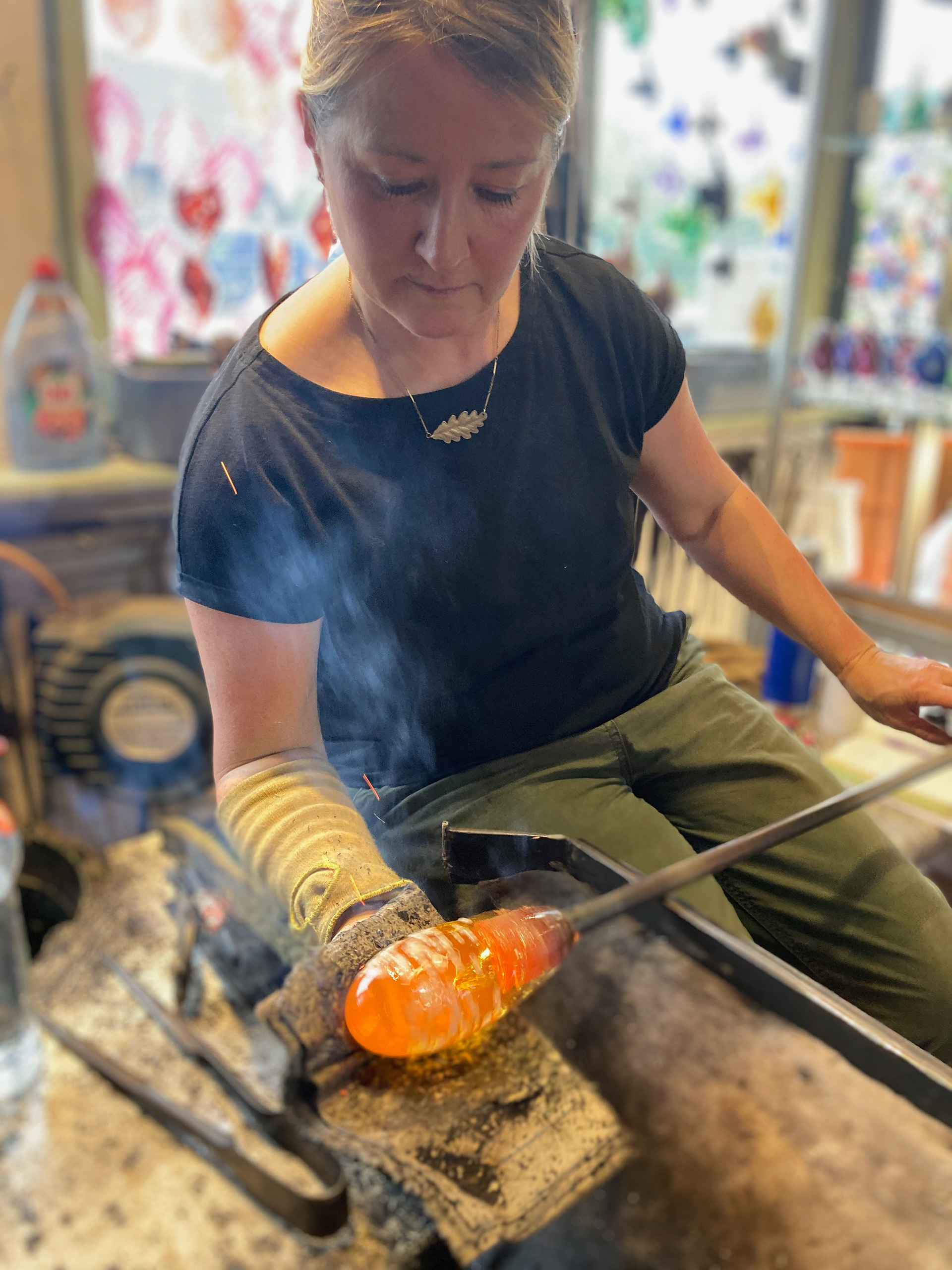
It all begins with a blowpipe, its heated tip dipped into the furnace—running 2,400–2,600ºF degrees, usually 24/7—filled with molten glass. The moment you dip it in to gather the glass, you need to be constantly rotating so it doesn’t fall back in. Then, you roll it onto a thick sheet of steel to cool the exterior (“marvering”), and blow and/or shape it. At this point, you can dip back in for more glass or continue shaping with tools. Once satisfied with the general shape, a smaller rod called the punty is attached to the base so you can gently break it off the blowpipe. Another furnace with a smaller hole (“glory hole”) is used to reheat parts of the glass for more shaping. When fully shaped, it’s placed into a third furnace, “annealer”, to slowly cool the glass and prevent breakage. This was a simplification of the process—in reality, it takes many steps to finish a piece.
Famously, Murano, Italy, near Venice, houses some of the world’s oldest glassmaking studios. Murano glass traces its roots to 452 CE in Venice. In 1291, the glassmakers were ordered to move the furnaces to the islands of Murano, supposedly because there were too many fires. But just a few years later, another law passed that prohibited the glassmakers from leaving the island and was in place for 500 years. Because glassware was a vital part of Venice’s economy and trade, moving the glassmakers protected trade secrets. Revealing these secrets or leaving the island without permission was punishable by death. Murano’s glass recipes were passed down through generations, kept in notebooks, and taught to apprentices.
Much like neon signs, the art of glassblowing and its handblown techniques have mostly remained the same. “Very few of the basic ones developed by glassblowers have ‘left;’ some techniques may get less attention or have a far smaller base of practitioners than they once had, but very few have been truly forgotten,” says Nicholas de Godoy Lopes, curatorial assistant at the Corning Museum of Glass (CMoG) in New York. “We also live in an exciting time where techniques that may no longer be used in manufacturing settings find a ‘second life’ in artists’ studios.” The museum features glass collections, a research library, a hot shop for live glassmaking, a studio program, public classes, architecture, conservation, and more.
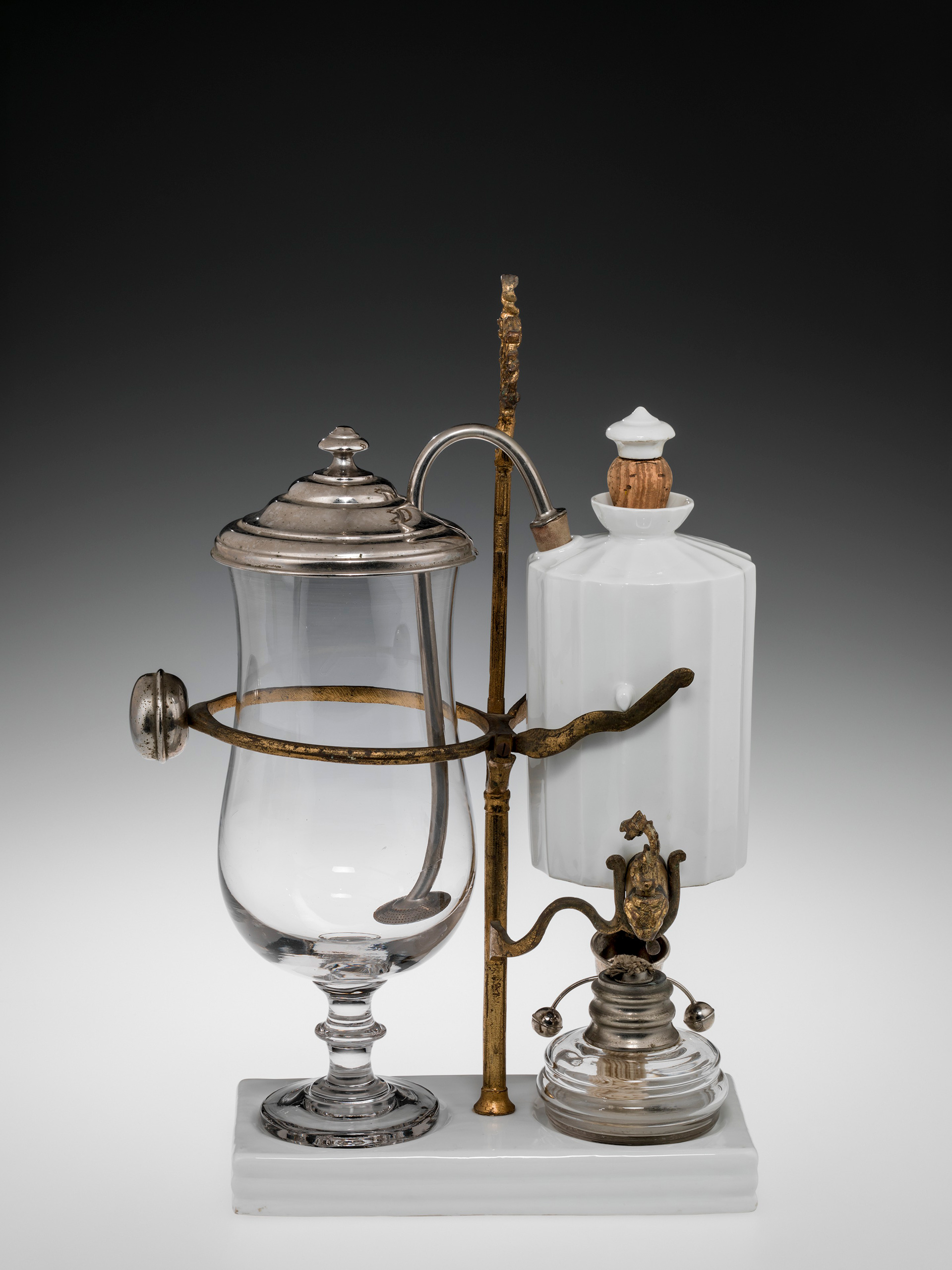
Drinkware “has always stretched glassmakers’ talents,” adds de Godoy Lopes. Every part of a piece needs to be separately made and then joined together. Rushing the process risks breakage. “Historically, whoever blew the drinkware was not the person who was tasked with cutting, engraving, painting, or gilding the vessel afterwards.”
In the 1820s, the invention of pressed glass—pressing into a mold—“caused a dramatic transformation in the glass industry,” says de Godoy Lopes. With the advent of manufacturing, glassware became cheaper and more abundant. The glassware you buy off the shelves at Target and Williams-Sonoma is manufactured, machine-blown glass, where each step has been carefully automated and blown into molds for uniformity.
Art, though, has a way of sticking around, even if the artisans are not as common as they used to be. Beginning her glassblowing education at 18, Louisa Raven earned a Master of Arts in glass from the Royal College of Art in London. After a 20-year break, she returned to the industry three years ago, and hasn’t looked back since. “I actually watched a few episodes of ‘Blown Away’ to try to remember what to do!” she jokes. “Luckily the muscle-memory was largely still there, and it didn’t take long for my confidence to return.”
Raven’s glassblowing business features colorful and dotted drinkware and vases. Her pieces are inspired by the shapes of mid-century Scandinavian glass and nature, and free-blown, so each piece is truly unique. On why she loves the craft, she says it’s a “very instant medium” that involves quick thinking: “I like the vague danger and excitement of it all; it’s quite a performance. I love the fact that the tools and techniques haven’t changed for hundreds of years. You only have a combination of heat, gravity, centrifugal force and hand tools to create a piece.”
To create a colored glass, she dips the tip of molten glass into a button of color; for a dotted glass, it’s a tray of crushed color glass. “My dotty glasses are fun to make, and each one is entirely different from the next; they are as unique as fingerprints!” she says. When shaping a glass, she uses a pad of wet newspaper and describes the sensation, “It’s amazing to feel the material moving in your hand; the moisture creates a jacket of steam to prevent the newspaper from sticking.”
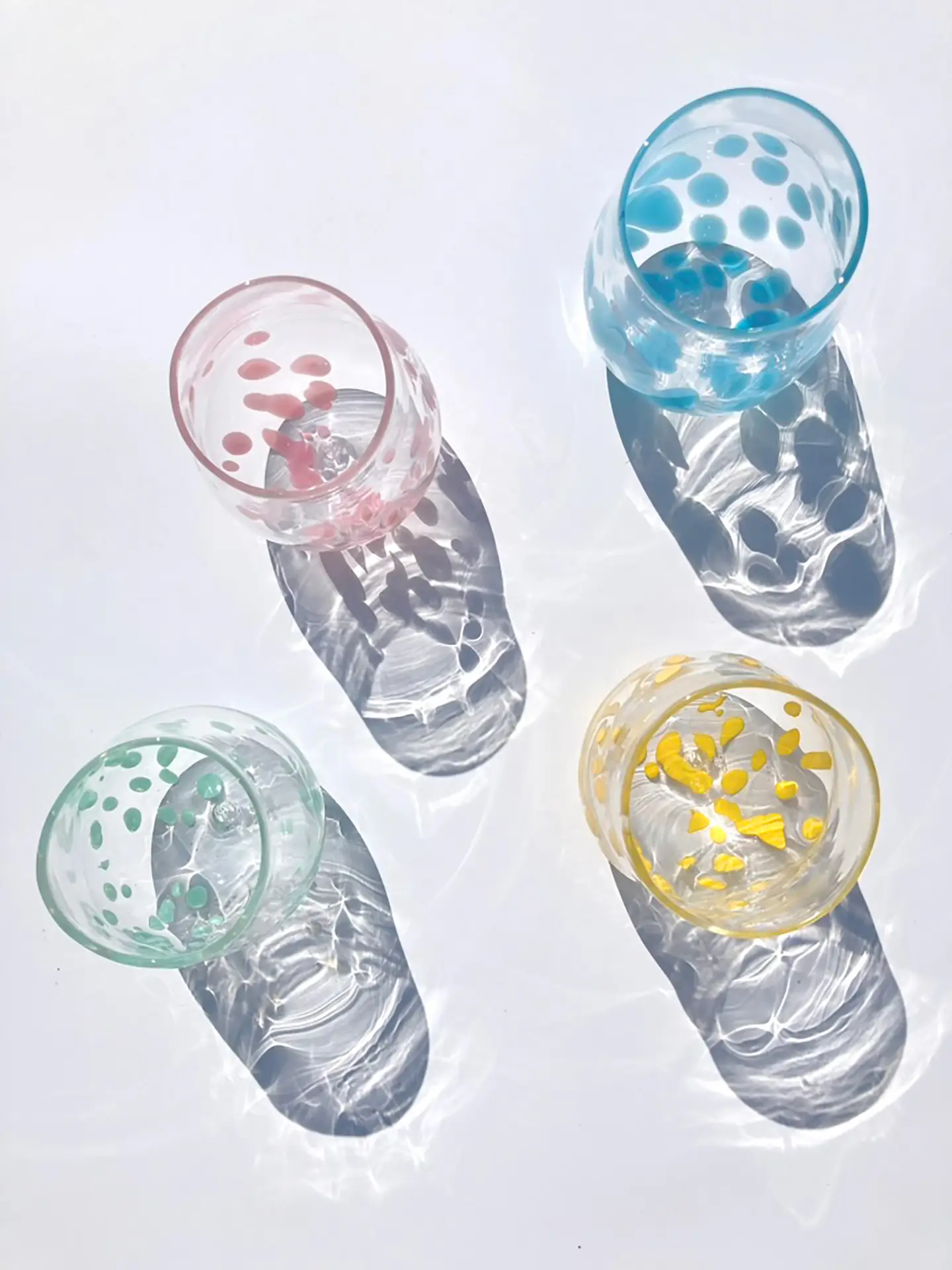
Raven believes that “using something handmade should be one of life’s daily rituals” and not sequestered to special occasions. Describing her work as “functional glassware,” she adds, “My work is designed and made to bring joy to people every day. I feel there’s something intrinsically pleasing about holding an object which carries within it a spirit of authenticity, individuality and craftsmanship.”
In glassblowing, there are two ways to heat the glass: a large furnace or a smaller flame/torch. The latter has a hotter experience of 4,000–5,000ºF and can begin with glass tubes. Because of its smaller footprint, it also offers a lot of control to create detailed pieces.
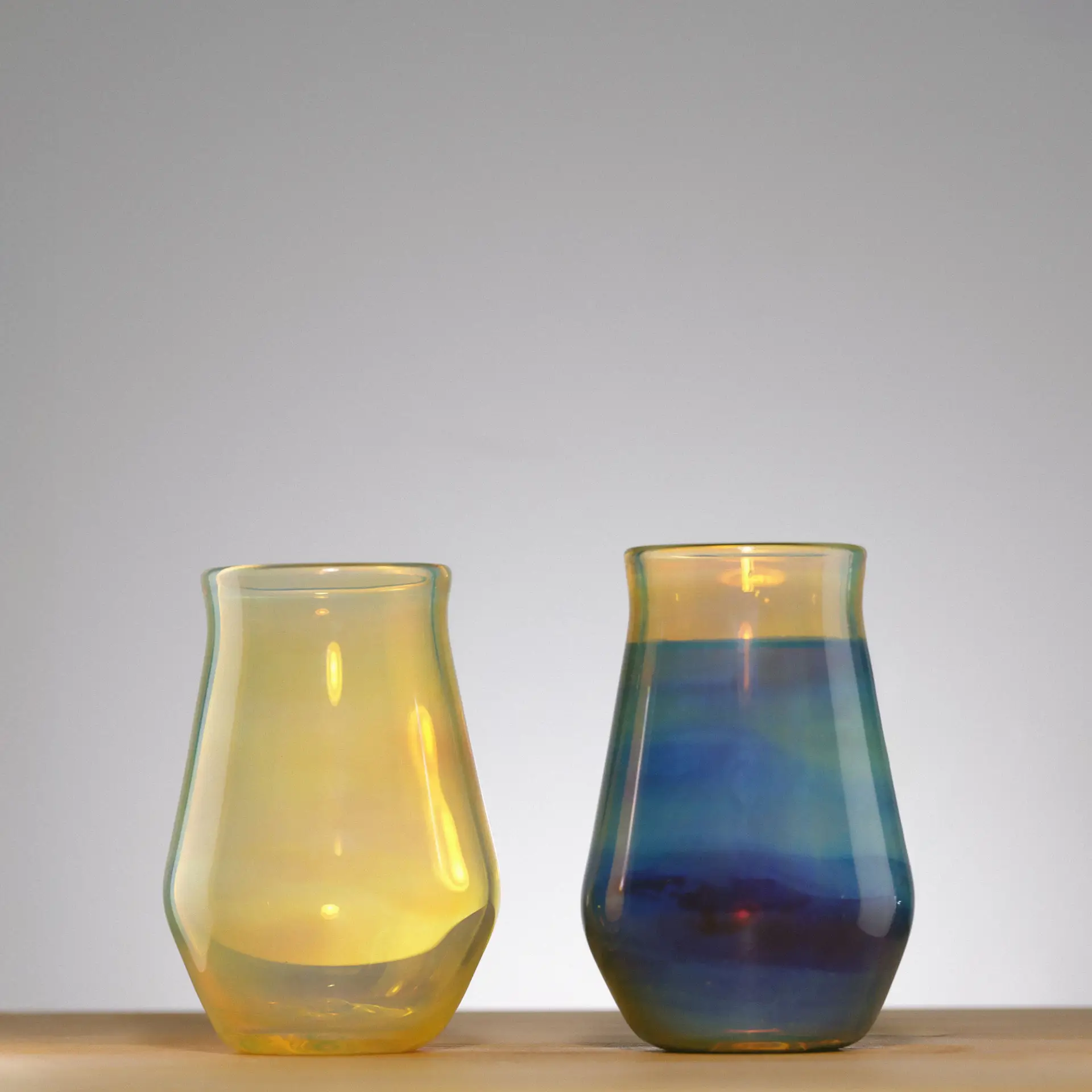
In Lowell, Massachusetts, Lucas Land uses flameworking on borosilicate glass—the same glass used in science laboratories—to create color-changing drinkware that can handle a dishwasher, microwave, and quick changes in temperature. During lampworking, in a process called “silver fuming,” he vaporizes 99% pure silver and adds it to the glass surface. “What’s really incredible and special about that silver fume is that, every time you start adding your favorite beverages to them, is how they’re going to transform,” he says. “It’s based on changing the reflection of the silver.” A tea might bring up more pinks and purples while black coffee could produce a rich blue.
At 14 years old, he took a marble-making class and knew glasswork was in his future. He built a studio in his mom’s backyard and taught himself everything he could about glassblowing. “Functional artistic pieces” is his guiding throughline, even when he stepped away from glass to focus on carpentry, he says. “Having a use, form, and function is definitely something that ties back to my carpentry of everything has a purpose and should be really well done.” He went all in on his glassblowing business five years ago and now works out of a studio in Western Avenue, which hosts a community of nearly 400 artists.
Much like Raven’s philosophy, Land wants to make things people can use on a daily basis, explaining, “It’s a piece that, when you’re sipping your coffee in the morning, you end up holding onto it the entire time because it just fits in your hands so right.” His current product line includes tumblers, mugs, pints, stemless, straws, and hopefully soon, a coffee dripper. He appears at craft markets and works with local breweries like Navigation and cafes like Brew’d Awakening, and thanks to borosilicate’s durability, Land still sees his work in use and regularly has customers return for more. He adds, “I think there’s a really strong revitalization of the handmade crafts coming back into the world.”
For thousands of years, glass drinkware “has never been just about function,” explains de Godoy Lopes. “Something about drinkware has inspired artists, designers, and craftspeople throughout history to come up with thousands of variations on lids, handles, bowls, stems, and feet.” In coffee, we’ve seen plenty of custom ceramics—perhaps it’s time for glass to step into the spotlight.
Jenn Chen (@thejennchen) is an Editor At Large at Sprudge Media Network. Read more Jenn Chen on Sprudge.