








It’s no secret that caffeine is a drug. What’s more, it’s downright indispensable for those of us addicted to it. But what’s often left unsaid—particularly for those who make their careers in the coffee industry—is the reality of caffeine levels and the reliance on them that keep us going. It’s almost like a “if we don’t talk about it, it doesn’t exist” kind of approach, and it has collided in many ways with the wider field of coffee health research, which is rife with pseudoscience and conflicting scientific studies. In fact, as I was writing this, I was pitched a scientific study on the health benefits of caffeine.
Is caffeine good or bad? It’s not so black or white, what a surprise!
As a wee barista, I remember a decaf espresso grinder and a decaf batch brew. But that batch brew would sit around longer than the caffeinated one and the decaf espresso wouldn’t really be dialed in, because who cares about the decaf customers, right? If someone ordered a half-caff, we’d dose half from the caffeinated espresso grinder and move to the decaf grinder to fill the rest in. Dialing that in? Never heard of her.
When you cup, you spit to minimize the caffeine intake but it still gets ingested over time. So now you manage that with things like L-theanine capsules or a pound of broccoli. Screw sleep if it was a heavy cupping day—balance that out with alcohol. (This is satire, not medical advice.)
Thanks to wearables, home tests, and apps, you now know your “sleep score,” when you should stand, if your protein intake is too high, how many cups of water you drink and if that’s enough hydration for you, and so on. All of that is data, sometimes wrapped up into nice, pretty charts. My water tracker, which I admittedly stopped entering data into after a month, has water as the default comparison and will tell you that the 12oz coffee I drank this morning? It has 100mg of caffeine and only 60% hydration. It doesn’t cite a source and the caffeine content is also adjustable in the app.
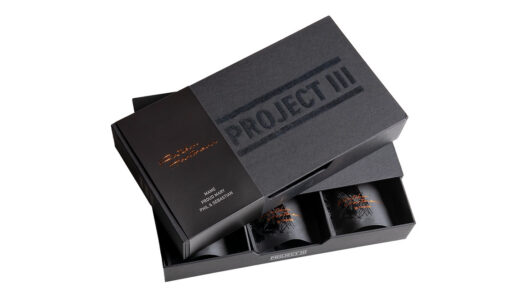
So when I heard about Onyx Coffee Lab’s Circadian box set, I went hmmm, that makes sense but who is drinking 25% caffeinated coffee? And upon going to the landing page with its fancy calculator, I was staggered by a statistic: do people really drink FIVE cups a day? If you really drink that many cups in a day and you have trouble falling asleep—36% of US adults don’t get enough sleep—it makes sense that you might want to begin paying attention to your caffeine intake. The half life of caffeine is about five hours, which means five hours after drinking coffee, half of that caffeine amount is still in you. Residual caffeine in your system may adversely affect your sleep quality.
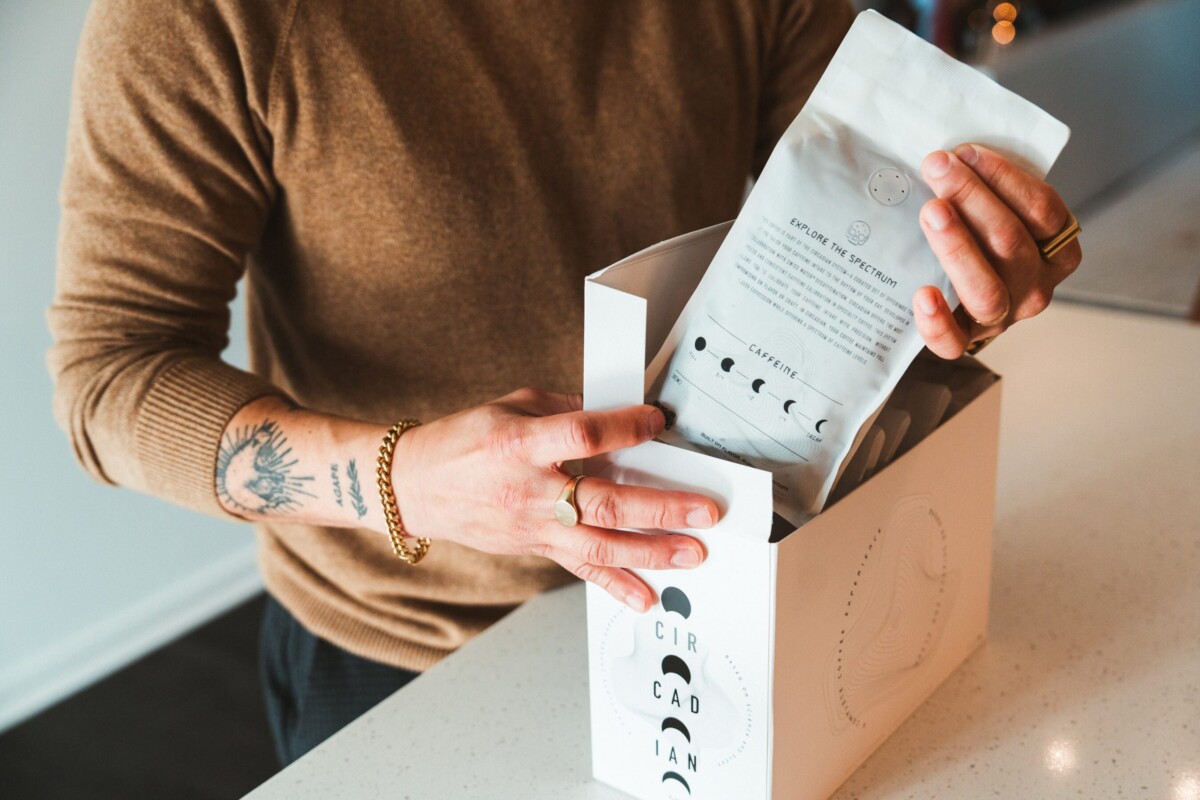
Onyx’s co-founder Jon Allen admits that the idea of Circadian was a wholly “selfish endeavor.” While the idea was born a year and half ago, he’s played around with partially caffeinated blends for years to improve his sleep hygiene and manage his insomnia. Circadian’s release is too new for concrete data, but he tells me that based on anecdotal feedback and supported by wearable data, customers reported better sleep scores post-Circadian usage.
How caffeine affects your body is dependent on many, many variables. There’s your caffeine metabolism—largely predetermined by genes—but also influenced by medications, health conditions, food intake, pregnancy, stress, and far more. What happens for many people is this: they wake up, drink coffee, use that spike in energy to do the work, crash, drink more coffee, repeat. What partially caffeinated, Circadian, and Caffeine Control offer is a modulated approach to coffee. What if instead of big spikes, you do soft, rolling, descending hills? What if, instead of going cold turkey and suffering through a week or so of being completely useless, you gently taper your caffeine intake to your goal level?
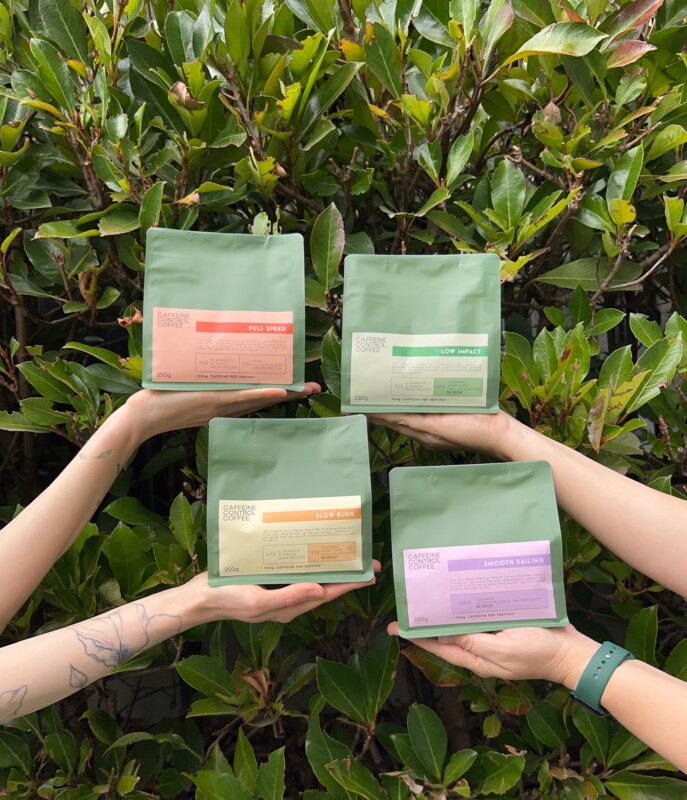
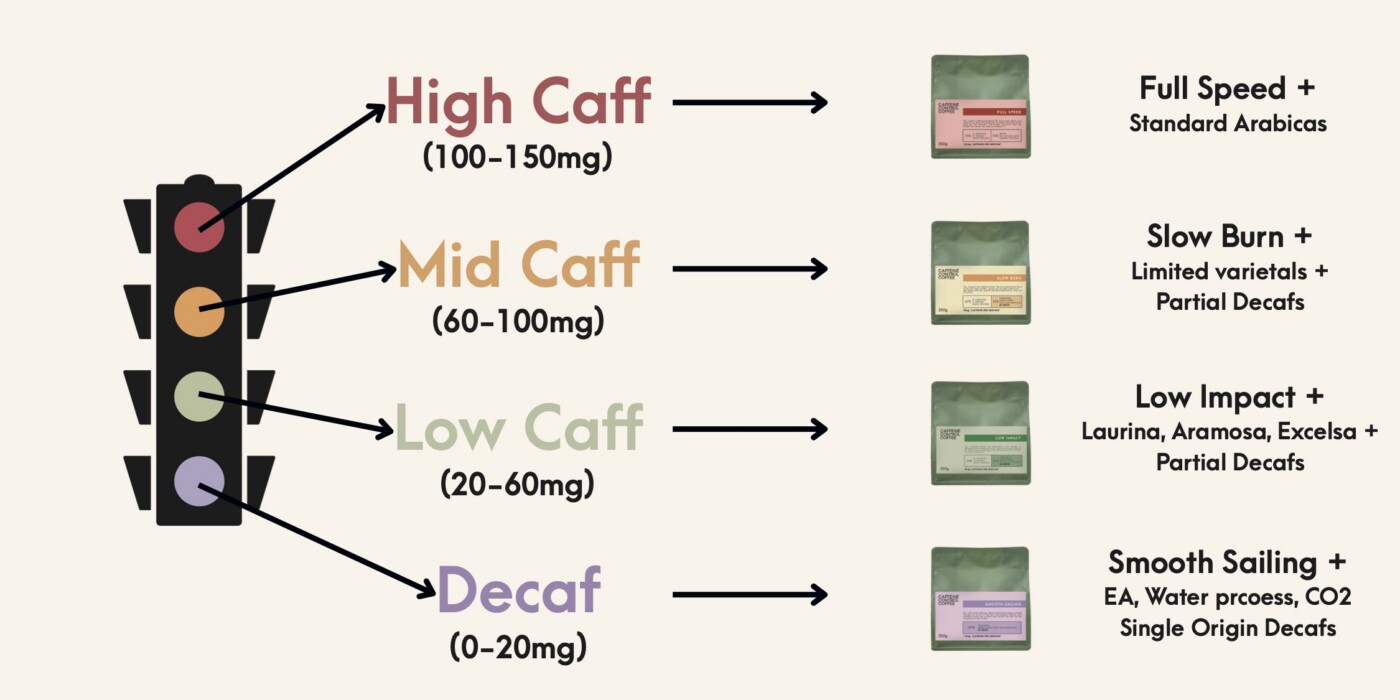
Caffeine Control was founded by 2013 World Barista Champion Pete Licata and coffee professional Maria Licata. It’s based in Australia, and offers a quiz that asks about how you react to caffeinated coffee, your sleep quality, coffee-drinking habits, your cut-off time for caffeine, and more, to give you estimated results in caffeine sensitivity and metabolism. Each result corresponds to their coffee offers. For example, someone with average sensitivity and high metabolism is recommended a Full Speed (fully caffeinated) coffee in the morning and Slow Burn (moderate caffeine, approximately one-third decaf) in afternoon.
For those who want to reduce their intake or reset, there’s a four-week plan with a bag each week that slowly decreases your caffeine intake. Caffeine is “a deceptive drug, because your body adapts to minimize its effects over time. So the same dose often doesn’t affect us the same as time goes on,” explains Pete Licata. “The worst symptoms of caffeine withdrawal typically last two to four days, and our goal is to ease people into the reduction without feeling like they are sacrificing a comfort.” The reduction to decaf is meant to provide a “tolerance reset.” For some, he says, one week of decaf is enough to reset while others could take up to one to two months.
Both Caffeine Control and Onyx have similar methods in how the blends are made. Part of the blend is decaffeinated—Onyx uses the same coffee for both while Caffeine Control uses different origins—and the other part is not. Because each have designated percentages of caffeine, the levels are routinely checked with a caffeine meter.
When we’re first waking up, the body naturally produces cortisol, more commonly known as the stress hormone, and adding caffeine increases cortisol production, making us alert. Consuming caffeine later in the day interferes with melatonin, harming your sleep quality. Perhaps at this point, you’re rethinking that third full-caff cup and wondering if caffeine is the culprit for your poor sleep scores. How does one figure this out? Besides taking a quiz—which is guidance and not medical advice—you should, at minimum, log your caffeine intake and sleep quality, says Mike Strumpf, Senior Director of Coffee at Swiss Water Decaf. Other helpful items to track to improve your sleep hygiene include mood, exercise, stressors, and releases. “A key driver to understanding the impact of caffeine on your sleep is to dedicate time to reflect on how well you slept and then think about the causes.”
Sleep hygiene is essentially creating habits and an environment that sets you up for the best quality sleep. There are general recommendations but what works is dependent on the individual. For example, part of my sleep hygiene is blocking distracting apps after midnight on school nights, keeping my bedroom cool, and having blackout curtains.
Allen adds, “I think it’s worth everyone tracking it for a week, regardless of how into this you really are, because I do find that most people when they do track, and the people are challenged to do it, are usually off by 30 to 40%. They consume much more caffeine than they think they do.” That’s because of the confusing measurements of what a cup is. You may read that one cup has X amount of milligrams, but that’s a 4.5 oz cup. So if you think you have two cups a day, you’re actually having five.
But wait, there’s more complexity to add. Erin Reed, Director of Marketing at Swiss Water, points out that the brew method matters, “Another aspect as it relates to coffee specifically is that there is not a set amount of caffeine in any cup; how it is brewed will be the main factor affecting the levels.” And, there is still a minuscule amount of caffeine in decaf coffee. Swiss Water currently has three half-caff offerings from roasting partners in their online store. “We’ve seen a noticeable increase in half- and low-caf offerings from the roasters we work with,” comments Reed.
This attention to partially caffeinated coffees runs parallel to other wellness trends like “sleepmaxxing,” matcha as a superfood, and tracking body and health data. If consumers are becoming more conscious of what’s entering their bodies and the effects of that, then it stands to reason that the coffee industry should acknowledge how it champions a caffeinated beverage.
Allen points to other beverage industries, like wine and beer, that the coffee industry often compares itself to. “The other industries have long been adjusting alcohol percentage and ABV. That’s a fairly normal thing in almost every other beverage that has some sort of stimulant or depressant. Coffee is one of the very few that has negative connotations based upon what we modulate,” he says. As it is increasingly touted as a culinary beverage, we “kind of turn around and still attack the idea that, if it’s not full of the stimulant, then it’s not a quality beverage, and I find that a bit hypocritical of the industry.”
Licata agrees, adding, “For a very long time, it has seemed as if caffeine were a largely ignored part of the industry, and I found it strange that the drug component of our industry product is also the least discussed part of it.”
I’m glad people are finally talking about this, and that the call to take caffeine consumption seriously is coming from inside the house. Partially decaffeinated offerings, a mindful fully decaffeinated regimen, and a proactive approach to managing one’s own caffeine consumption feels like a conversation the specialty coffee industry can truly be a leader on. Here’s to more talking openly about the caffeine in our lives in 2026 and beyond.
Jenn Chen (@thejennchen) is an Editor At Large at Sprudge Media Network. Read more Jenn Chen on Sprudge.