








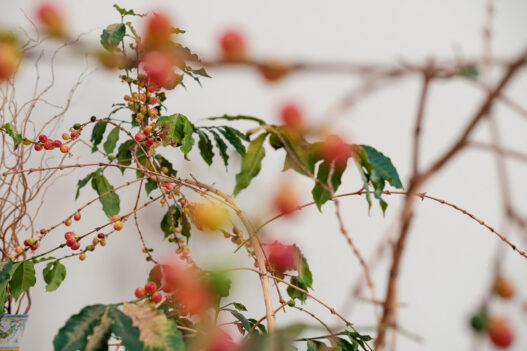
Perhaps you read our recent story about a truly epic coffee plant growing indoors in a San Francisco city loft. If you, like us, were inspired to try your own hand at cultivating a coffee plant of your own, we’d love to help show you the way.
Growing coffee as a houseplant is much like growing any other tropical houseplant, but going the extra step of flowering and bearing fruit takes a lot of experimentation and care. You should test these tips slowly and individually, giving each one some time to take effect.
1. Your coffee houseplant needs to be a developed, happy one
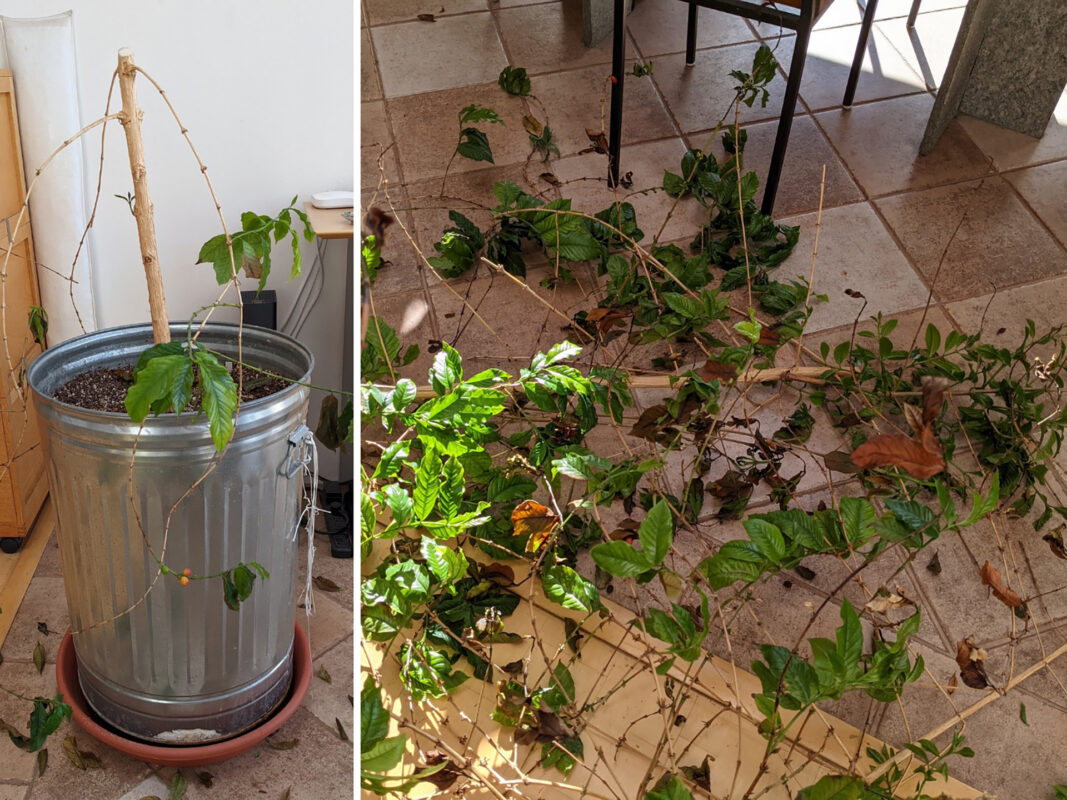
The very first step, before jumping ahead to flowering, is to ensure the basic needs of the coffee houseplant are met. Coffea arabica—the most common coffee plant sold in plant stores—reaches maturity around three to four years in native environments. The plant needs to be in a deep pot for its long roots and in an environment with high humidity, bright-ish light, and warm temperatures. Larry Berger, whom I interviewed about his plant, was recommended by Thompson Owen of Sweet Maria’s to use a 31-gallon galvanized steel trash can to accommodate the deep roots.
2. Feed it like a teenage kid
Back in 2022, the late Jay Ruskey of FRINJ Coffee told me, “The coffee plant has to take a lot of food, they’re kind of like teenage kids—they like a lot of food all the time.” Like other fruiting crops, different growth stages have their own fertilizing requirements. Nutrients for leaf growth differ from the nutrients for fruit production. Having more phosphorus in your fertilizer, at the end of the vegetative growth stage, supports the upcoming blooming stage. John Corredor from the same article, has found success with Espoma Organic Citrus-tone (5-2-6) for his own indoor coffee plants.
3. Fake a “wet season”
In their native environments, coffee plants go through the tropical wet season. To mimic these growing conditions, you’ll need to follow a relatively strict schedule of light and rain. If you are also feeding it, be sure to replenish the nutrients after the “rain.” I would recommend this tip to intermediate gardeners because watering in excess without proper soil composition or adequate drainage leaves your plant open to root rot.
4. Give it shade, but also lots of light
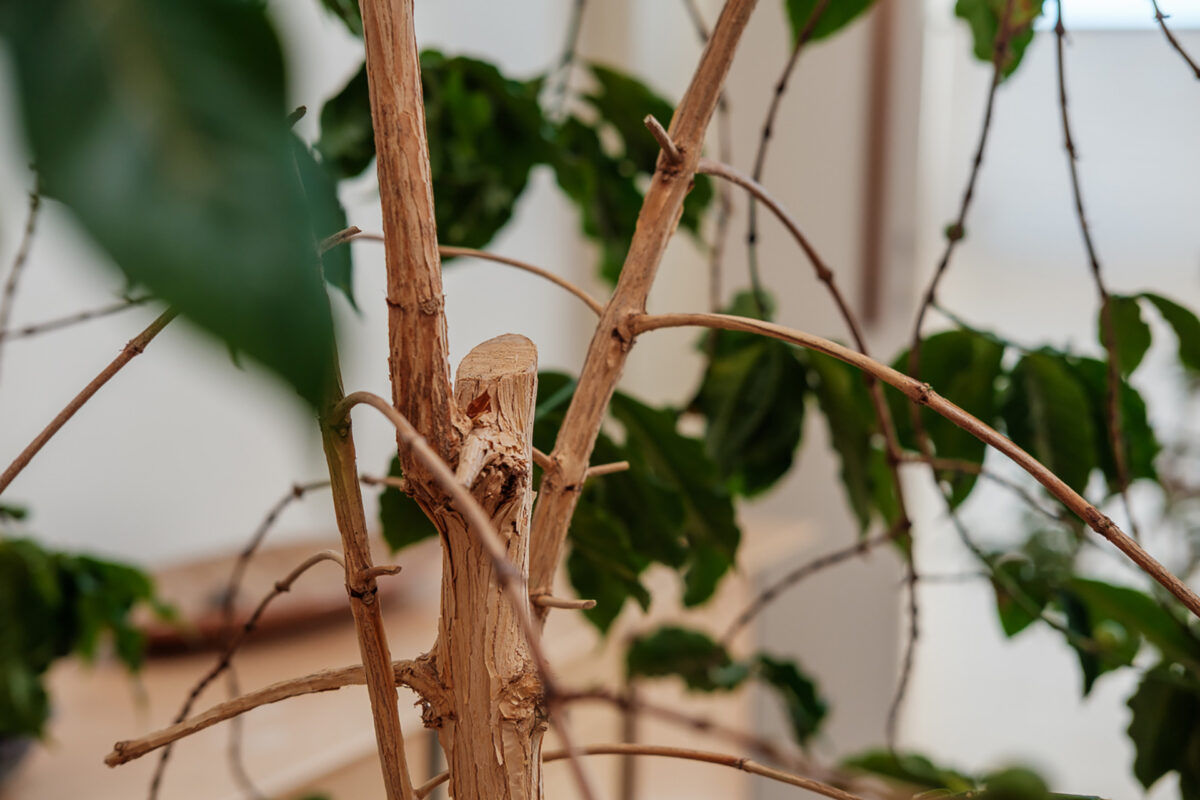
I know, this one is a little contradictory. While coffee plants do love light, they are sensitive to strong sun, which may cause leaf burn. Extending the daylight (see the next tip) is another signal to the plant that it should get ready to bloom. Corredor shared that the outdoor Florida plants I wrote about did, in fact, bloom and produce 100g of green coffee. He credits the healthy soil, filtered light via neighboring palm trees, and high humidity of Florida for their flowering and fruiting success.
5. Gradually introduce red-light and infrared grow lights
Consumer grow lights usually offer the full spectrum of light with adjustable intensity, timing, and light composition. Red light (620-750 nm) is used for photosynthesis and tells the plant to focus its energy on producing flowers, while infrared light (700+ nm) stimulates already-flowering plants and increases the yields. Before adding lights, you should understand how each part of the spectrum works with growth stages. Giving the wrong light or too much/too little at the incorrect stage may result in legginess and growing leaves instead of flowers.
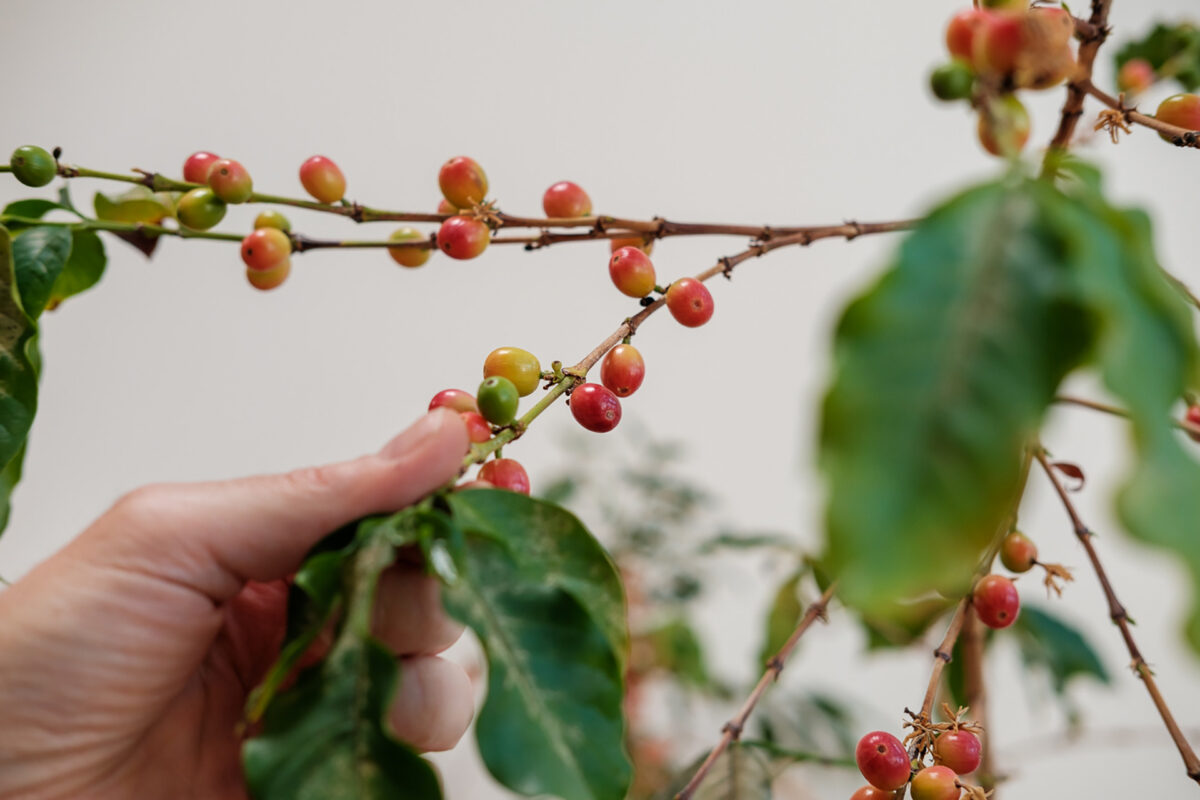
It is very rare for indoor coffee houseplants to bloom. If you’ve made it that far already—even with one or two flowers—that’s remarkable and an indication that it could produce more. Pick one or two of these tips, research them for your unique indoor conditions, and take notes to improve for the next growing season. I hope your coffee plants thrive and produce at least one cup of coffee for you!
Jenn Chen (@thejennchen) is an Editor At Large at Sprudge Media Network. Read more Jenn Chen on Sprudge.