








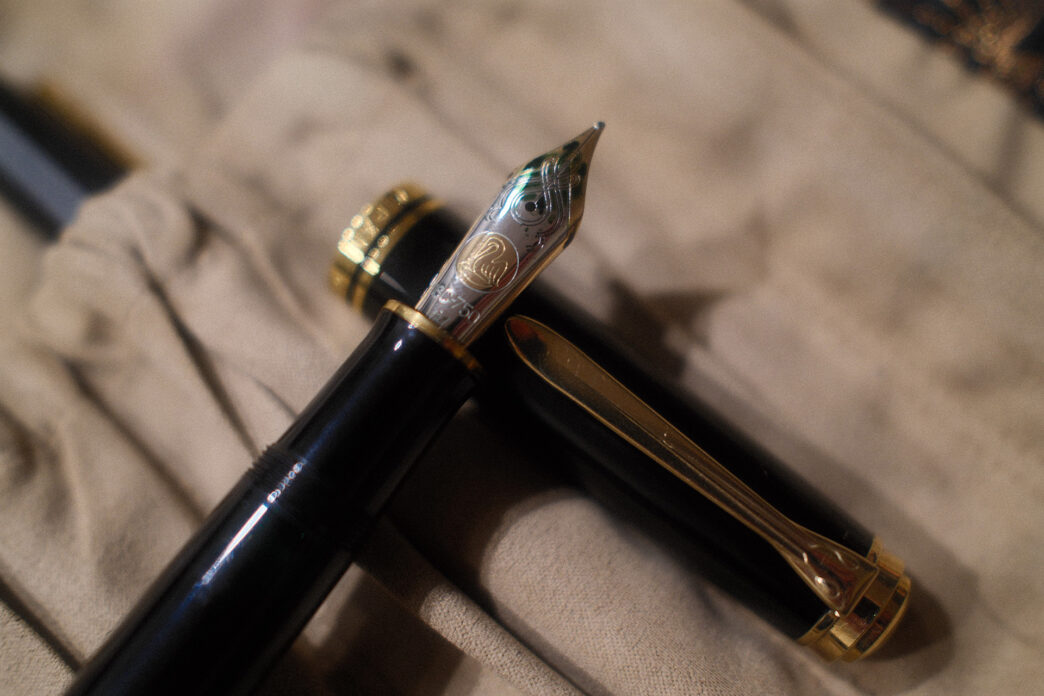
The historical trajectory of the fountain pen is a little ironic: what began as an important item for the educated person to write cleaner and faster is now a niche writing instrument that encourages one to slow down. And by niche, I mean a growing global market worth $1 billion.
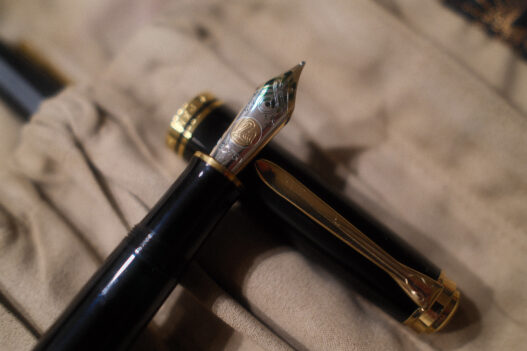
The world of fountain pens gets deeper as you research. Physically speaking, there’s a pen for everyone out there: from a sleekly polished exterior to a highly adorned metalwork one to a 100+ year old vintage pen. And the nibs can be just as varied and customizable with gemstones, designs, and laser engravings, not to mention the many limited edition pens that drive the collector’s market. The idea of “one pen for the rest of your life” is a strange one if you’re used to the current enshittification of products, fbut sustainability is a draw for fountain pen users.
“You’re a temporary caretaker; the pens are designed to last your entire life, your kids’ entire life, and their kids’ entire life,” notes Alvin Nguyen, who works at a Chicago pen store and separately buys and sells rare pens. The Japanese word for “fountain pen” has this longevity enshrined: “万年筆,” with its three Kanji separately meaning “ten-thousand years brush/pen.”
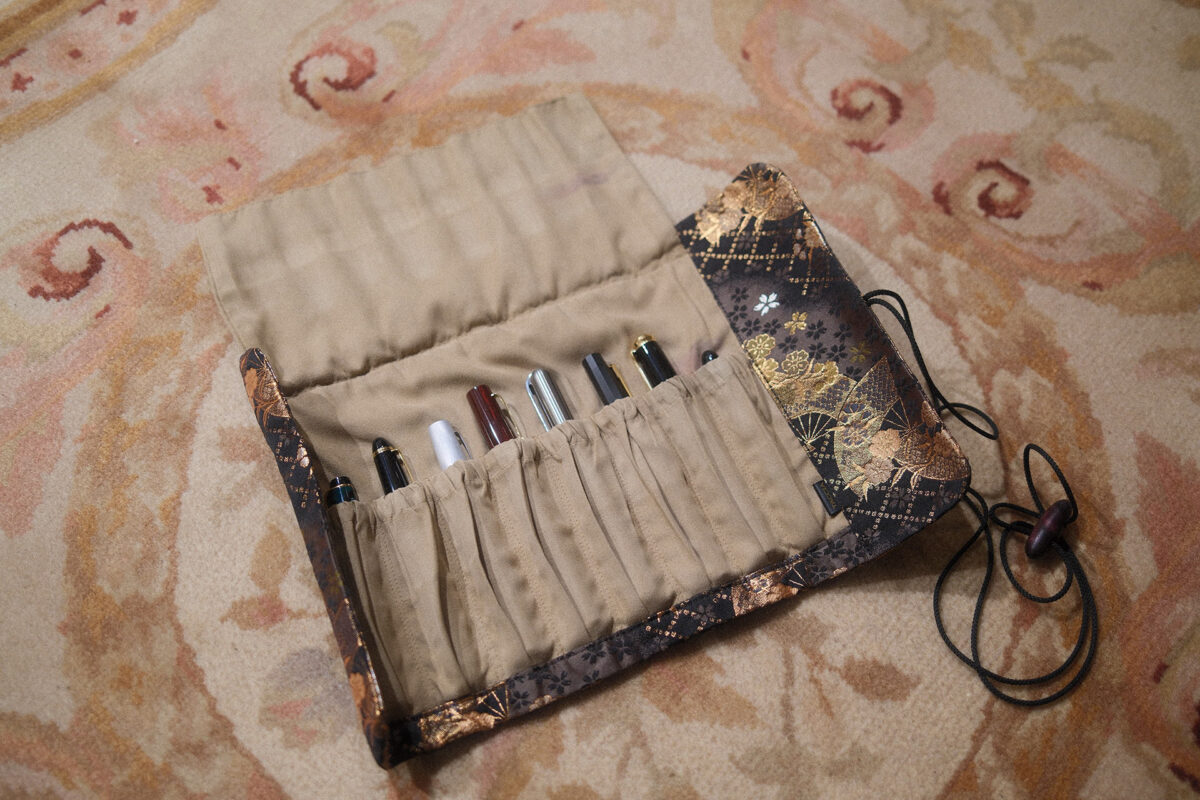
For an industry over two centuries old, it tracks that coffee has appeared multiple times in pen and ink form. Inspired by Japanese kissaten cafes and the coffee jelly dessert savored in them, the Platinum Century 3776 “My Favorite Things – Coffee Jelly” ($368 retail at the time of writing) features a 14K gold nib. It comes with a rich “Dark Syrup” mixable ink, reminiscent of the dark grade maple syrup used in coffee jelly recipes, and is packaged up neatly in its own box.
As part of its Coffee Edition collection, industry stalwart Sheaffer produced a fountain pen (in a soft brown gradient, of course) with a coffee cup emblem on its cap and an ink scented with coffee. To take it a step further, Manufactum paired up with ink manufacturer DeAtramentis and created an exclusive, coffee-derived ink. According to the product page, “the coffee has been filtered several times too and afterwards coagulated and brought into the desired consistency by using glycol.” If you think this is too kitschy or one of those “because we can” products, they are not the only coffee inks I found; there are whole collections of gastronomic-scented inks out there.
The fountain pen, as we know it today, is made up of four main parts: the nib, the ink delivery system, the barrel, and the cap. There are different mechanisms for filling the ink reservoir and feeding it to the nib, but I’m not going to get into the nitty-gritty of it all. Rest assured, there are many sites, forums, videos, and pen clubs available to assist with your education.
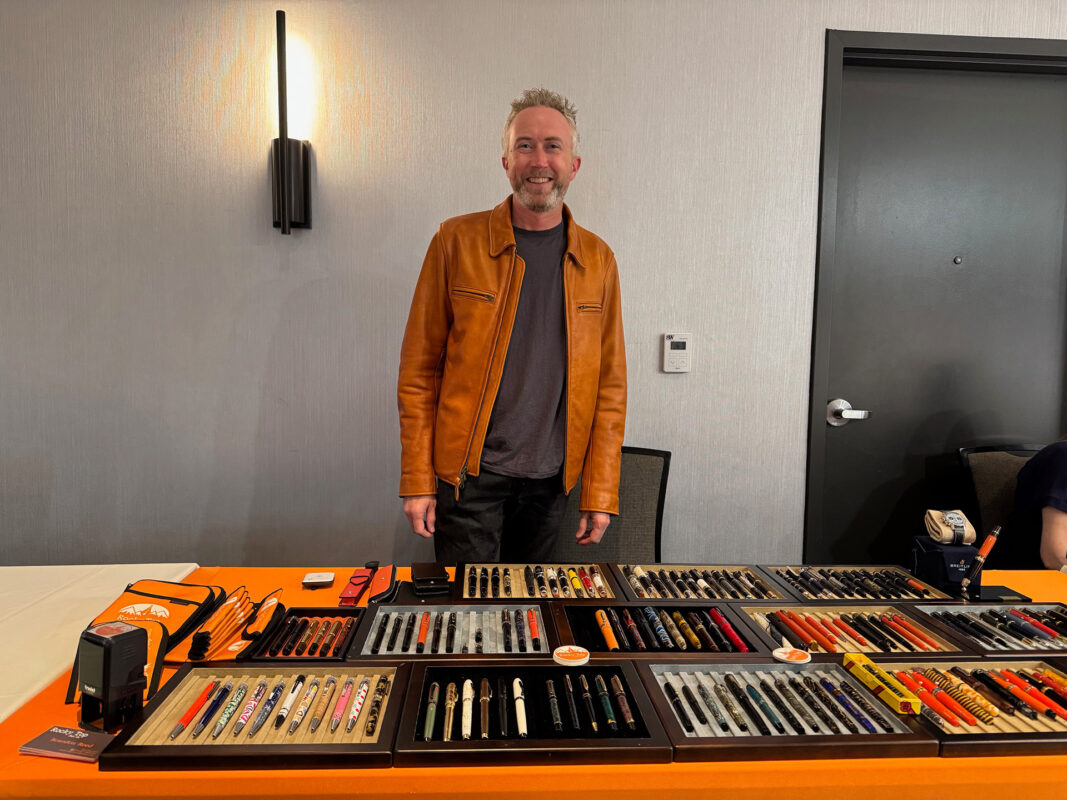
The first patent for a fountain pen was filed in 1809, granted to Frederick Fölsch in England. But, patents don’t always align with the first inventor, and pens with reservoirs were not an exception. Because fountain pens have undergone many evolutions, there are different opinions about who invented them. In 953, there was a pen mentioned in the Islamic historical book “Kitab al-Majalis wa ‘l-musayarat” where “ink should only flow when desired and the ink should not stain or leak.” And in the 16th century, several European inventors described the existence of “reservoir pens.” At the time of the patent filing, Fölsch improved upon the common ink-dipping pens by installing a spring-loaded valve on one end that, when opened, the air pressure allowed ink to flow.
Additional advances to the ink reservoir were made by Romanian inventor Petrache Poenaru in 1827, and in 1884, Lewis Waterman patented a capillary feed system that used gravity and capillary action for ink flow. Early pens were handmade by artisans, but with the introduction of factories and mass production, they became more accessible to everyday people.
There’s an undercurrent between many of my feature articles: this return to analog materials and instruments, be it hand-painted signs, neon, or board games. It all encourages you to slow down. “We have seen massive growth in the industry just at my company alone, and the growth has been almost unbelievable,” says Nguyen, noting that the pandemic kicked the resurgence off, especially when people were looking for anything to do. Facts back him up: the global writing instrument market—which includes pens, pencils, and markers—is projected to reach $23.9 billion by 2030, while the stationery market (because ink and paper are essential, too) is projected to reach $40.4 billion by 2033. “There are so many ways to enjoy the pens—not only just how they feel to write with and having that sensation where you feel like you’re writing with something special—but also just reconnecting with reality, like journaling.”
In a more granular view, a previously cited report found that the fountain pen segment is expected to grow from $1 billion in 2024 to $1.28 billion by 2034. In the US, 44% of sales are driven by the collector community, who value premium and custom pens.
Brandon Reed, collector and refurbisher at Rocky Top Pen Co, is part of that collector community. “I think there’s an interest that’s growing in the fountain pen market because our world is so digital that there’s a desire and a draw back to the tactile pen-to-paper methods of writing, communicating, and all of the like. Especially now with ChatGPT, anyone can write anything and it can sound wonderful.” He adds, “Not everyone can write something with a pen and make it look wonderful.”
Reed first learned about fountain pens over two decades ago when he noticed his professors writing with “what I thought was the coolest thing ever.” Once he experienced the distinct tactile feel of fountain pen to paper, and learned about the craftsmanship behind them, he was hooked. Ninety-five percent of the time, he’s using fountain pens, and the remaining 5% is when ballpoint pens are required. His collection is now over 100 pens, but two years into collecting, he began repairing and restoring pens, taking special care to preserve the original nib and feed. The ones that catch his eye these days are the 100+ year-old pens, often engraved with someone’s name or location. Throughout the year, Reed attends pen shows and club gatherings (“Actually, on Friday night, we had what’s called a Pelikan hub—85 people came to that.”) to stay connected to the pen community.
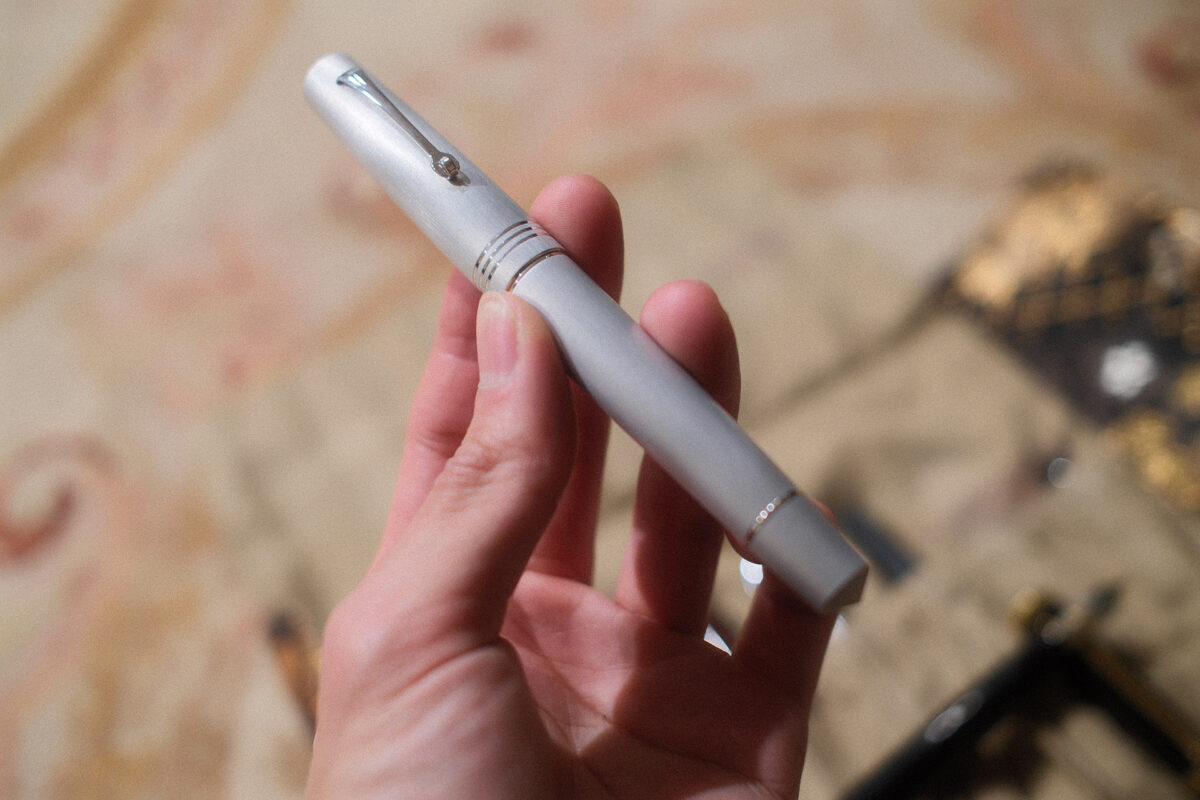
With a constantly evolving collection of around a dozen pens, Nguyen’s collection strategy is more of a source, sell, or trade one: he buys to enjoy and looks for increasingly rare ones. He’ll also pay friends who travel to Japan to source pens for him, explaining, “There’s a joke in the industry that all of the best products—the most coveted stuff, and their best ideas—they don’t leave the country, because they’re Japanese exclusives, so then it becomes much more rare to see them stateside.”
One of his favorite pens he’s sold off is the limited-edition Pilot M90, produced in 2008 as a re-creation of the popular 1971 MYU pen. Unlike most pens, it has an integrated nib, meaning the nib and barrel are machined from a single solid piece of stainless steel. A nice benefit from the industry growth is the boom of independent makers and artisans, like nibmeisters, who create custom nibs and service existing ones. Comparing them to jewelry makers, Nguyen says, “You’re working on the tipping material of pens, which can be as little as two ridges of your fingerprint wide, and they’re working at that scale with really high precision, and most of it’s done by hand.” He references nibmeister Regalia Writing Labs’ intricately detailed work and I can see the comparison (this prototype nib, involved “hours of hand-filing and forming, in the pursuit of letting the structure of the steel hang by a thread,” sold for $9,999!).
A specialty coffee company and a fountain pen manufacturer’s pen collab when? In all my research, I couldn’t find this collab—someone send me a note if it exists!—which means that this marketing idea is ripe for the taking. To write this, I learned a dizzying amount of pen info and history, plus a deeper appreciation for slowing down…and that I may just well be shopping for a fountain pen in the near future. Nguyen says, “In the maker community, I think that people are seeing that they can create something that people enjoy, and I think that’s a draw that we all have, whether it’s coffee or whether it’s fountain pens.”
Jenn Chen (@thejennchen) is an Editor At Large at Sprudge Media Network. Read more Jenn Chen on Sprudge.