






Do I want a soft tap, distinct clicky-click, or perhaps a solid thock? Somehow, I found myself one night playing audio tracks of keyboard switches.
There’s a whole foreign language of industry terms in switches alone: stem, actuation force, pre-lubed or not, pins, and more. And once you think you’ve gone far enough, you find out that instead of buying a pre-built keyboard, you can build your own with all your preferred parts, and a whole other world opens up.
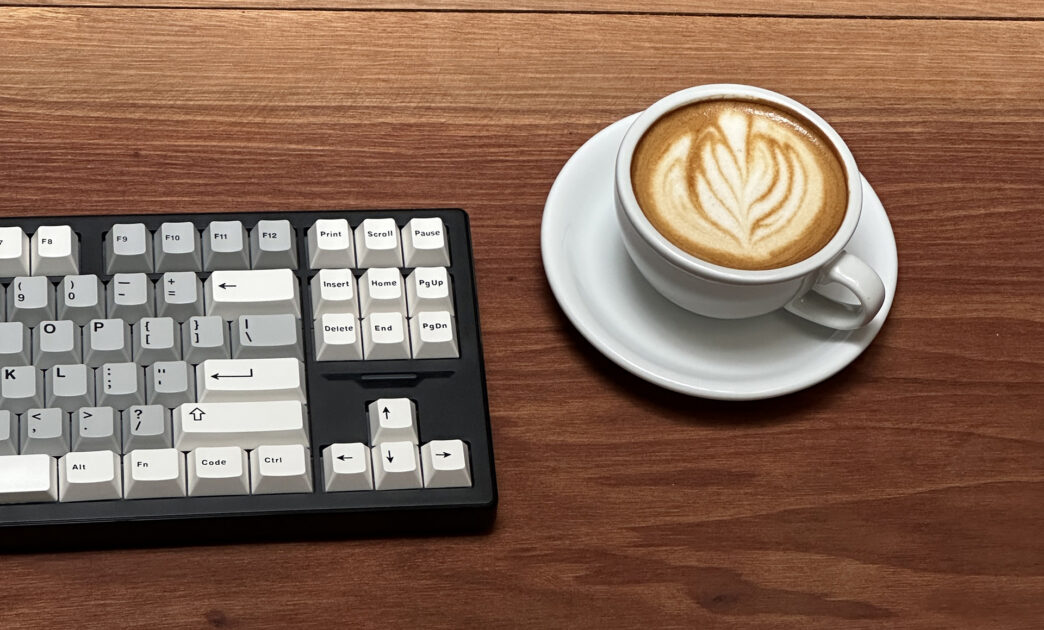
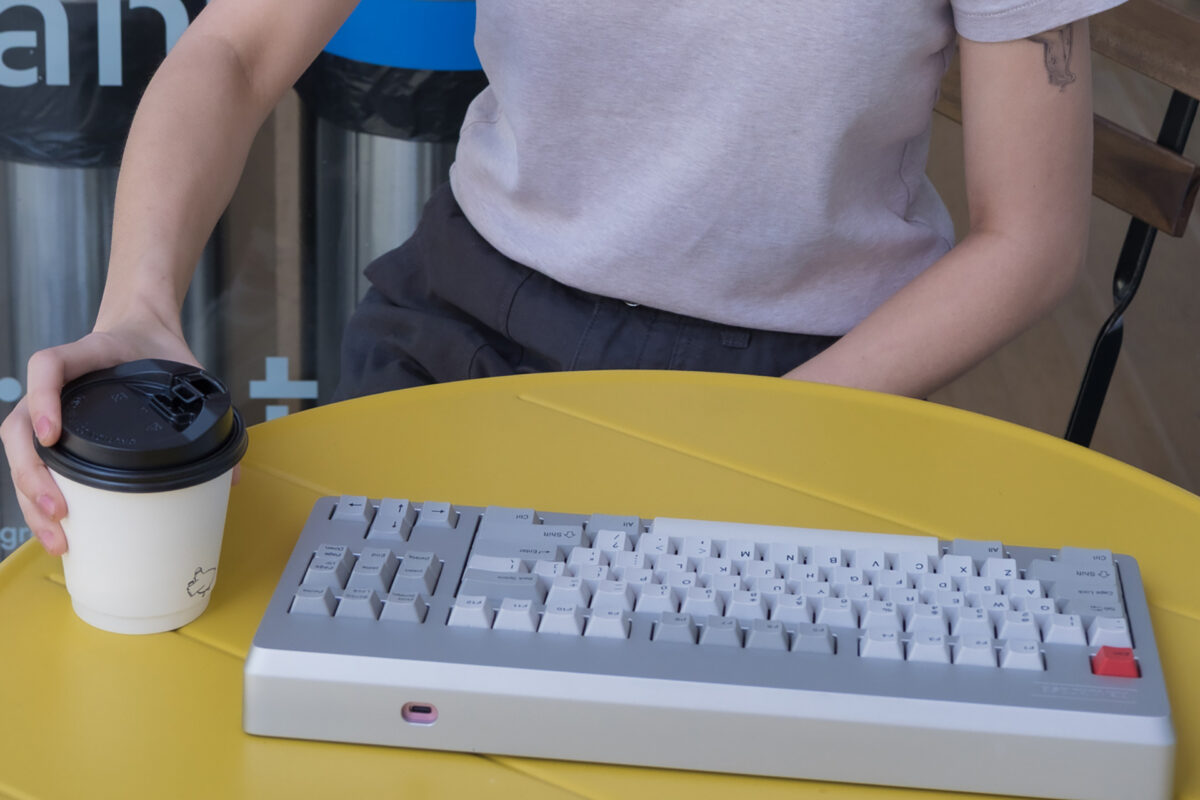
Naturally, there are die-hard coffee fans in the keyboard industry, and so the number of coffee-themed items, from cafe-esque keycaps to HMX Latte switches (a “creamy” sound) to a mid-pour artisan keycap, is astounding. Some businesses took it a step further and created keyboard cafes: part keyboard showroom with their associated parts/accessories and part specialty cafe. Much like how tattoo parlors, plant stores, and board game stores coexist with cafes, keyboard cafes have found parallels between the interests and use coffee as a vehicle to open up conversation.
The keyboard community (or “keeb” for short) is similar to the specialty coffee one, in that there are gearheads, passionate enthusiasts, collectors, custom mod fans, builders (though it’s not recommended to build your own espresso machine or grinder), retailers, and, of course, the manufacturers.
While one interviewee told me that the market is oversaturated, another, with similar reasoning, told me that it isn’t, but it is noisier and more complex. Two sides of the same coin. Either way, both agreed that it’s overwhelming to enter as a newbie.
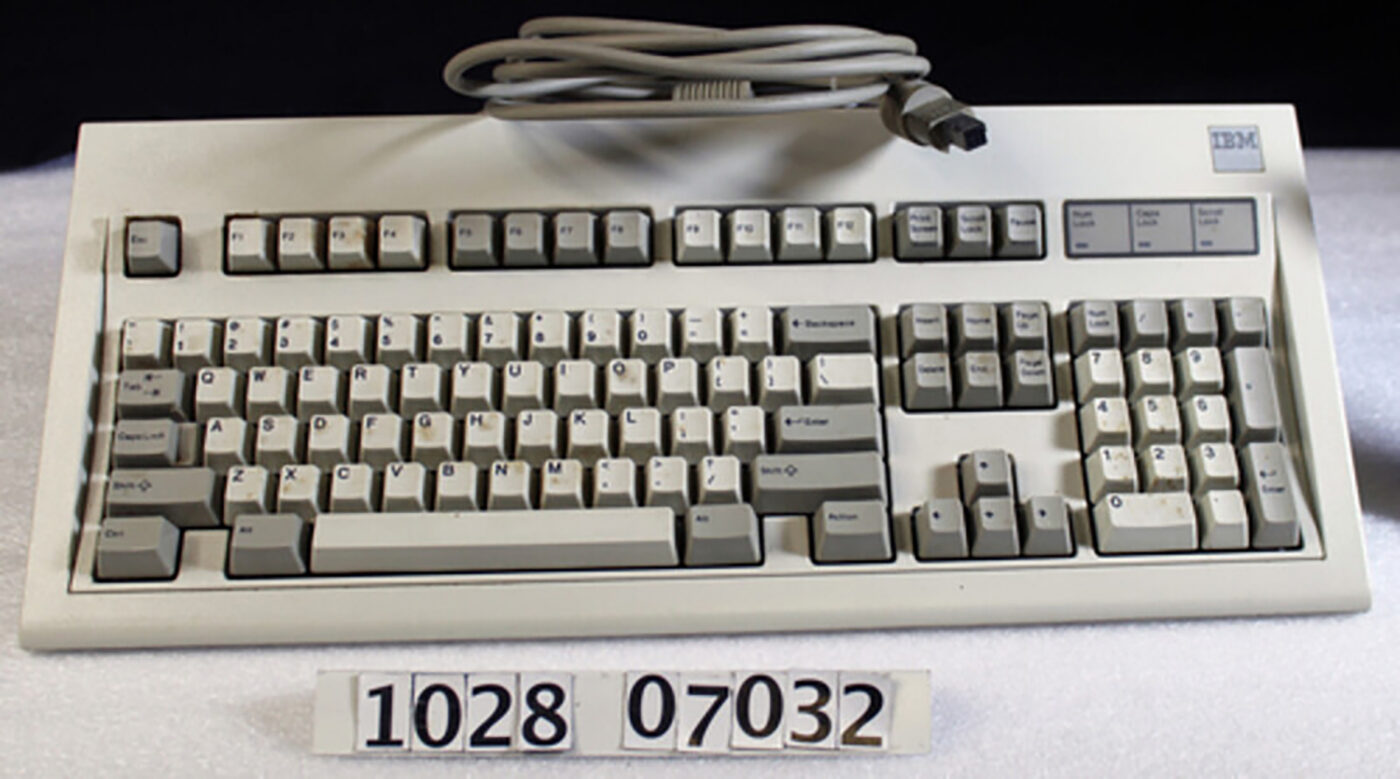
Of the many subcultures I’ve explored, keyboards are perhaps the newest. Clearly, its history traces back to the typewriter, but the detached, mechanical personal computer keyboard became popular with IBM’s Model M release in 1986, featuring Cherry switches, a brand you may be familiar with if you’ve researched keyboards. The German manufacturer held the patent for the Cherry MX switch until it expired in 2014, and an outpouring of new manufacturers and switch innovations soon followed. As the Internet and gaming gained popularity, mechanical keyboards became preferred for their precision, reliability, and durability. In between those years, membrane switches entered the market—less expensive to manufacture, lighter, quieter, etc.—and are probably the ones you have now.
The key (sorry) difference between mechanical and membrane keyboards is in how the switches work. Membrane keyboards’ keys all press on the same surface, while mechanical keyboards’ keys each have a metal spring and activation mechanism.
Themed keyboards and the associated desk accessories are quite common, including unique keycaps, frames, and desk mats. For example, one could have a candy-themed keyboard with bright pops of color, backlit keys, and artisan keycaps shaped like different candies.
View this post on Instagram
Keo, the artist behind Etsy store Keofelt, designs artisan keycaps for the aesthetic keyboard-users. Artisan keycaps are 3D, while novelty keycaps feature a printed illustration. Don’t need or want to use the “PgDn” key? Replace it with a 3D resin mug with a perfectly stacked rosetta instead, which she notes is a bestseller. Keo’s unique keycap offerings are handmade and tiny, each one taking 1-2 hours to complete. She has one set dedicated to a cafe aesthetic, and via custom order, also crafts a miniature grinder.
View this post on Instagram
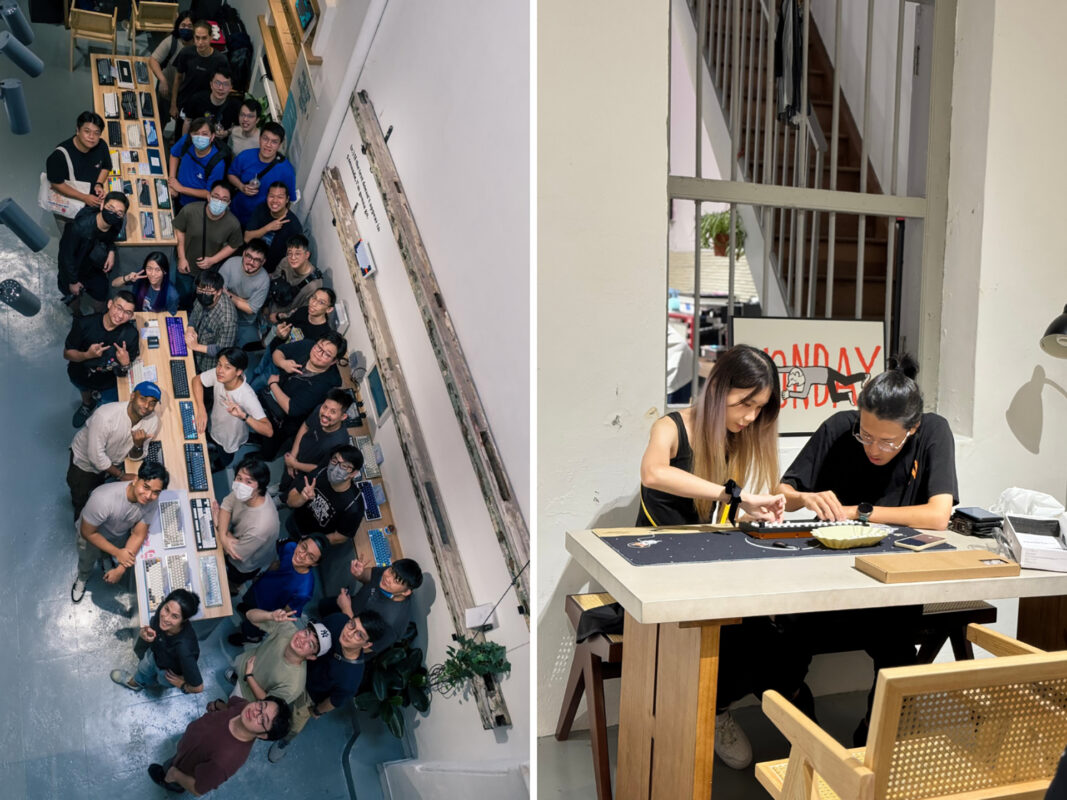
Once you’re in the realm of building your own keyboard, the options become limitless, and, as Erica Teoh notes, overwhelming. Teoh is the co-founder of Click & Brew, a combination cafe and retail space for keyboards in Penang, Malaysia. The co-existing concept was intentional from the beginning, so they could cultivate a culture that values experience and community. “We wanted to create a space where people could sit down, build a keyboard, ask questions, and enjoy a cup of coffee at the same time,” she explains. “Coffee naturally invites conversation, and that sense of comfort makes the hobby feel more approachable.”
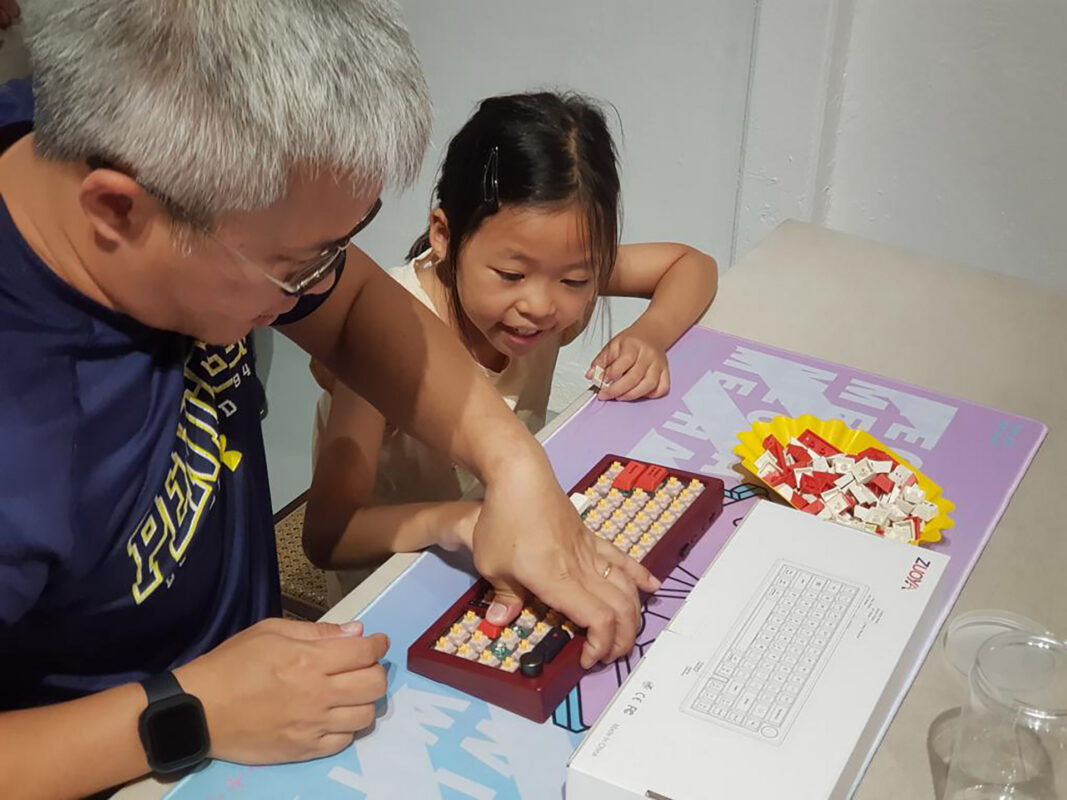
Click & Brew’s keyboard side of the business includes selling keyboards, switches, and accessories, but it goes beyond the traditional retail model by offering repair, modding, and building services and workshops. The workshops are designed for beginners and teach fundamentals instead of chasing hype, plus there’s a Young Builders one for kids (ages 7-14) to learn proper typing skills. If you’re newly exploring this hobby, she recommends trying keyboards in person—vital for switches—then going by feel and sound, not brands. When you browse online for a switch, product pages include sound files, and you can find numerous ASMR videos of people clicking away.
Personal preference dictates your choice of a switch’s tactile nature and sounds, as does the layout of your build. Perhaps luckily for the newbies, these layouts are mostly described in percentages, with 100% being the traditional layout with everything: function row, navigation, number pads, etc. The 80% or Tenkeyless (TKL) layout removes the number pad, and the percentages drop as more sections are removed. A 40% layout is ultra-minimal and keeps only the most essential keys. And then there are more choices to make in the case, angle, keycaps… no wonder people get overwhelmed.
“What keeps us in the keeb culture is how deeply community-driven and knowledge-sharing it is,” says Teoh. “Once people spend time in the space, they realize that both coffee and mechanical keyboards share similar values—craft, attention to detail, and personalization.”
Keyboard enthusiast and builder Chelsea Chen entered the hobby in 2020 after her MacBook’s butterfly-switch keyboard broke and the “B” key stopped working. She was working in neurology research when I interviewed her, but also coincidentally took on a part-time barista job.
Her first mechanical keyboard was a pre-built Ducky 65% (no number pad, navigation and function, and F-row keys), with Cherry MX switches. Whenever it was used, “my sister despised being in the room with me.” Six months in, overstimulated by the RGB lights, she caught the bug to build her own. Beginning with a Tofu60 case—“the quintessential starter keyboard; a slab of metal”—she collected components and learned how to solder.
Looking back, it was a wholly pandemic lockdown interest, fueled by time and the practical need for a functional keyboard: Twitch streams taught her everything about keyboards and modding them, and the online community was thriving with those new to working from home. Eventually, she offered to build them for strangers on Reddit, streamed those builds on Twitch, created a Discord server, organized meetups at Paper Son Coffee in San Francisco, recorded ASMR videos, and it kept ballooning from there. “I un-ironically made a TikTok—I never thought I’d be like one of those people to post—then I went to go shower and half an hour later, I have 800k views,” she recalls.
And as in any hobby, you hit a peak and then begin to reevaluate your choices and spending habits (who here also donated a bunch of pour-overs you never use anymore?). She observes, describing when she saw a photo of someone’s collection of 100+ keyboards, “At a certain point, it becomes excess consumption.” She still offers builds and some repairs—her top clients have commissioned her for builds over 10 times each—but doesn’t participate as much anymore in the community. Chen is happy with her current setup and is also trying to be less perennially online. Her outlook might be familiar to coffee professionals: “At the end of the day, the joke is, it’s a keyboard.” People will ask if it sounds good, sharing about all the modifications they made, and then others will still say, “Sounds like a keyboard.” She observes, “It’s a keyboard. It tastes like coffee.”
Jenn Chen (@thejennchen) is an Editor At Large at Sprudge Media Network. Read more Jenn Chen on Sprudge.