





As a satellite event to the annual Neon Speaks symposium—a gathering of neon enthusiasts and professionals—Neon Works opened its studio doors for public tours. This opportunity happens only once a year, so I jumped on the chance to join. Ever since I published this story about neon coffee art a few years ago, I’ve been far more appreciative of neon signs, restoration work, the historical implications, and the craftsmanship needed to keep the industry alive.
Neon Works is a studio founded by Jim Rizzo in 1989. His neon sign shop does it all: designing and creating new signs, fabrication, glass bending, maintaining existing ones, restoring and repairing historic signs, and storage. If you’ve visited San Francisco in the last few decades, chances are that you’ve stumbled across Rizzo’s work. In 2008, for the film “Milk,” Focus Features paid Neon Works $70k to restore the historic Castro Theatre’s 65-foot vertical neon sign. It’s been an iconic beacon of the Castro neighborhood ever since.
Walking into the Neon Works courtyard, you’re immediately greeted by a grouping of store signs too large or too heavy to fit inside the warehouse space. Leaning against the walls are two enormous Goodyear signs that clearly belonged sixty feet up in the air. Its paint was applied as “baked enamel,” making the sign more weather-resistant than vinyl, which peels off.
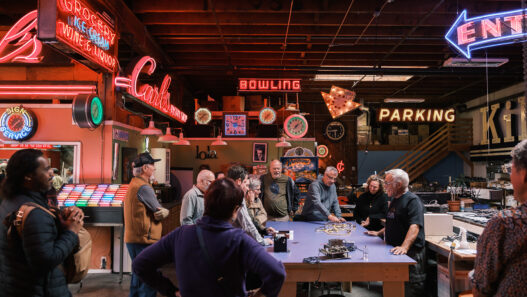
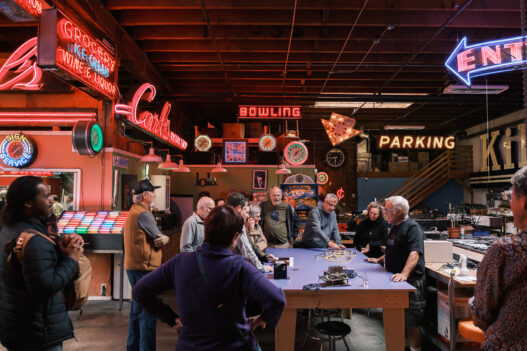
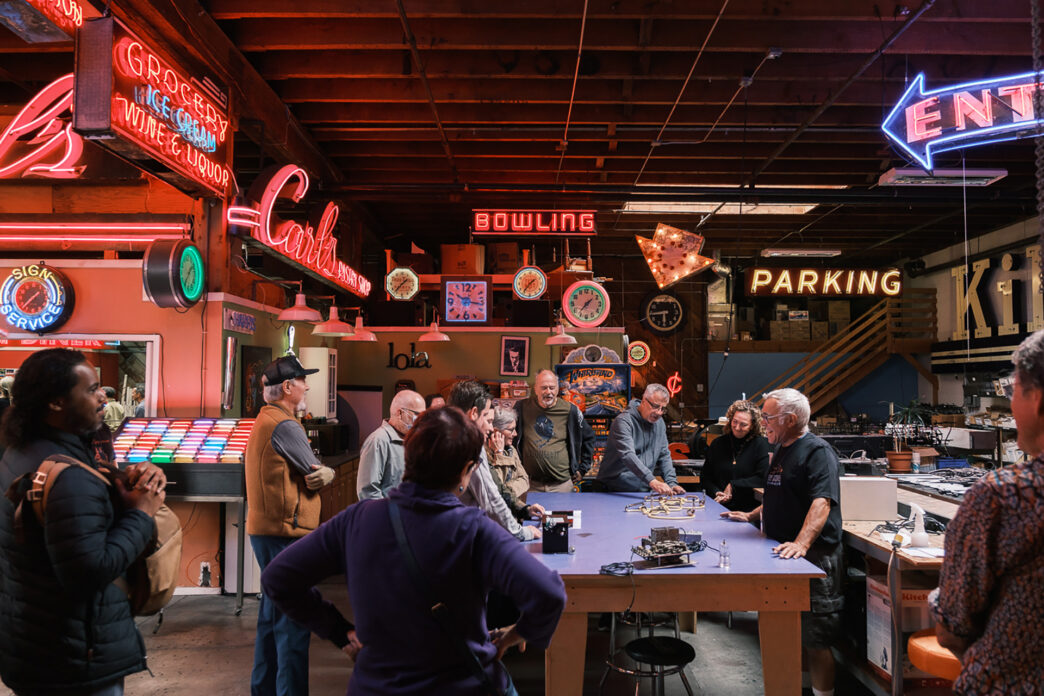
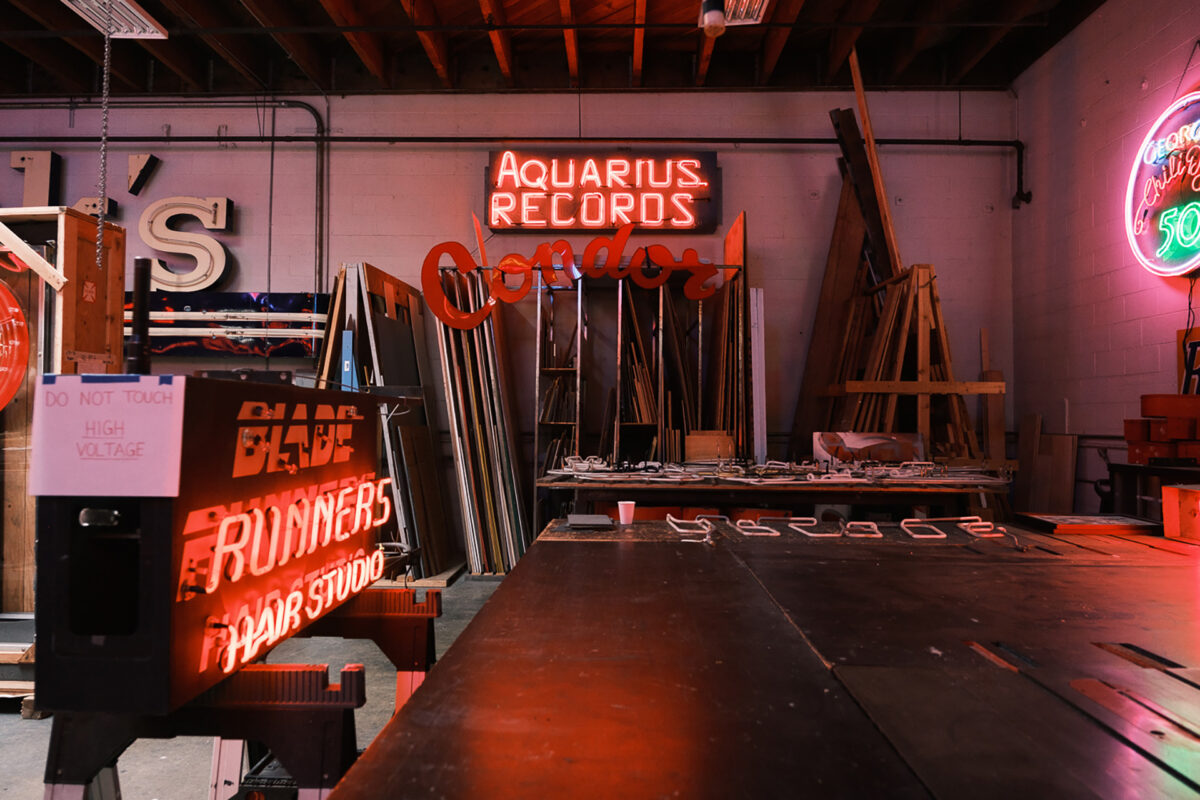
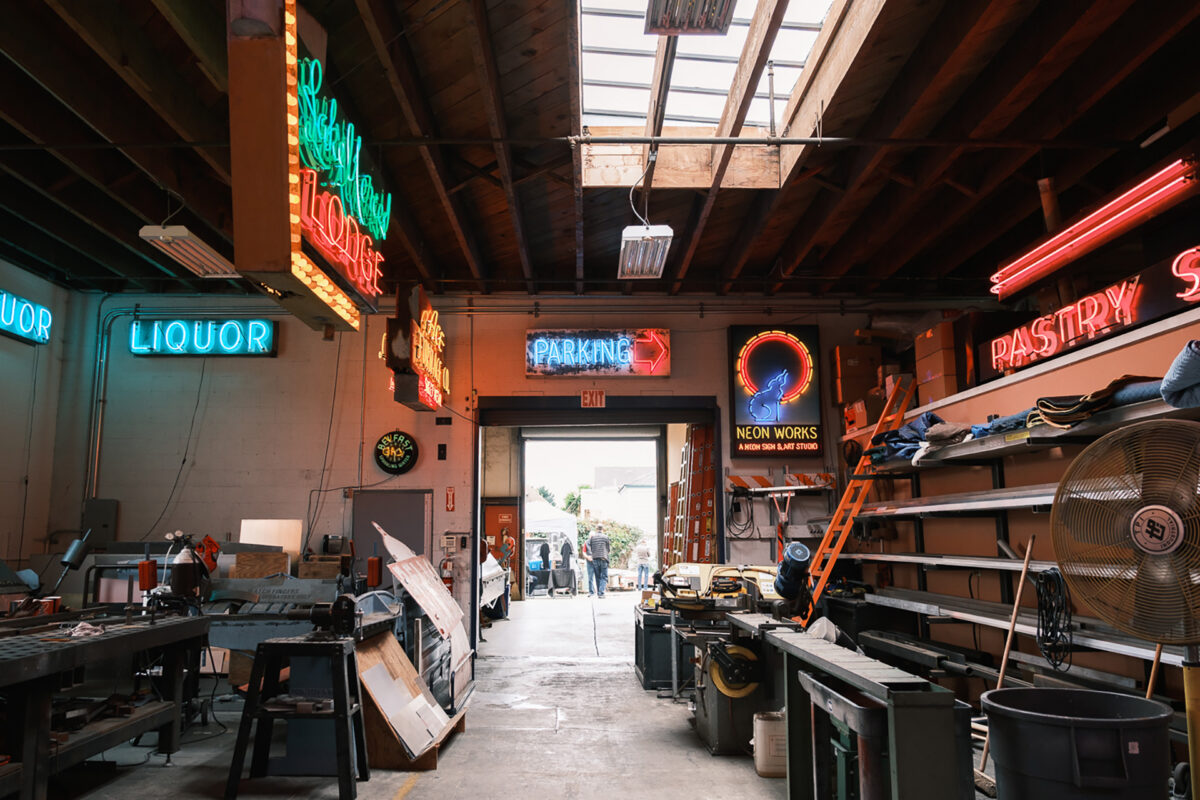
The Neon Works studio itself is housed in a 17,000 sq ft warehouse in San Francisco. As one would expect, neon is everywhere: lit up above, decades-old signage still shining bright, and works in progress. If you know enough of the Bay Area’s history, you may recognize some of the signs of businesses past.
Rizzo doesn’t know the history of every sign in Neon Works, but he pointed to Kilpatrick’s Bakeries as possibly the oldest he knows, dating back to the 1940s.
“I’ve always loved neon. I’m attracted to it,” explains Rizzo. “Not everybody can do it: the skill in assembling a sign with neon is really high. You got to know how to not break the glass, how to wire it properly.” He adds, “LED—and I hate LED—it’s so simple, a chimpanzee can build an LED sign. You have to be a craftsperson to build a neon sign.”
One of the biggest draws of neon is the fact that the core of its artistry and techniques haven’t changed much since the beginning. The biggest technological improvement has been the invention of solid-state flashers. Vacuum pumps and electrodes have also improved, but everything else—housings, transformers, tube supports—has all declined in quality.
“It’s timeless. I mean, it’s a hundred-year-old trade, and it’s made the exact same way,” says Rizzo. “You could look at pictures of a neon bender, and it looks just like him in the same fires, in the same position, with the same workbench.” He gestures to glass bender Adam Taylor, who’s standing in the next room over.
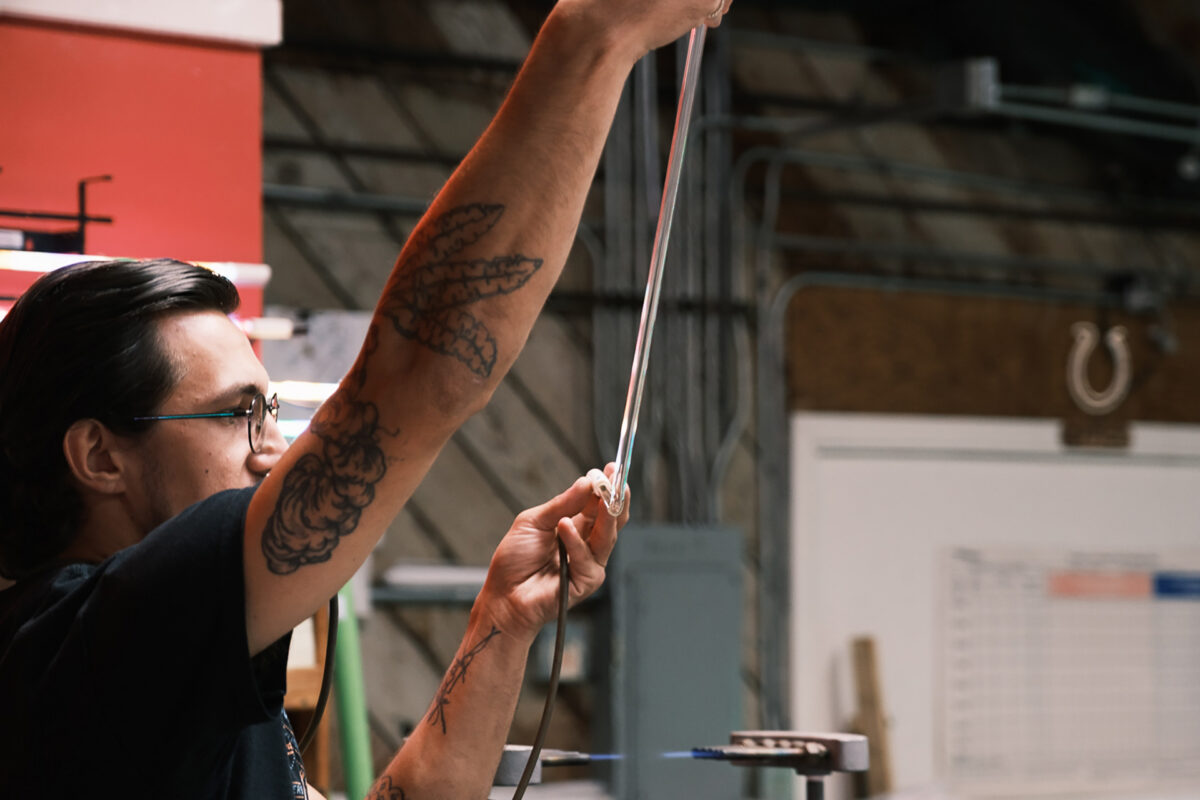
Taylor studied neon in art school and later learned glass bending. “Unfortunately, the program didn’t do the best job about being kind to commercial neon,” he reflects. “So I kind of came out of art school with a real nose up in the air of just like, ‘eww commercial beer signs, bleh.’” He’s happy now with his choices and gets to still use the studio for his art—truly a best-of-both-worlds situation.
Creating glass letters involves careful manipulation of flame, air, and glass handling. During the demo, we watched Taylor make “A-N-N” (and then we ran out of time and tube to finish the “E”). He marked hashes on the cold glass to know where to bend and how much glass he needed.
One of his more memorable works was earlier this year. He worked on Golden Star Radio’s bilingual sign in Chinatown. It was believed to be the first Chinese-language radio program in North America and the California Historical Radio Society raised $65,000 to restore the sign.
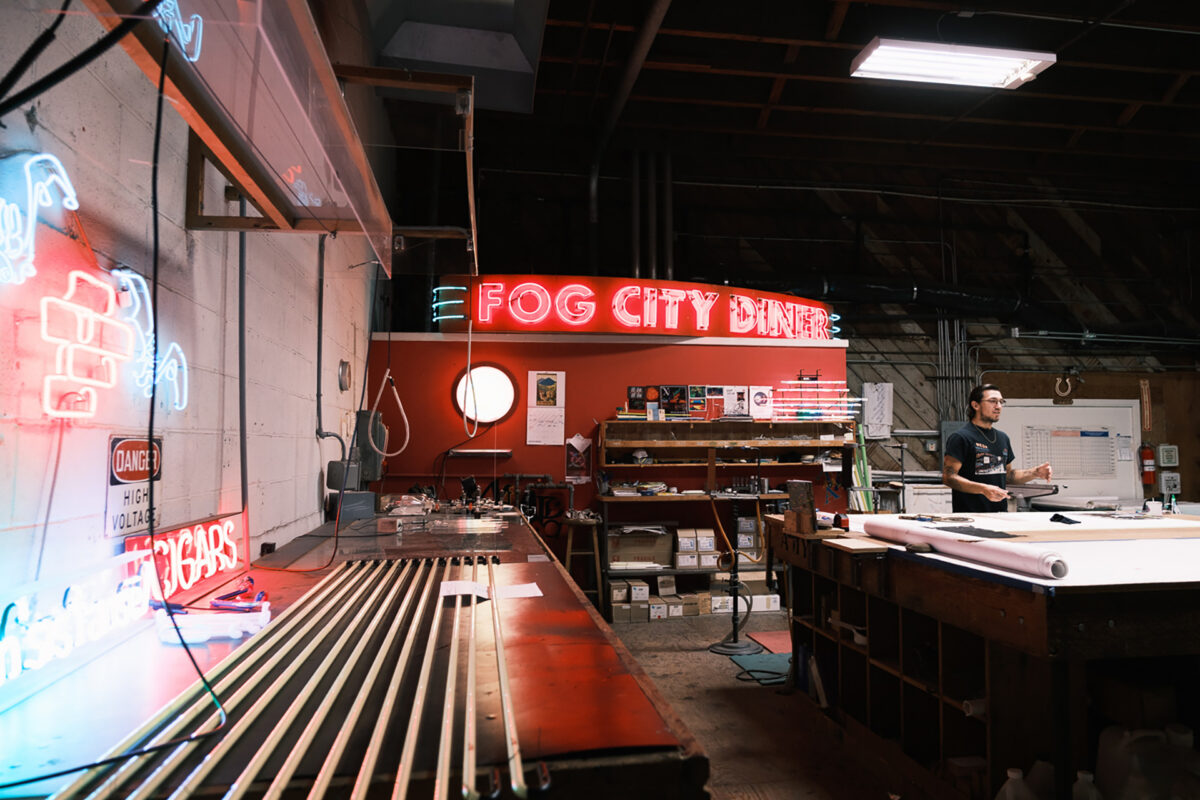
“I’m 29. There’s not a lot of people doing neon anymore, especially my age. All my peers are 60 years and older,” says Taylor. “For the sake of wanting to see neon in the future, wanting to see certain landmarks stay neon, and new stuff to come up, I’ve got to stay in it to make that reality happen.”
Many of Neon Works’ clientele are food and beverage establishments. Neon’s story is full circle: what began as a way to draw people off the streets is now seen as a way to stand out among all the LED signs. Plus, it’s more environmentally sound: every part of it can be recycled, whereas a broken LED sign goes into the dumpster. Rizzo jokes, “Diners, restaurants—they’re huge consumers of neon signs. I mean, what’s a diner without a neon sign? It’s nothing.”
Taylor adds, “Every neon sign is made by hand, by one person. They’re all unique labors of love. Support real neon, support businesses that use real neon, and yeah, let’s keep it going.”
Jenn Chen (@thejennchen) is an Editor At Large at Sprudge Media Network. Read more Jenn Chen on Sprudge.