







We’re past the point where decaf is a bad word. There’s a lot of dudes getting their “death before decaf” tattoos crossed out like an ex-girlfriend’s name. Or there should be anyway. If there is one place where decaf univocally lags behind caffeinated, it’s in variety. Not all coffees have a decaffeinated version. Most don’t in fact. If you see a nice Pink Bourbon at a shop, there’s a near zero possibility of grabbing a bag of it that has been decaffeinated.
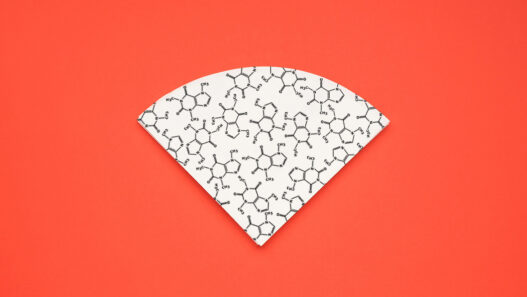
But this soon may no longer be an issue. A team of scientists have created a new coffee filter that removes half the caffeine while “retaining key compounds.”
As reported by Phys.org, the findings were recently published in the Journal of Membrane Science and is the work of researchers from the University of New South Wales in Australia and Okayama University in Japan.
The decaffeination process is typically undertaken while the coffee is still green/unroasted, which can limit the options for the consumer, especially on the higher end of specialty, where varieties like Gesha are rarely, if ever, decaffeinated. Their challenge was create a means of removing caffeine post-processing while maintaining the other compounds that give a coffee its unique characteristics.
To that end, they created a filter made of graphene oxide, “an atomically thin, sheet-like carbon material that can be assembled in layers.” Between the sheets they incorporated sodium alginate crosslinked with calcium ions, which affects the types of dissolved compounds able to pass through the layers.
After creating different versions, they ultimately landed on one that was able to remove half the caffeine while still retaining the other compounds associated with flavor. They were able to create a more effective filter for removing caffeine but it removed too many other compounds in the process, making it not ideal for the purpose.
But they haven’t yet found the upper bounds of the current filter. For their analysis, researchers kept the contact time constant for the different filters to assess which worked better. With that now determined, they are able to test it in different scenarios to see if any improve its performance. They are also building a new filter using hollow fibers, “thin tubes that allow a large membrane surface area to be packed into a relatively small space,” that in other filtration experiments have consistently been shown to remove more caffeine than the graphene oxide used to make the current filter.
A decaffeinating filter could be a game-changer for the caffeine-sensitive. Folks have tried to make a post-roast decaffeinating process in the past, the now-defunct Decafino being the most notable, but so far nothing has stuck. Even so there’s never been a better time to be a decaf drinker. But with something like this filter, a whole new world of options becomes available.
Zac Cadwalader is the managing editor at Sprudge Media Network and a staff writer based in Dallas. Read more Zac Cadwalader on Sprudge.