






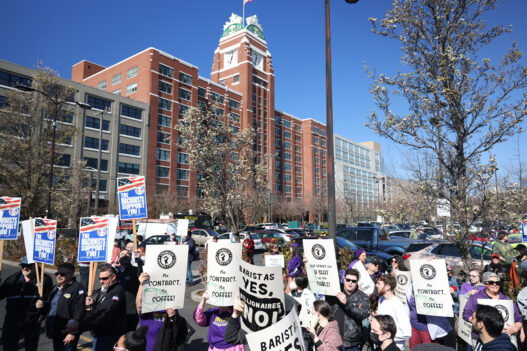
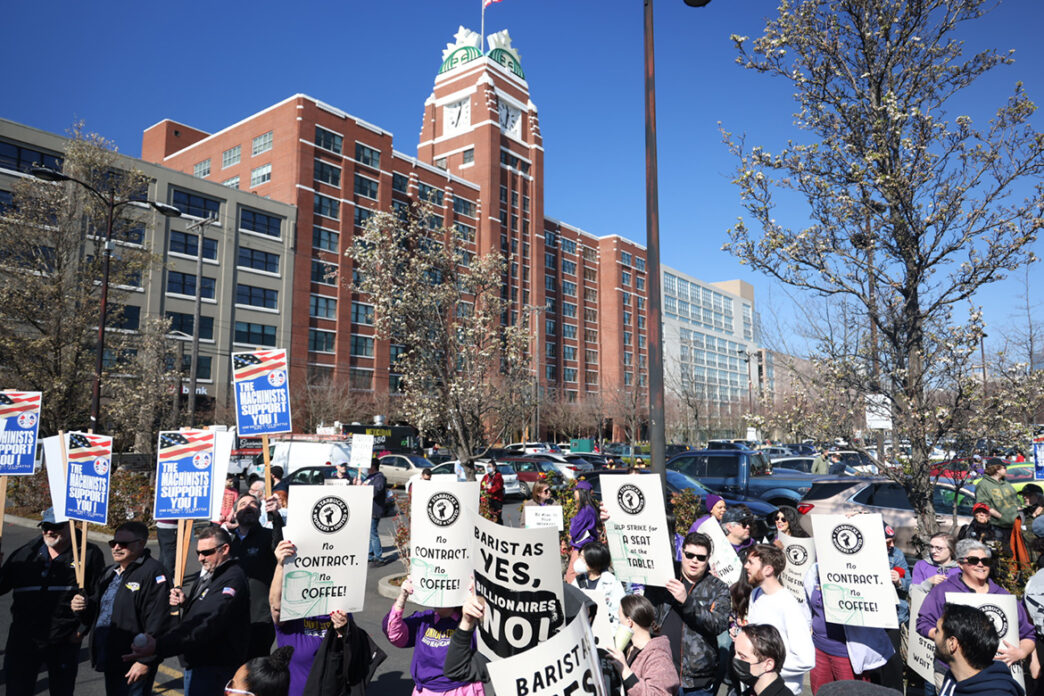
December will mark four years since the first modern Starbucks successfully voted in favor of unionizing. In that time, over 600 stores have followed suit and joined Starbucks Workers United. And zero contracts have been ratified. That’s why union workers at the coffee chain in over 40 cities have gone on strike, which they claim will be the “largest and longest” in company history.
Strikes are not new for Starbucks Workers United, but this latest effort, which they are calling The Red Cup Rebellion, is a ramp up in intensity. As reported by The Guardian, the current strike began on November 13th, launched to coincide with Red Cup Day, “which typically hails the start of the lucrative holiday trading season at the coffee chain.” This strike is open ended, meaning it has no set end date. Over 1,000 workers are already participating and they are urging customers to steer clear of the store until a deal is done.
Per Starbucks Workers United, the strike is comprised of 65 stores, most of whom have been forced to close temporarily. SWU is claiming they will expand to more stores if progress isn’t made on the contract, which they are describing as “no contract, no coffee.”
The strike was approved by 92% of SWU members and has drawn the support of prominent politicians like mayor-elects in New York City and Seattle Zohran Mamdani and Katie Wilson, respectively. A framework was initially agreed-upon in early 2024 but talks eventually stalled out, with both sides blaming the other for not bargaining in good faith.
In response to the strike, a Starbucks spokesperson states that over 99% of their cafes are still open and that they “delivered the strongest Reusable Red Cup Day in company history.” The spokesperson also noted that “Starbucks already offers the best job in retail, including more than $30 an hour on average in pay and benefits for hourly partners.”
Starbucks Workers United kicked off a wave of union efforts in specialty coffee shops around the country, many of whom, most notably Intelligentsia, have had contracts ratified. Thus they are turning up the heat, and today marks one week since the strike went into effect. The efficacy remains to be seen and relies upon the workers to hold the line against a multi-billion dollar corporation that can take the hit. But the pressure is mounting. Four years is a long time to wait for a contract.
Zac Cadwalader is the managing editor at Sprudge Media Network and a staff writer based in Dallas. Read more Zac Cadwalader on Sprudge.