










Ask any dentist and they’ll tell you that coffee stains your teeth. I appreciate their concern, but they’re really barking up the wrong tree on that one. They are right though, coffee is highly adept at staining just about anything not brown. This is apparently true on a cellular level, smaller even, as a new study finds that espresso is effective at staining biological samples to create better clarity and contrast in electron microscopy.
As reported by PsyPost, a study published in the journal Methods examined the efficacy of espresso as a non-toxic and cost-effective meaning of preparing samples for electron microscopy.
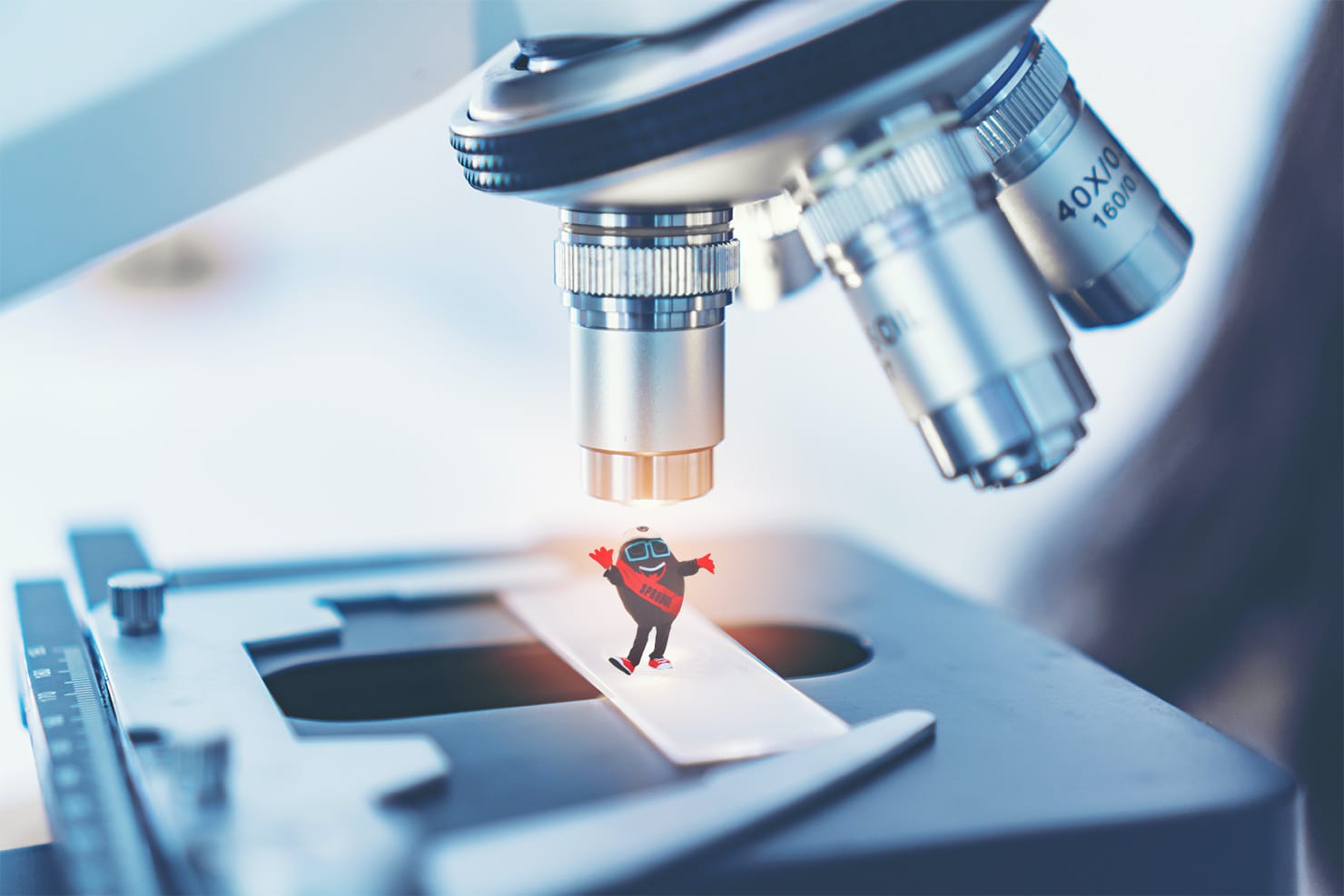
Electron microscopy is the process by which biologists examine the inner workings and structures of a cell at the nano level. To do this, they rely on transmission electron microscopes (TEMs), which use accelerated electrons to determine the cell’s shape. The problem is that most of these cells are composed of “light chemical elements like carbon, hydrogen, oxygen, and nitrogen,” which don’t interact strongly with electrons, thus creating a very weak image.
The traditional means of bumping up the resolution has been the “positive staining” of the samples, whereby they are treated with heavy metals. The heavy metal ions binds to the cell structures, making them much more reflective for electrons. This creates more detailed, higher contrast images of the cell’s structure.
Currently, researchers use a salt derivative of uranium called uranyl acetate for positive staining. But as one would expect, it’s not ideal. PsyPost notes that it is “both highly toxic to the kidneys and chemically radioactive” and requires “strict safety protocols, expensive waste disposal, and complex regulatory paperwork.” The use of uranyl acetate has even been banned in some laboratories.
Enter coffee, the eco-friendly solution to all problems. Researchers took samples of zebrafish cells, selected specifically for the complex, double-walled membranes of the mitochondria. Uranyl acetate, espresso made with robusta, and chlorogenic acid (an abundant compound in espresso that researchers hypothesized was responsible for the staining) and introduced them to separate zebrafish samples.
Each was examined with a TEM to determine the clarity of the image created; the crisper the membrane lines the better. The images then underwent a mathematical analysis to measure the pixel intensity, specifically in comparison to the surrounding cellular area.
They discovered that not only did espresso produce clear, well-defined images of the membrane, “in some cases they were even better than with uranyl acetate,” according to one of the study’s authors.
Espresso thus is not merely an eco-alternative but a viable competitor to traditional methods. One that is safer and cheaper. Researchers note that different biological tissues react differently due to their chemical composition—“a stain that works well on the lipids of a mitochondrial membrane might not bind as well to a protein in a muscle fiber or a strand of DNA.” More research will need to be done on espresso’ efficacy for other cell types.
So next time you are at the dentist and they tell you have coffee stains, you say, “you’re damn right, and you’re welcome.”
Zac Cadwalader is the managing editor at Sprudge Media Network and a staff writer based in Dallas. Read more Zac Cadwalader on Sprudge.