






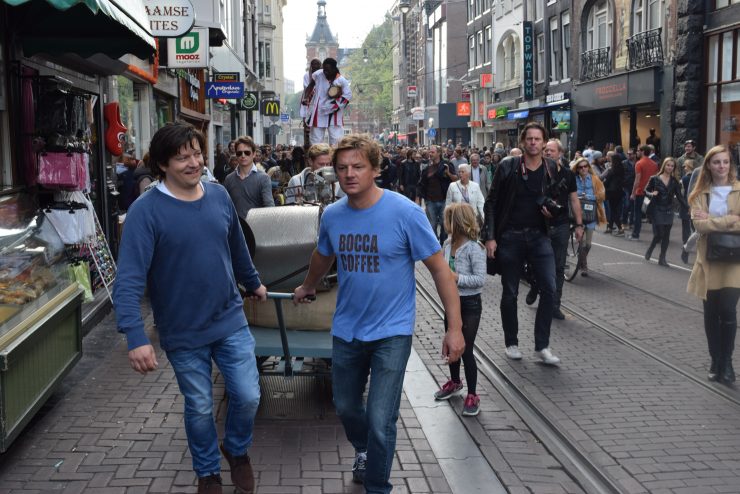
On a balmy Sunday afternoon in October, the Simons brothers could be spotted pulling a cornflower-blue platform truck along the streets of Amsterdam. Tethered to it was a 15-kilogram Probat roaster, hopper pointing forward, drum cushioned by a sack of Arabica beans. Behind them, a group of Togolese musicians and stilt dancers ululated and played percussion. Behind them, several dozen supporters cheered, snapped photos, and, on the occasionally steep bends of canal-side brick road, gave a push.
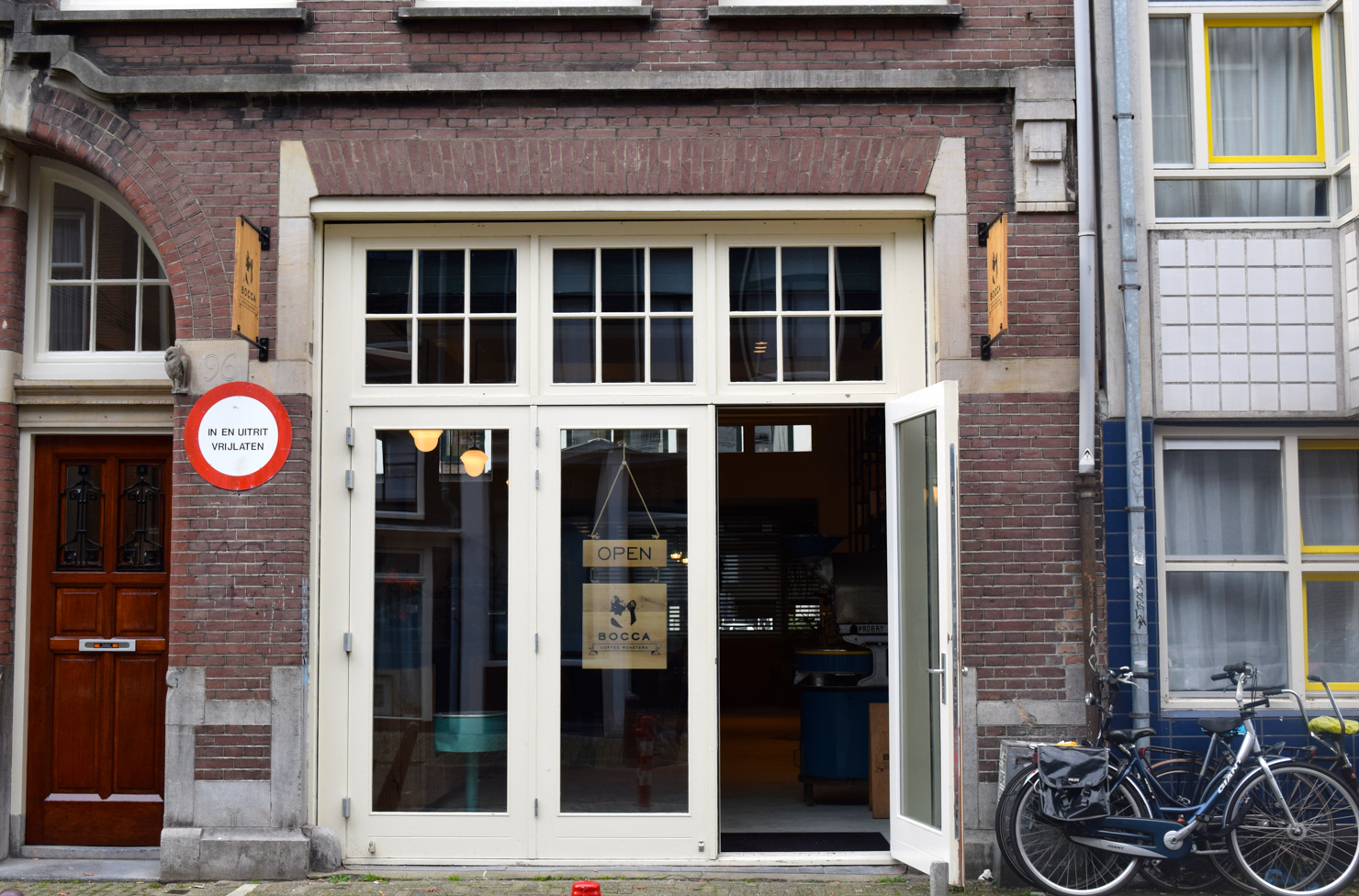
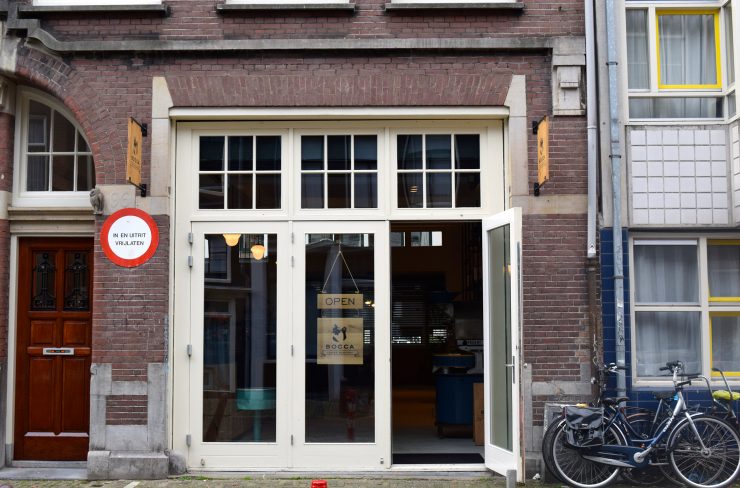
Using human-powered wheels for transportation is not uncommon in the Netherlands—locals are known to move house by bike—but even the brawniest of cyclists would have been vexed by the old roaster, weighing a reported 300 kilograms. What a pragmatically Dutch decision for Menno and Tewis Simons, to turn their haul into a parade, a parade that physically and symbolically took their Amsterdam workshop from a garage in the Jordaan neighborhood, where in 2001 Menno Simons first started roasting under the company name Bocca, to their new flagship store a kilometer away.
Those who know the Simons brothers know they are not the parading type. Modesty is as much a part of their workaday uniform as relaxed-fit jeans and cotton shirts. Constant self-scrutiny prompts comments, such as Menno Simons’ “It’s not such a long time ago that we never looked at the water, and 98% of your coffee is water.” Roasting has demanded of them “a steep education,” Tewis Simons says, adding, “it’s chemistry—I was never really a star at that.” And then there’s their refrain of “We’re not good at marketing.”
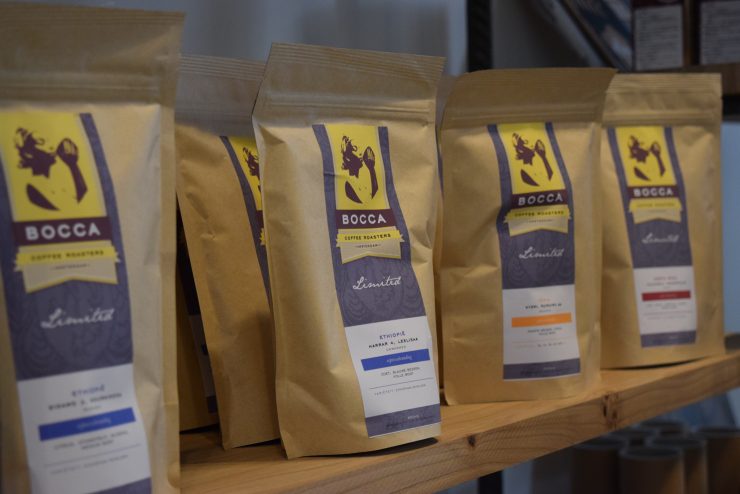
But minimal self-promotion hasn’t seemed to curb Bocca’s growth. Last year, they won the European Coffee Award for best artisan roaster in Europe. Their logo-branded ceramics continue to pop up across Amsterdam: from Third Wave cafes to hotel bars, you spot the head-tie-wearing woman in profile raising a cup to her mouth (bocca in Italian). In the last dozen articles Sprudge published on the Netherlands’ coffee scene, the roaster cameos five times, including in unlikely venues (a hash bar that serves Bocca’s classic Full Blend) and drinks (a bottled Japanese-style slow-drip featuring a Santuario and a Yirgacheffe by Bocca).
When asked about how many wholesale clients they actually have nationwide, Tewis Simons ballparks the number of bars and restaurants at “about 300, 320.”
Ninety-nine percent of their beans, they estimate, are from Trabocca, the organic specialty coffee sourcing company that Menno Simons founded in 2003 and which is today a major player in the international trade of green coffee.
“I’m Menno’s biggest client in Holland,” explains Tewis Simons, referring to the brothers’ division of labor at Bocca, where he oversees day-to-day operations. Menno Simons handles Bocca’s strategy and development, while also serving as director of Trabocca.
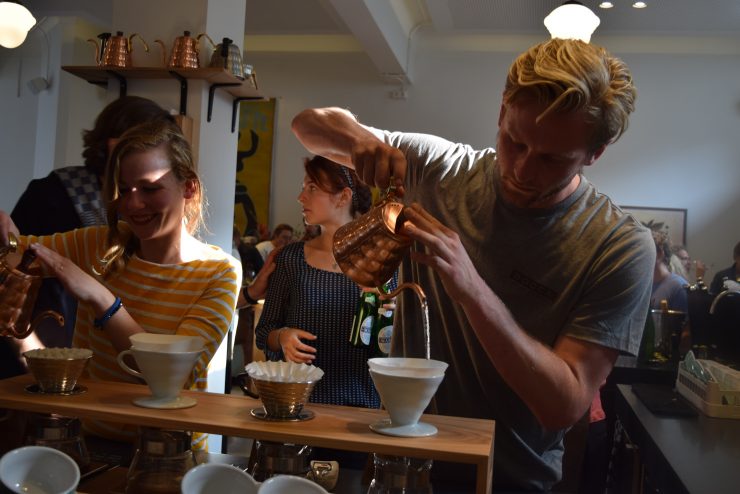
Altogether Bocca has fewer than 30 staff, with two to three baristas rotating shifts at the new flagship.
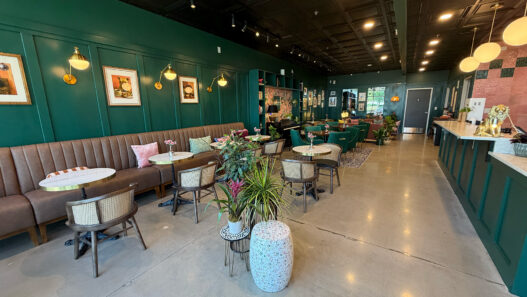
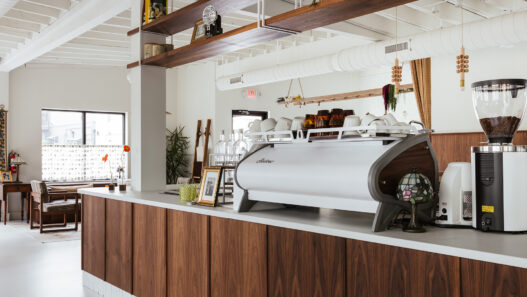
The store lies in the Spiegelkwartier, a neighborhood rife with antique shops and art galleries. Though in the prime real estate shadow of the Rijksmuseum, the property is exceptionally wide and airy. Most striking is the 18 meters worth of bar, a cut-out black-topped rectangle that naturally halves the room: a customer-oriented side for thirsty walk-ins and a training side for wholesale clients and workshop attendees. It was designed to compensate for the sparse seating—city zoning permits Bocca limited area for consumption, not a full-on cafe—and to be able to switch out equipment with ease.
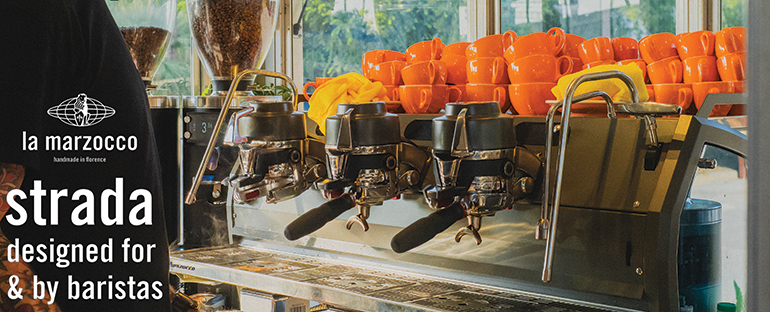
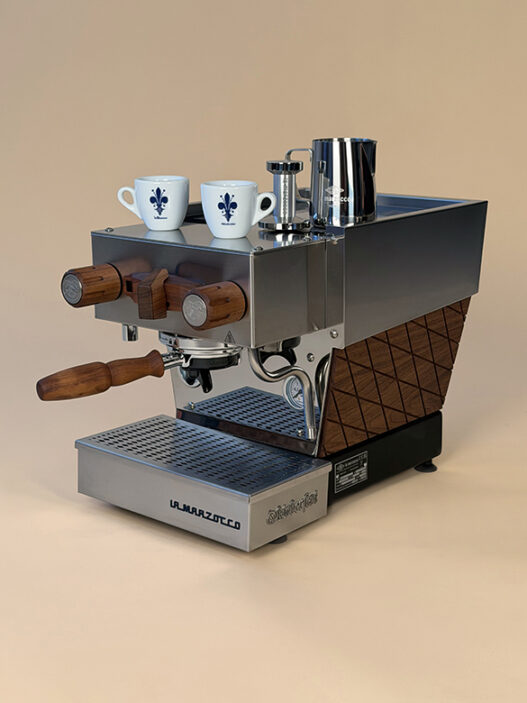
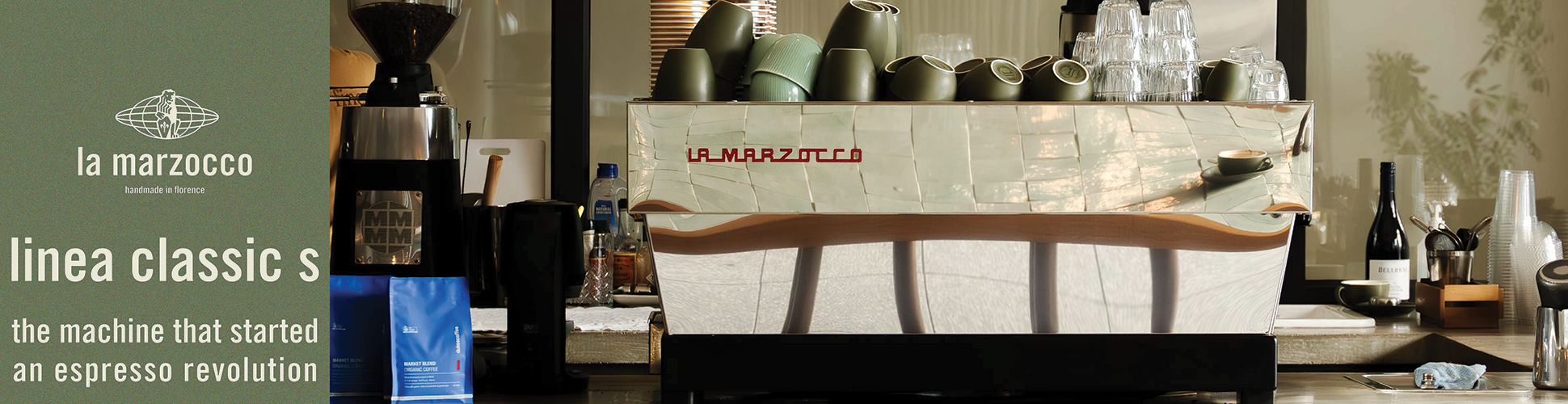
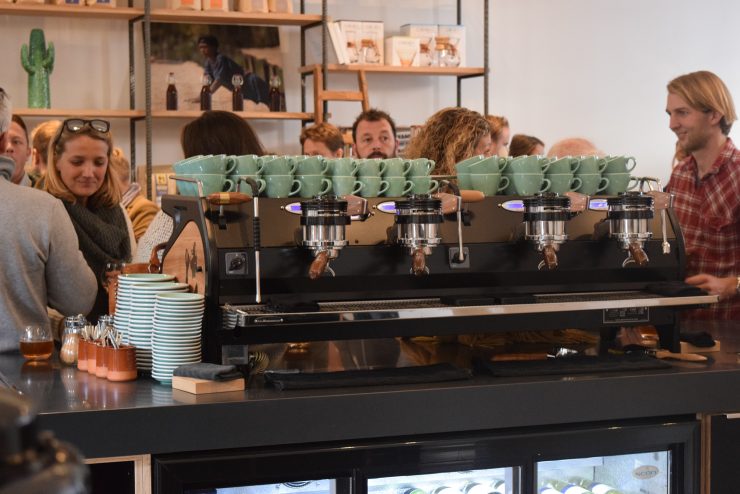
Their espresso workhorse is currently a customized La Marzocco Strada.
“We pushed Italian buttons,” Menno Simons laughs, recalling what transpired when the brothers requested non-production-model specs at the company’s factory in Florence. But the intra-Euro back-and-forth ended well, resulting in a custom-made four-group machine with a see-through rear panel. It lets waiting customers watch the steam boiler at work or, if at rest, simply admire the shimmer of copper piping. Bocca’s logo appears on the side paneling, made of wood that, like the bar, comes from an elm tree knocked down in a recent storm on a nearby canal.
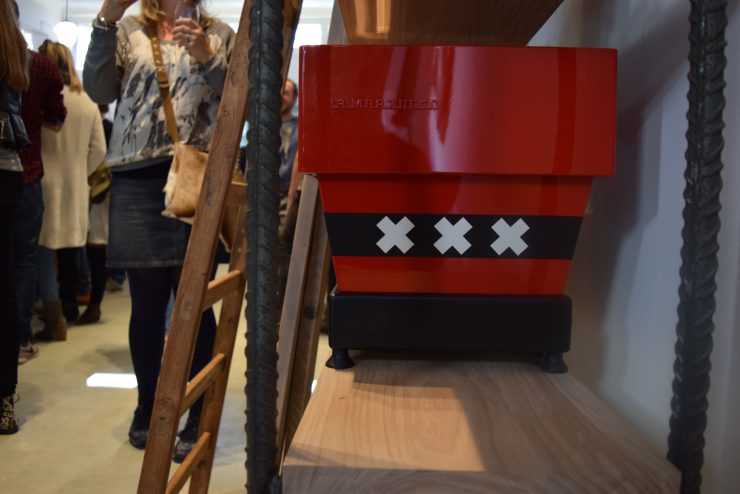
La Marzocco also represents in the form of a Linea PB, the model more familiar to many of their clients, and a Linea Mini, made for this year’s Amsterdam Coffee Festival and subsequently bought by the brothers. Bright red and black-belted, with a trio of white saltires lifted off Amsterdam’s coat of arms, the machine seems right at home. A three-group Synesso Hydra is on hand, too.
There are enough grinders for each day of the week: Mazzer Kony quadruplets, a Nuova Simonelli Mythos, a standard Mahlkönig EK 43, and a smaller, limited-edition EK. A triumvirate of AeroPress, V60, and Kalita Wave rules the filter coffee station.
On any given day, up to eight coffees are available, comparable to the wholesale offerings.
Bocca roasts an average of 3,000 kilograms a week, the bulk of it on a 70-kilogram Loring. They do that at their warehouse in Dronten, a small east-lying town about an hour away, closer to where the brothers grew up.
“The link to our roastery is very short,” notes Tewis Simons, referring not to distance, but to the coffee feedback he and his brother expect to reap at the store.
“Customers, prospects, but even competitors are invited to come and share knowledge,” elaborates Menno Simons. “We think we know a lot, but we also know that we do not know exactly where we are. So we’re trying to find out every day: where are we now? And how can we get better?”
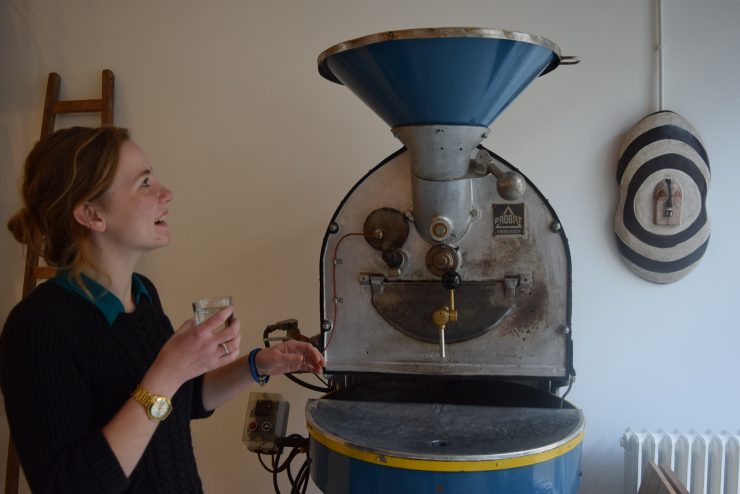
And as for the old roaster that, like a float, guided the Sunday marchers through town? It has a new purpose at its new location. Post-parade, at Bocca’s opening party, attendees in want of post-espresso hydration found out if they pulled on the Probat’s small knobbed tap—out came a stream of reverse osmosis water.
Karina Hof is a freelance journalist based in Amsterdam. Read more Karina Hof on Sprudge.