







Anaerobic fermentation is a divisive issue in the world of specialty coffee. Some love it, especially for its ability to deliver big flavors that provide many fledgling coffee lovers their first aha moment. Like a natural coffee on big juicy steroids. Others hate them, for similar reasons. The flavors can be like a battering ram assaulting the tastebuds, washing over much of a coffee’s delicate nuance. My personal take exists somewhere in the middle. That anaerobically fermented coffees produce interesting flavors and are best served in small drinks, like an espresso, because anymore than that and I’m good. Likewise, it seems a technique best suited for lower grade coffees to enhance their flavors; I have no idea why anyone would do this to a Pink Bourbon or a Gesha.
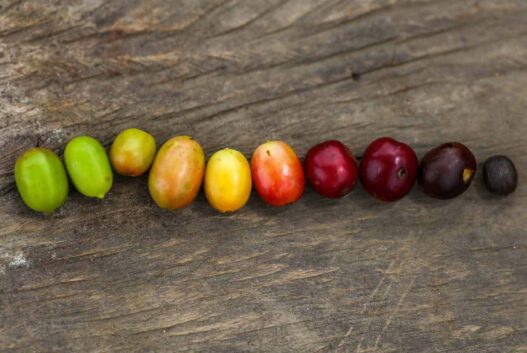
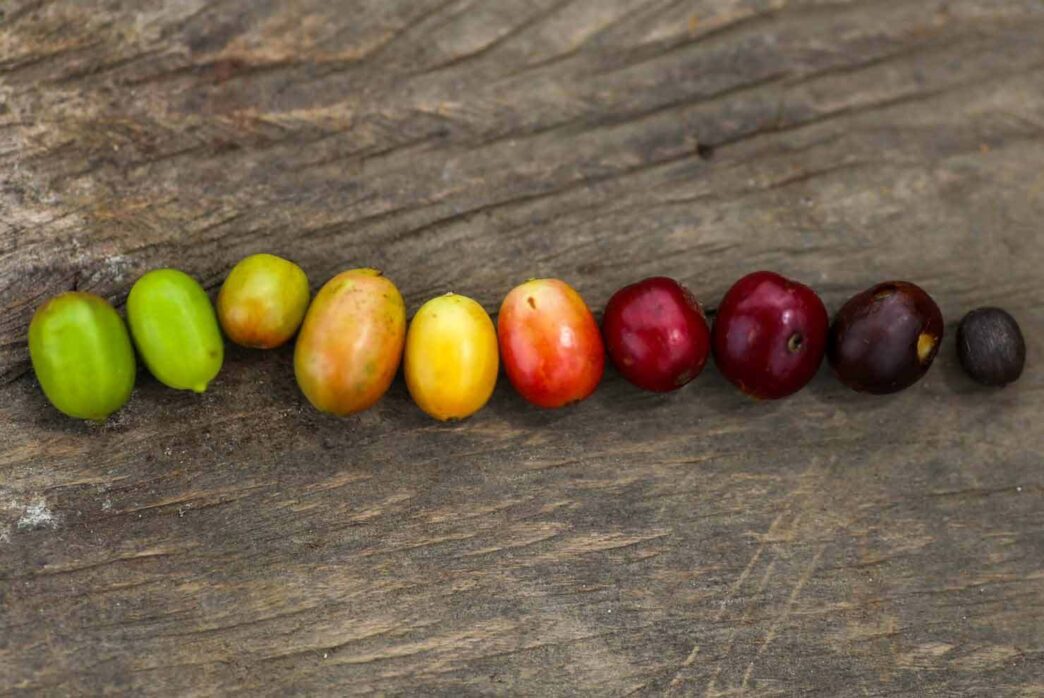
It’s this latter idea that a new study has examined and pushed to extreme ends. Researchers have taken unripe coffee cherries and processed them via different anaerobic fermentation methods and found they scored higher than non-anaerobically fermented ripe cherries.
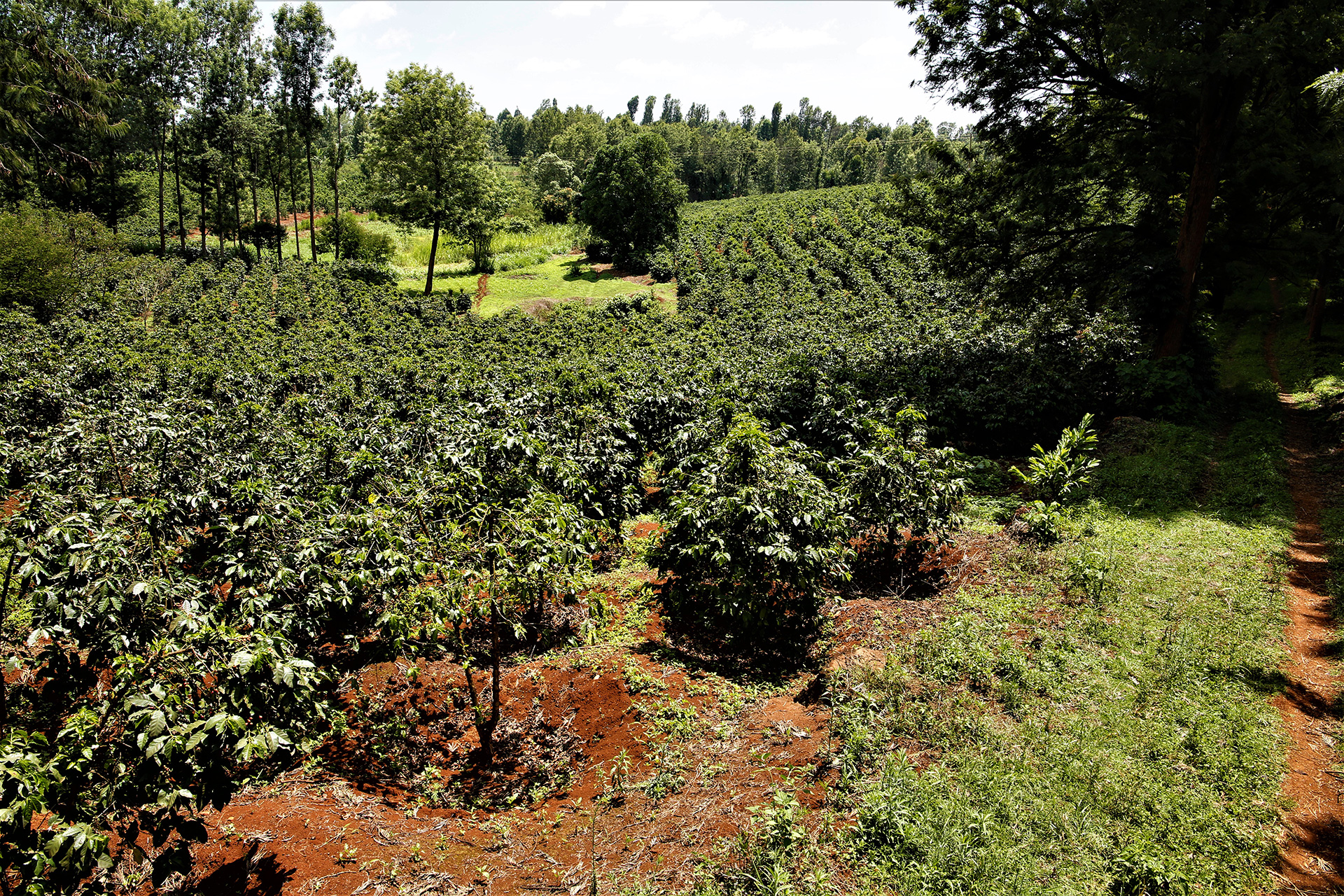
As reported by Phys.org, the article was published recently in the journal Food and Bioprocess Technology and is the work of a cohort of researchers from Brazil’s Federal University of Uberlandia. For it, they concentrated on the Arara variety of coffee, that was released in 2012 and since become popular in Brazil for its disease resistance and ability to grow in a variety of climates. The coffees used in the experiments were produced on Fazenda Chuá in Patos de Minas, and based on the findings of an AI tool developed by the researchers, a total of 70% of the coffee cherries used were unripe.
They tested a total of 32 different fermentation parameters, including times ranging from 24 to 96 hours, with and without temperature control, inoculation with specific yeast strains, and fully submerged for water-less fermentation.
The coffees were then cupped using SCA protocols, and they found that the unripe coffee fermented at a constant temperature of 27 °C was observed to score higher than the same un-aerobic fermented coffee containing only ripe cherries.
And here’s the real kicker: some of the unripe coffee wasn’t even roasted. Green coffee comprised somewhere between 13% and 30% of the preferred beverage. The authors note that this may be the upper limit of the green coffee additive, though, adding that they believed at 70%, the fermentation wouldn’t be able to counteract the astringent qualities of unroasted coffee.
The next step for the group, per Phys.org, is to determine what compounds in the fermented green coffee are responsible for the positive sensory attributes and to see how the anaerobic fermentation can impact other varieties.
Say what you will about anaerobic fermentation in coffee, this research seems to pretty conclusively show its ability to enhance the flavor—and thus the value—of a coffee, especially one that may not otherwise reach specialty grade. And in a world where the price of a coffee is precarious and volatile, a post-harvest technique to make it even better is undoubtedly a good thing. But please, leave my washed Pink Bourbons alone.
Zac Cadwalader is the managing editor at Sprudge Media Network and a staff writer based in Dallas. Read more Zac Cadwalader on Sprudge.