






Last week, the city of Portland, Oregon passed a measure banning the sale and service of force-fed foie gras in restaurants. The ordinance comes with a fine of up to $5,000 for a violation. It is not the first of such bans in the US. New York City, Pittsburgh, Brookine, MA, and the entire state of California have previously prohibited force feeding for foie gras. Outside America, 20 countries have banned the practice.
In most, if not all, instances the laws are due to unethical treatment of animals. Force-feeding creatures, in this case birds, often ducks, in order to create fattier livers is deemed cruel and unusual. Which certainly sounds a whole like a certain processing method used in niche—but oddly visible—sectors of the coffee world. And it has us wonder, is kopi luwak next?
For whatever reason, presumably the abject bizarreness of it all, kopi luwak is one of the most known types of coffee by the general public. Somewhere along the lines of Kona and Jamaica Blue Mountain.
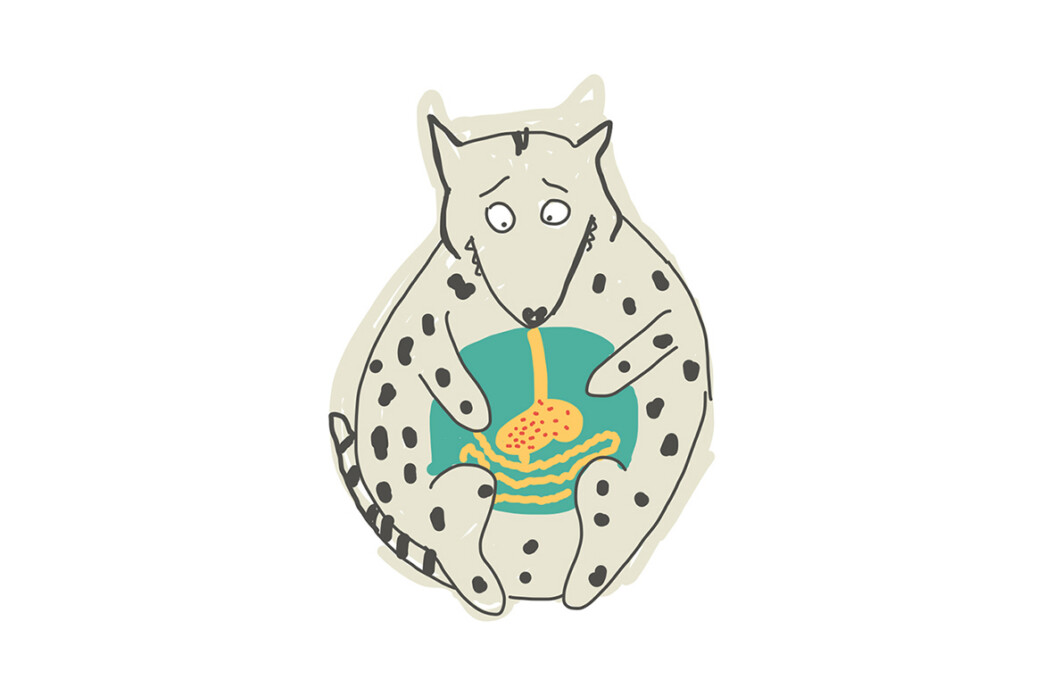
For those blissfully unaware of what exactly kopi luwak is, it is the coffee produced by a cat-like creature called a civet. The civet eats coffee cherries, which get processed in its stomach, and then pooped out its butt. It is believed that kopi luwak dates back to the 18th century, when Dutch colonists in Indonesia noticed civets eating coffee cherries and decided to pick the seeds out of their scat, and turns out, it produced a better tasting cup than anything else available at the time.
This was due to the civets only eating the ripest cherries, more akin to modern picking practices than methods at the time. And in an effort to commodify the practice and increase output, it led to individuals force feeding cherries of varying quality to civets kept in captivity. Which of course has the opposite result in terms of quality, leaving only an extremely marketable animal cruelty.
A lot has changed in farming and processing practices in the centuries since kopi luwak was discovered, to the point where a coffee that rightfully tastes like it has passed through a cat’s rectum is no longer the best tasting coffee option, not by a long shot. Still, the practice remains. Not only that, it has expanded. To elephants and tigers and any other exotic-enough sounding animal that folks believe they can charge a premium for it. Within the last year there has even been a scientific analysis of the processes taking place inside a civet’s stomach to create the coffee.
And with foie gras being banned, especially in a coffee-loving city like Portland, one can’t help but wonder if kopi luwak will be the next cause taken up. Should it be? Is it government overreach to police what we eat? Or is it the government’s very job to protect not only animals but people from their baser instincts? But should—or should not—and will are often different things. It stands to reason that a kopi luwak ban may appear somewhere just over the horizon; if animal cruelty via force-feeding is the metric, kopi luwak meets the criteria. (There is also “ethically produced” kopi luwak, but it still tastes like kopi luwak.) Will it be? I don’t know. Should it be? No idea. But will it be? Who can say. We’re just asking questions.
Zac Cadwalader is the managing editor at Sprudge Media Network and a staff writer based in Dallas. Read more Zac Cadwalader on Sprudge.