








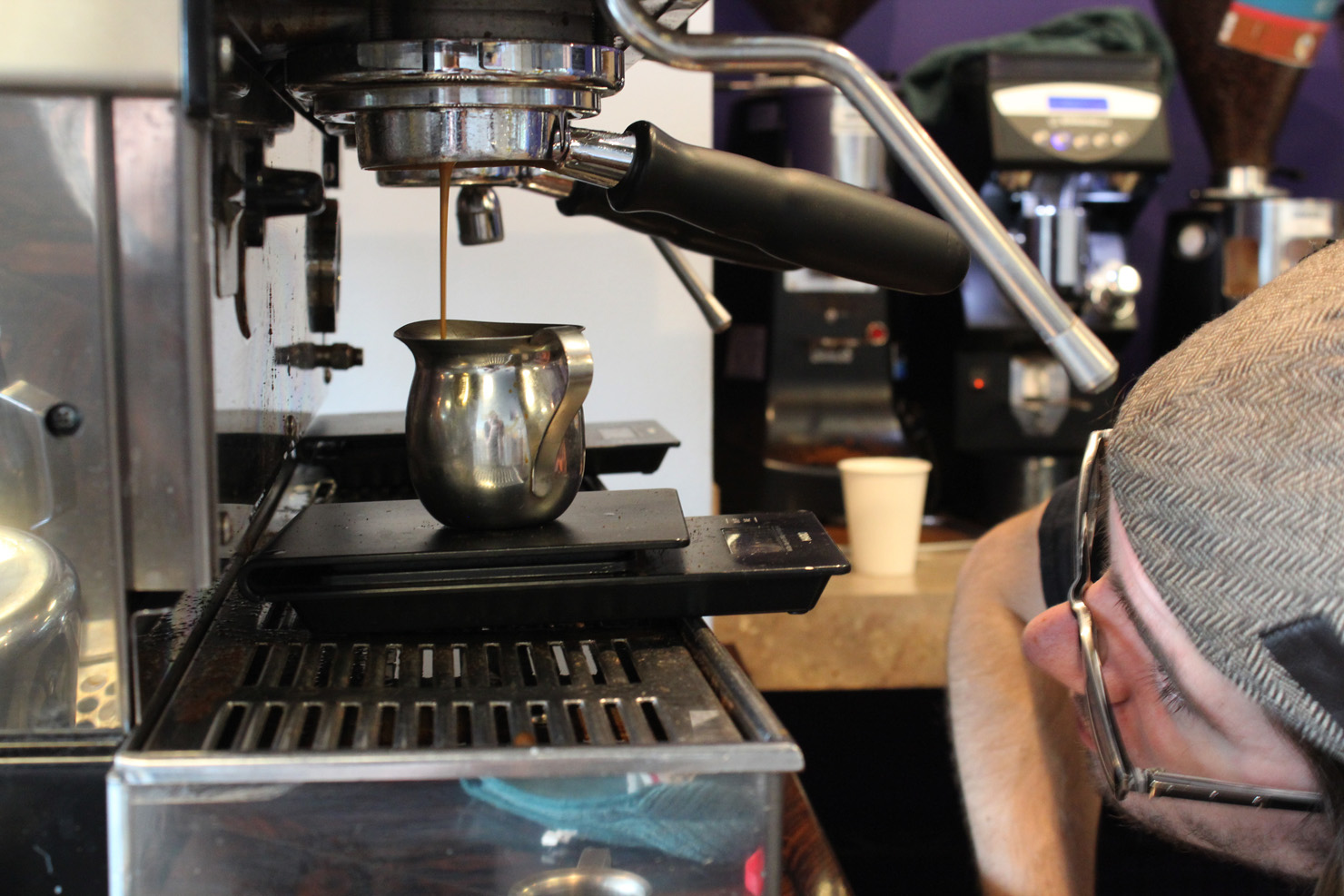
When it comes to espresso machines—or more specifically, the difference between a proper espresso machine and a machine that makes espresso-like drinks—the gold standard measurement is the amount of pressure it can produce. Nine bars, that’s the inflection point. If a machine can produce nine times that of the atmospheric pressure, then it makes espresso. Anything less and it’s merely espresso-like.
But not so fast, says researchers from the University of Warsaw. The team of physics examined how pressure effects the flow of water through an espresso bed and things start to go haywire well before the nine bar mark.
As reported by Earth.com, the research, which was published recently in the journal Physics of Fluids, started from a question asked by a barista at the Warsaw Coffee Conference: what’s the deal with channeling?
In coffee brewing, and even more so in espresso where pressure comes into play, hot water will take the path of least resistance through the brew bed. With enough added pressure, the water can essentially bore a hole in the coffee bed to create a channel. The water that passes through it doesn’t come into contact with the coffee grounds, leading to an under-extracted, often sour shot.
To better understand what’s happening, the researchers pulled shots at pressures ranging from one to 12 bars and recorded pressure readings and output volumes 10 times a second. They found that up to five bars, there was a linear relationship between the amount of pressure applied and the total output. Double the pressure, double the output.
That’s where things started to get weird. More pressure no longer meant more flow but in fact the opposite. Eventually, the output slowed to a trickle. The reason for this, according to the researchers, is that the additional pressure basically pinches closed the pathways the water had previously been using.
Each of the shots followed a similar pattern. For the first five to 10 seconds, the water soaks the coffee bed, pushing out all the air and causing the grounds to swell. After that, the flow continues to increase as the pressure does, extracting compounds from the coffee grounds. But if allowed to run long enough past the five bars of pressure, the output begins to slow and ultimately settle at a lower rate.
Per the research, after 30 to 40 seconds, the solubles in the coffee has dissolved, leaving a material, called porolastic, that holds liquids in its pore while also bending to pressure. And it is this material that begins to compress and choke the extraction under higher pressures. (Now, should you be pulling shots past 30 seconds anyway?)
The researchers now plan to do the same experiment again but with clear glass beads instead of coffee ground in order to better visualize what it happening inside a high-pressure shot.
So maybe it’s not the grind that’s choking your shot. Maybe the pressure is too high. And spoiler alert, nine bars may be too high. I fully expect this research to be incorporated into, in not a World then definitely a US Barista Championship routine in the next two seasons.
Zac Cadwalader is the managing editor at Sprudge Media Network and a staff writer based in Dallas. Read more Zac Cadwalader on Sprudge.