










There has been a push in coffee growing, and global agriculture at large, toward a more holistic approach to production. Beyond “organic”, many farmers to incorporating biodynamic and/or regenerative practices, which works with the land to ensure its health and that we aren’t taking more than we are putting in. These methods eschew pesticides and chemicals that can harm both the earth and what it produces.
And new research finds just how complicated these practices can be. A recent study of a Puerto Rican coffee farm finds that some of the ecological forces aren’t linear and can drastically effect a producer’s management strategies.
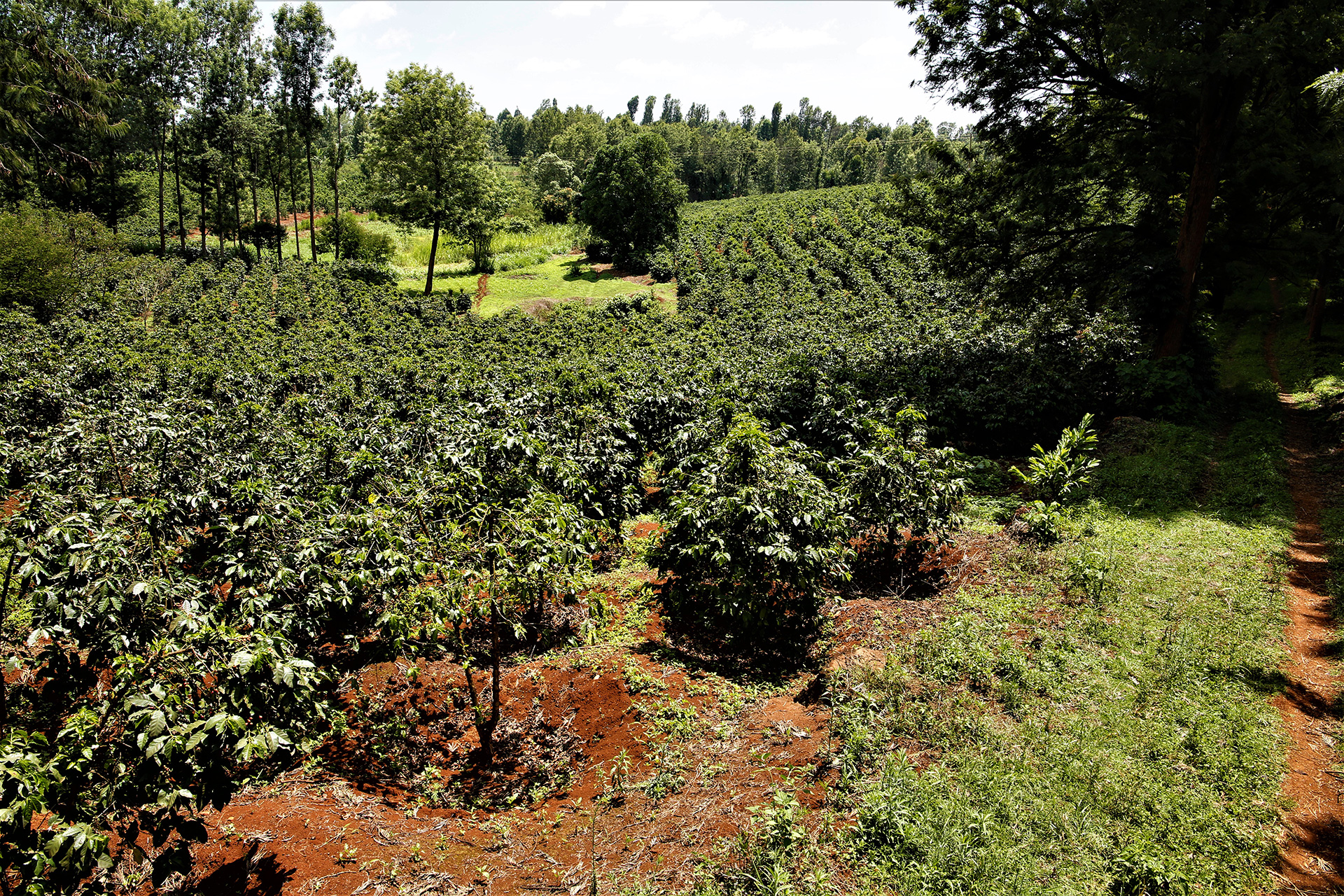
As reported by Science Daily, researchers from University of Michigan’s School of Environment and Sustainability examined the interactions between three different species of ants as well as a predator fly over the course of a 30-year period on a coffee farm in Puerto Rico. Pest management strategies on farms, especially ecologically minded ones, require an understanding of the innerworkings of the various species in order to accurately predict which will be the dominant one at a given time.
Some species of ants act as a sort of pest control for farmers. In this particular research, two of the species worked to that end, thus understanding when they will be more active and present can better equip farmers with strategies for pest management.
But what the researchers found was that the interactions between the four species were too complex for simplistic forecasting.
For the study, researchers looked at two types of ecological behavior. The first is intransitive loop cyclic behavior, which is basically a game of dominant species rock, paper, scissors, where A beats B, B beats C, and C beats A. The second is predator-mediated coexistence, where a predator feeds on a particular species has downstream effects the non-dominant species.
On the Puerto Rican farm, there is a particular species of ant that dominates the other two, and a predator fly was introduced that feeds on that particular species. This adds chaos to the ecological system, and any of the four study species could at some point be the dominant one. This follows the predator-mediated coexistence model.
But as the appearances of the predator fly and its prey alter, it creates an oscillation in the dominant species. By combining these two systems, the researchers were able to track which ecological behavior the four species were operating within at a certain time and could, theoretically, then predict which species would be dominant.
If so, the information could better help farmers strategize on when pest intervention intervention would be necessary versus when a beneficial ant species may be dominant and thus doing much of the pest control naturally.
More than anything, the study shows just how complicated ecological farming practices can be. It’s not as simple as composting and avoiding pesticides. It requires an intimate understanding of the environment, which can be chaotic. It’s further proof that producers operate somewhere between agriculture and craft, and it’s why they should be paid for more their work.
Zac Cadwalader is the managing editor at Sprudge Media Network and a staff writer based in Dallas. Read more Zac Cadwalader on Sprudge.