







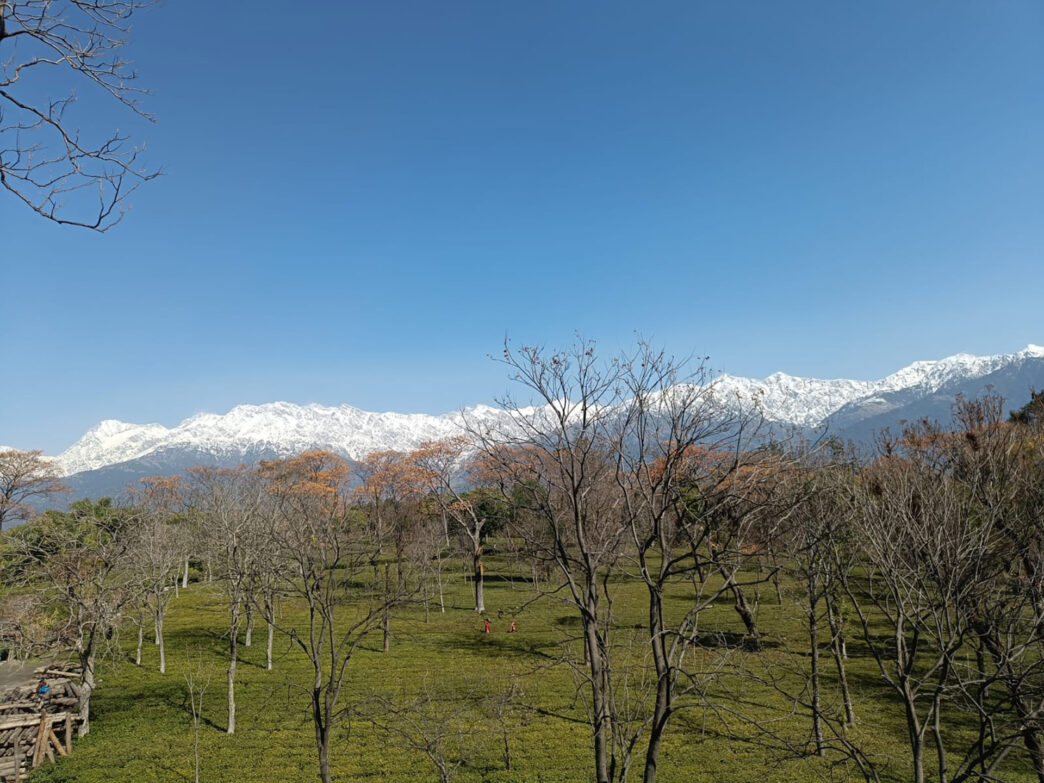
The arrival of the first flush is a highly anticipated moment at any tea estate. As I planned my visit to the Wah Tea Estate, I hoped to witness this moment first hand—to see the tender two leaves and a bud being plucked. Nestled in the picturesque Kangra Valley, at the foothills of the snow-capped Dhauladhar mountains in Himachal Pradesh, India, the estate promised a breathtaking backdrop to this seasonal ritual. But to my luck, or perhaps misfortune, I arrived just a little too early. The first flush had been delayed, a subtle but telling sign of the changing climate. The bushes were only beginning to stir, their fresh green tips just emerging, teasing me with the promise of what was to come.
The Wah Tea Estate is the largest tea plantation in Palampur and the greater Kangra region, stretching across 526 acres. The estate—home to tea plantations, a tea factory, cafe, lodge, tea shop, and tasting room—crafts Kangra Orthodox black and green teas, made exclusively from the original Camellia sinensis cultivar.
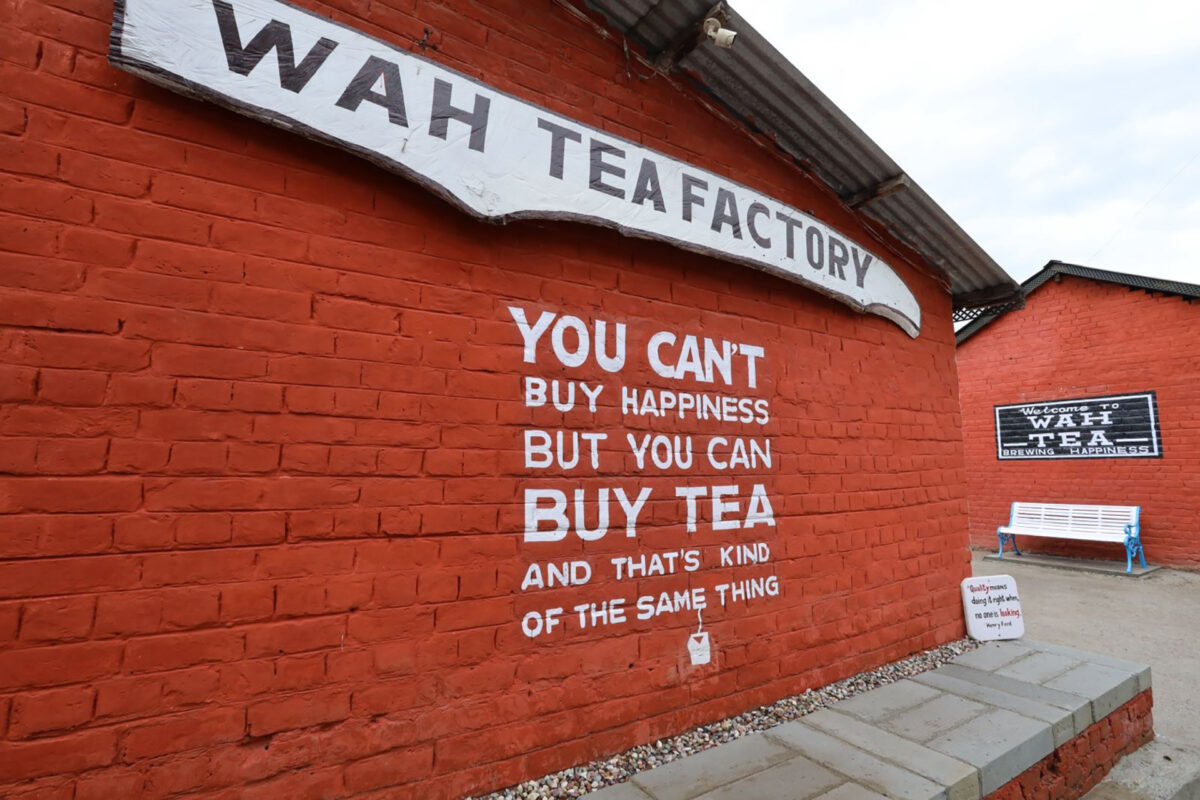
I was warmly welcomed at the Lodge at Wah by Surya Jai Prakash, the fourth-generation planter who manages the estate’s operations, and his family. Envisioned by his father, Deepak Prakash, the Lodge exudes an understated sense of luxury, thoughtfully crafted with locally sourced materials and traditional techniques that honor the region’s architectural aesthetic. Set within the workings of Wah, both the Lodge and the Estate offer guests multiple opportunities to immerse themselves in the art of tea-making. Guided tea tours and tasting sessions showcase a variety of estate-grown brews, offering a deeper appreciation of Kangra’s rich and often overlooked tea heritage.
The heritage is complex and its legacy spans across the Himalayas, from Assam in the northeast to Kangra in the north. By the 1800s, Britain’s global empire was faced with the challenge of supplying tea to the obsessive tea-drinking population back home. Tea had long been grown in the hills of Assam, located in northeastern India at the foothills of Himalayas, many years before the British set foot in the region. However, the Empire brought its own desire and expertise (including those hired in from China) for growing the crop in Assam. As part of another effort to cultivate and secure a stable tea supply, a Scottish botanist named Robert Fortune, was dispatched on a secret mission to China to smuggle out tea plants along with the closely guarded knowledge of tea production. This Chinese varietal was cultivated in Himalayan valleys of Nepal: Darjeeling, Dehradun and Kangra.
As part of this expansion effort, the British established the Wah Tea Estate in 1857 in Palampur, Himachal Pradesh. The estate thrived through decades of continuous cultivation and even withstood a devastating earthquake in 1905. It was later acquired by Sir Sikander Hayat-Khan, son of the Nawab of Wah in present-day Pakistan, who named the estate after his birthplace. Fittingly, “Wah” translates to “wow”, a sentiment visitors are likely to share upon experiencing the estate.

The estate was bought in 1953 by the great grandfather of Surya Jai Prakash, who now oversees the manufacturing process at the estate and the affairs of the lodge. Hailing from a family of tea growers, Surya grew up immersed in the world of tea. The lush green bushes of the estate and the inviting warmth of the lodge reflect his dedication to crafting the perfect cup and creating an experience that truly embodies the journey from garden to cup.
Tea estates in India are renowned for their black teas, crafted using the orthodox method, where each batch of freshly plucked leaves undergoes withering, rolling, and oxidation, carefully guided by a tea master to bring out the tea’s rich and complex flavors. While black tea production in the Kangra valley follows the same orthodox method, its flavor profile sets it apart from typical Assam and Darjeeling teas, featuring mild sweetness and a hint of pungency. In addition to manufacturing black teas, Wah has also been successful in blending the precision of Chinese tea tradition with the rich and diverse terroir of India. They have mastered the art of making pan-fired green, oolong and white teas.


My company, Dona, sources its oolong and white teas from the Wah Tea Estate, and during my visit, I was eager to gain a deeper understanding of how both small batch teas are produced. During a guided tour of the factory, I met Wah’s tea maker, Rudra Sharma who shared compelling insights into how true tea making begins not in the factory, but the tea garden. He brings with him three decades of experience from Darjeeling, now channeled into crafting a distinctive, darker oolong in the Kangra Valley that is smoky, pungent, and full of character. A master of his craft, he meticulously tracks the local weather conditions—temperature, humidity, and rainfall—to determine the precise moment to halt oxidation by roasting the leaves over low heat. The oolong is hand rolled to ensure that the leaf is carefully treated and only made in small batches. The first tender leaves of the season’s flush are reserved for crafting white tea. Wah’s white tea is something special—delicate, nuanced, and with a taste that evokes the freshness of rain. The tea undergoes minimal processing, allowing the leaves to retain their subtle flavors and aromas.
While walking through the tea estate, I noticed a few workers spraying the fields and initially assumed it was a conventional pesticide. Curious, I asked what they were using and was pleasantly surprised to learn it was a natural blend made from lemongrass and galgal (a citrus native to the Himalayas) both of which are cultivated alongside the tea. This eco-friendly practice is part of the estate’s transition to organic farming, which began two years ago. I also discovered that the soil is enriched with in-house biochar, produced from pruned tea bush wood at the end of each season, further supporting the estate’s commitment to sustainable cultivation.


As the full range of Wah’s teas was laid out before me for tasting, I was impressed by the mastery behind each cup. The estate’s deep respect for the leaf is evident in their carefully crafted brews. To my delight, I learned that the taste of oolong can be tailored to suit the preferences of Dona and its customers. It was encouraging to see how Wah thoughtfully brings together local traditions and the craft of tea-making. I left the estate with plenty of tea and a quiet hope to return someday and witness the energy of a full flush firsthand.
Navdeep Kaur is a freelance journalist based in New York City, and a tea professional working with Dona. Read more Navdeep Kaur for Sprudge.
Sprudge Media is proudly partnered with Dona. A complete list of current Sprudge partners is available on the bottom right-hand side of this and every article published on Sprudge.