










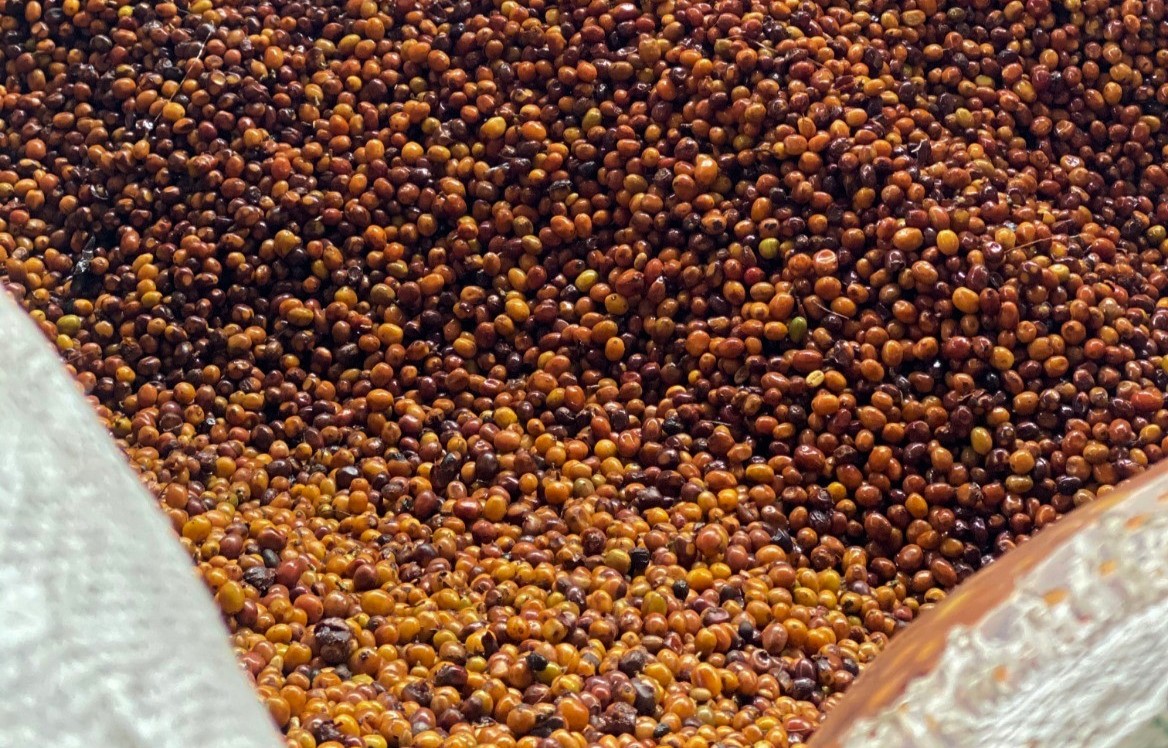
A practice originating in wine, co-fermentation in coffee is a method of allowing coffee, during processing at the farm or mill, to ferment alongside non-coffee ingredients. Fermentation is a part of any coffee’s journey from farm to your cup, and is a defining stage in flavor development within the bean.
Co-fermentation of coffee is commonly done with fruit, with the goal of influencing the ultimate flavor profile of the coffee towards more complex, often sweeter, flavors. Some of the fruits people co-ferment with coffee include melon, orange, peach, strawberry, grape, passionfruit, lychee, and (yikes!) banana. Other ingredients, like fresh mint and yeast, are also used to co-ferment and stimulate specific microbial activity.
Co-fermentation differs somewhat from infusion, which can refer to any additives brought to the coffee at a later stage, e.g. soaking coffee beans in bourbon, spraying coffee beans with flavored oils, and so on. Though some may call co-fermentation “infusion”, all infusion is not co-fermentation.
Sounds… interesting. Is this part of a greater movement towards experimental processing in general?
Yes. Controlled fermentation of many kinds has become trendy in specialty coffee in the past decade, with experimental producers tinkering more and more with temperature changes, oxygen-deprived environments and other adjustments (such as in anaerobic fermentation, thermal shock, etc.) Many find these processing methods offer exciting potential.
Co-fermentation “is expanding the possibilities for exploring new sensory expressions in coffee, combining creativity and a deep understanding of the fermentation process,” says coffee scientist Valentina Osorio Perez, an expert on the subject at Colombia’s National Coffee Research Center, Cenicafé.
Colombia happens to be a coffee-producing country where co-fermentation is truly taking off, so it stands to reason Cenicafe is keeping a close eye. The institute has been researching the effects of different styles of fermentation on sensory qualities, along with observing the exact chemical processes taking place. Dr. Osorio-Perez points out that the practice can go well beyond novelty into fomenting genuine economic impact for farmers.


“From an agricultural standpoint, co-fermentation can offer benefits if implemented responsibly and transparently,” she says. “It can generate added value, open new market niches for coffee growers, and promote sustainable practices using local resources.” She adds the caveat, however, that “it is crucial that these processes are developed with traceability, control, and technical training, to ensure they are safe, repeatable, consistent, and truly beneficial for the entire supply chain.”
But aren’t some people really against co-fermented coffees? Don’t some people find these coffees nasty?
Look: purists gonna pure. For many coffee aficionados, adding an outside ingredient to coffee at any stage is considered unseemly—and for these folks, tossing a banana in during processing is simply a bridge too far. Some criticisms of coffee co-fermentation include its potential for triggering allergies/lack of full ingredient transparency, the sense that it is “cheating” in competition or sensory evaluation, and even that the practice is “deceptive”.
In competition circles, co-ferments have seen a mixed reception, with allowance for co-fermented coffees in the World Barista Championship made only as recently as 2023. In Panama, co-fermented coffees were notably rejected from the 2024 Best of Panama competition.
As the saying goes, one person’s passionfruit co-fermented Pacamara is another man’s poison!
Okay, I’m intrigued. But can a casual coffee drinker really taste the difference?
Yes, it’s very easy for even a non-professional coffee taster to detect strong added fruit notes and other novel flavors in a co-fermented coffee. You’ll likely pay a higher price tag—experimental coffees are, by their very nature, more expensive. But as a coffee lover, does being on the vanguard ever truly have a price tag? (Yes. Of course it does. We kid. But try a cup if you can, and decide for yourself.)
Liz Clayton is the associate editor at Sprudge Media Network. Read more Liz Clayton on Sprudge.