





There is only one constant in the world of coffee tariffs and it is chaos. On Friday, the Trump administration announced an exemption from the “Liberation Day” tariffs for a host of imports not produced domestically. One of them is coffee. It was monumental news, with the National Coffee Association President and CEO Bill Murray releasing a statement that same day praising the move.
Then Saturday came, and Brazilian Vice President Geraldo Alckmin stated that actually, there’s still a 40% tariff on Brazilian coffee. And that should tell you all you need to know about the current tariff situation.
So what gives? Is this all just a big rug pull? A big beautiful headline without any follow through? Technically speaking, the Liberation Day tariffs, the 10% reciprocal tariffs applied across the board to all trading partners, are no longer applicable to things like coffee, tea, tomatoes, avocados, tropical fruits, and spices. That much is true, including those commodities coming from Brazil. The issue is that, at the beginning of August the US government applied an additional 40% tariff on Brazil, which many believe is in retaliation for the prosecution of former Brazilian president and Trump ally Jair Bolsonaro (who went on to be found guilty of attempting a coup and was sentenced to 27 years in prison). And this tariff is still in place.
Vice President Alckmin is judicious in his response, calling the 10% reduction “positive” and a “step in the right direction,” which it is, but only incrementally so. The tariff exemption was meant to provide “substantial relief” for consumers, who are suffering from rising grocery store prices (and blaming the president for). But as far as it concerns coffee, one of the key bellwethers, any exemption that doesn’t fully include Brazil won’t quite move the needle in the same way. In fact, removing the 40% tariff from Brazil alone would have a greater overall impact than removing the global 10% tariff. Because that’s just how much coffee we buy from them.
If you want to have an idea of how this is affecting coffee prices, here’s a graph from Investing.com showing the movement of Arabica futures prices today.
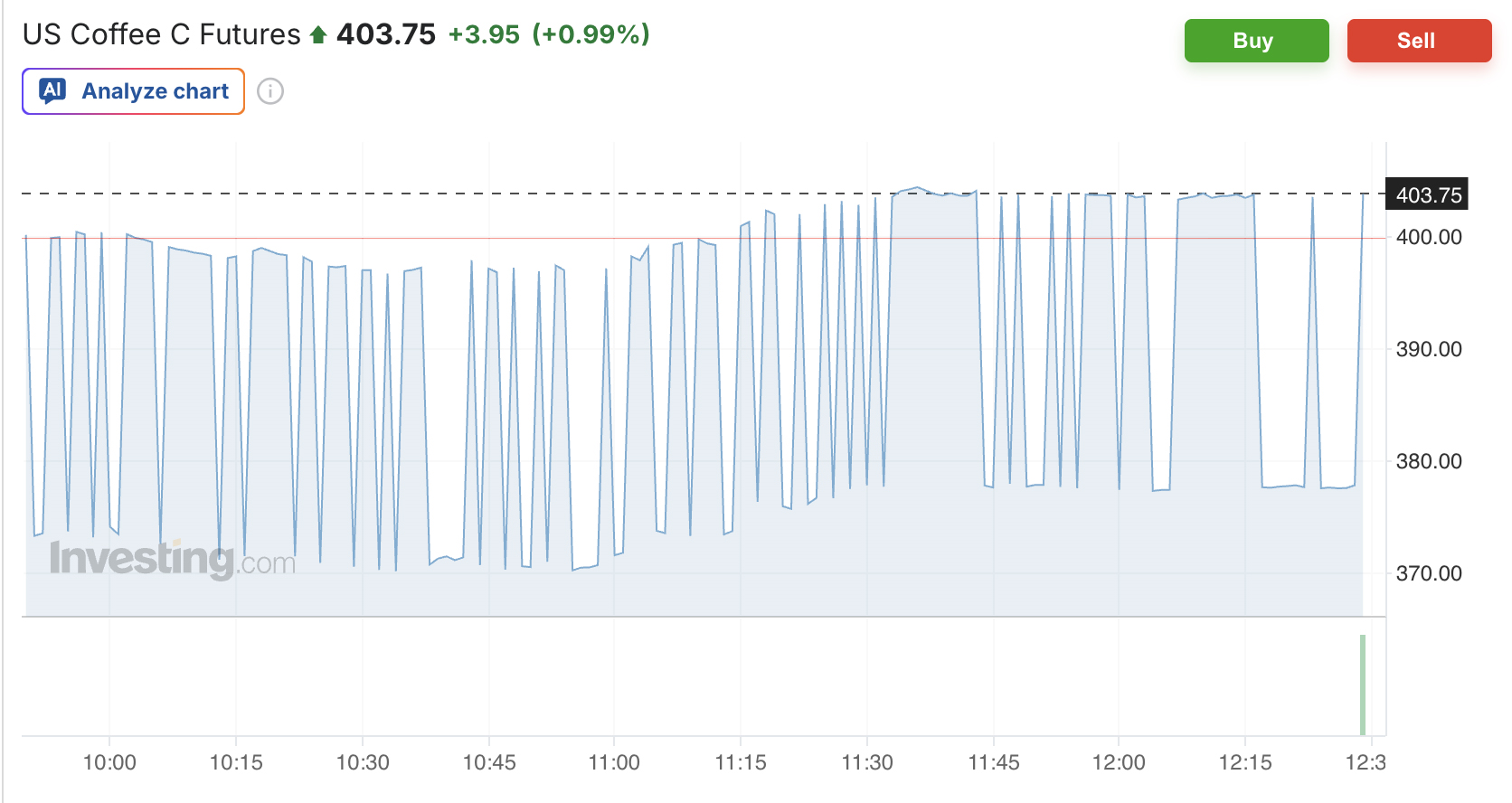
It looks like the transcript for a ping pong match. Thus the coffee industry remains in turmoil. The only certainty is uncertainty, and it will remain that way so long as America, the world’s largest buyer of coffee, and Brazil, the world’s largest producer, are in a trade war.
Zac Cadwalader is the managing editor at Sprudge Media Network and a staff writer based in Dallas. Read more Zac Cadwalader on Sprudge.