






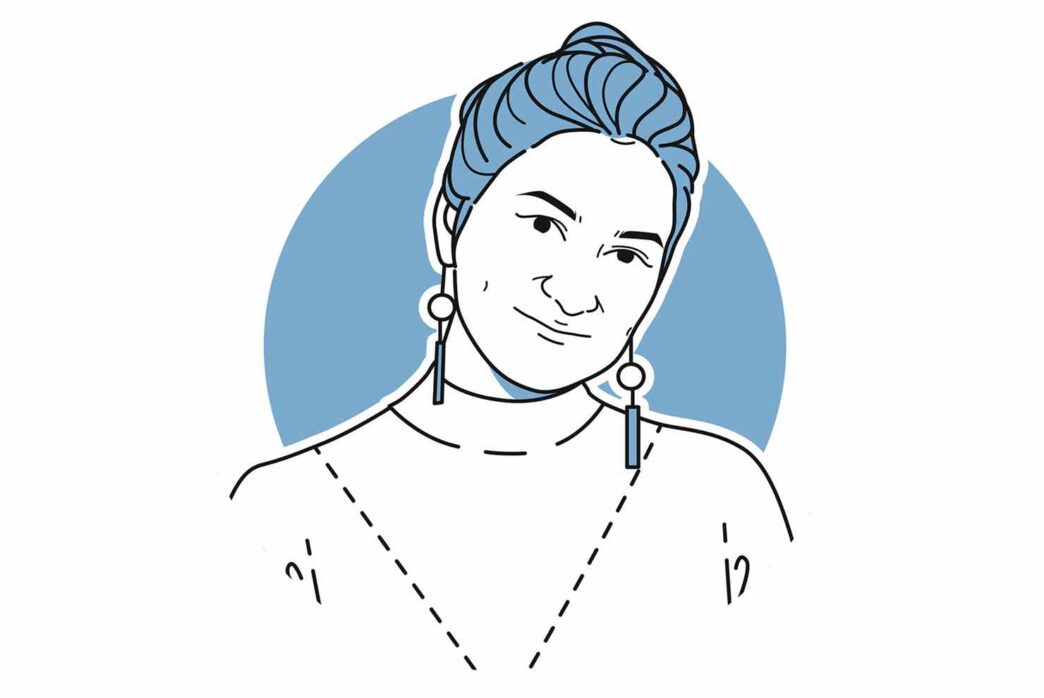
Welcome to The Sprudge Twenty Interviews presented by Pacific Barista Series. For a complete list of 2025 Sprudge Twenty honorees, please visit sprudge.com/twenty.
I am completely biased writing this nomination, yet I am also in the perfect position to write it.
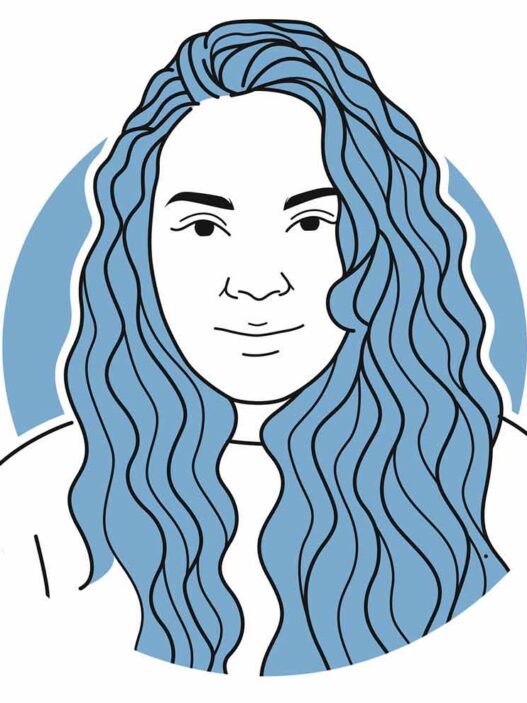
Areli is my life partner (June 14th will be 15 years) and business partner (December 10th will be 15 years), who heads up and is the green buyer for Little Waves Coffee. She is exceptional via the everyday. Though she would be uncomfortable having me say that, her way of work, looking at the world, empathizing with people deeply affect the ongoing development, questions, relationships, and results that she leads and causes to become real via our roastery.
Her work is quiet, consistent, and impactful. She prefers to work more than talk about work. She leads by working hard with and alongside her team, living her values, caring for others, and growing along with and in front of the people that she leads and partners with, whether they are working along side her in the roastery, or across the planet as partners.
Yet her voice is deeply impactful. The most clear public version of what I am describing may be seen in the second half of the coffee episode in the Apple TV+ docuseries, Omnivore. She skips an ego-centric method of sourcing coffee (a way that while easier and trendier that cherry picks rare coffees alone and only when convenient for the roaster) in favor of a program that connects quality, relationship, impact, top quality lots and just as much specialty coffees that allow for ongoing commitments to partners through time.
Little Waves is a Latina-led, women-forward, specialty coffee program that seeks to serve top quality coffees that deeply and honestly connect quality, relationship, and impact. As the green buyer, Areli sources an integrated array of offerings to express this ongoing work.
Areli is an immigrant. Born in Mexico, she moved to the US at age six. Though she prefers working in the background, Areli has grown to see the effect of her own voice particularly on women, Latinas, and others and because of that goes beyond her comfort zone to speak at events where other women, entrepreneurs, girls, etc… such as Duke Fuqua, on Apple, but at least as much in schools and in women’s groups. She quietly supports and bonds with other women, Latinx and striving coffee pros and startups alike.
Her work shows in the results and people who surround her. Her roastery team of seven is comprised completely of women of color, many immigrants and first generation. Instead of recruiting ready to go pros, she has developed from within. If asked, I imagine, that in addition to her team, way of work, and the coffees themselves, Areli would be most proud of her work as a founding board member with the Coffee Coalition for Racial Equity.
One of the challenges of her work and describing how she leads at LW, is that her approach includes layers and dedicating to pragmatic long game impact. While there is a deep social side to her work, she also sources and shares some of the top coffees on the planet including long relationships with Edwin Noreña, Jose Giraldo, and newer ones (via my participation in the ZHAW Coffee Excellence Center program along side them) with Mauricio Shattah and Alexandra Engfer Peterson (Hacienda La Esmeralda).
Sprudge noted some of these coffees in a recent article.
Yet while she sources from the top rare producers such as them who need no introduction, she is driven to find the next top rare coffee from a woman, and considers how her buying power can play a part in letting a female producer take a chance to experiment and break into the top tier. Areli is a super taster with natural and learned tasting ability that has wowed partners such as Edwin Noreña and our Q teacher Jodi Wieser.
Most of all she is a dedicated and reluctant leader whose reverberations go well beyond what I have described here.
Nominated by Leon Grodski Barrera
How many years total have you worked in the coffee industry?
16
What was your first coffee job?
Front of house and then barista at the only coffee shop in Cherokee, NC at that time.
Did you experience a life-changing moment of coffee revelation early in your career?
Yes! The coffee shop in Cherokee opened up my world to what creating space for community can look like and how it can be transformative for a community. It also taught me that coffee is a uniting vehicle, rich in history, and a mirror of our society and yourself.
Is there a person or persons who served as your mentor early in your coffee career? How did they impact you?
Leon! He’s my husband and business partner. He’s such a cheerleader and has some amazing skills and ways of thinking that I have learned from him along this journey. He has encouraged me to get out of my shell and given me the nourishing love and grace to grow as a person and a leader. He honestly does that for our team as well, and for other people he comes across who want to start their own business. I also feel like the folks we have the honor to work with teach me so much about myself and how to be a better leader.
What is your current role in coffee?
I am co-owner and green coffee buyer of Little Waves Coffee Roasters.
What facet of the coffee industry has changed the most during your career?
The pandemic amplified customers’ engagement with coffee—whether through home brewing, a deeper focus on quality, or seeking out education. It created ripples across the industry, shaping the kind of information we share with customers in response to growing demand. We’ve also seen a boom in coffee content creators, alongside a noticeable surge of interest in Brewer’s Cup competitions. I have also enjoyed seeing a shift from gatekeeping information to sharing information amongst colleagues.
What still surprises you today about coffee, or gives you joy?
Coffee feels infinite—there’s always more to learn, and I love that you can never quite know everything about it. Through coffee, I’ve connected with people all over the world, and it continues to be a powerful connector of life, innovation, science, and art. It not only brings us together but also stimulates us to think and grow. What brings me the most joy is seeing producing families able to make a comfortable living from coffee, with that impact reverberating across every part of the supply stream.
What’s something about the coffee industry you’d most like to see change?
I would love to see greater racial equity in our industry, and for us to continue working collectively to highlight the education, data, and knowledge coming from Indigenous, Black, and Brown women producers. Their voices and contributions should carry—if not more weight—at least equal weight as those of scientists from the Global North.
What is your most cherished coffee memory?
I’m going to cheat and say it’s not a single memory, but rather the results and ripple effects of our labor. Seeing our intentional decisions truly make an impact on our team, our community, and our producing partners is what keeps me going—and those are the memories I choose to hold on to.
If I had to name my most cherished sip, it would be in 2009, when my dear friend Niki encouraged me to try my coffee black. That moment marked the beginning of truly letting coffee into my life—and it set an entire journey into motion.
Do you make coffee at home? If so, tell us how you brew!
In our household, pour-overs are the norm—though to be fair, Leon usually makes them, and I only step in once in a blue moon. Most of our brews happen on an Origami Air S with Sibarist filters, a Fellow kettle, and Nucleus chilling balls. We’re fortunate to have great water in Durham, so we use filtered water as our base but also enjoy experimenting with Apax Lab minerals.
What is your favorite song/music to brew coffee to?
I love brewing coffee while songs about coffee are playing—it just reminds me how much coffee is part of everyone’s life. One of my go-to’s is the cumbia Sembrando Café by Alberto Pacheco y su Conjunto. And since I DJ, I like to mix it up: soul, funk, disco, cumbia, those ’70s tracks with the high keyboard that makes you feel like you’re in a spy movie, R&B, jazz—you name it. Even movie soundtracks make brewing more fun!
What is your idea of coffee happiness?
My idea of coffee happiness is coffee professionals flourishing from a livelihood in coffee and customers understanding the value in a $15 cup of coffee the way they do not hesitate to get a $15 cocktail.
If you could drink coffee with anyone, living or dead, who would it be and why?
I’d love to have coffee with my great-grandmothers, Magdalena and Justa. I would love to just hear more about their stories and do some lineage healing while we’re at it. My bisabuela, Magdalena used to roast her own coffee and brew it with a talega brewer (“sock method”)!
What’s one piece of advice you would give someone getting their start in the coffee industry today?
Coffee is a connective vehicle, and there are so many ways to express your skills, passion, and values within the industry. There are incredible organizations—like CCRE, Getchusomegear, Boca Boca, and The Chain Collaborative—actively working to make our industry more equitable. If you’re serious about a career in coffee, finding a mentor is invaluable. Connecting/volunteering with groups like CCRE or Getchusomegear can help connect you with a big network of people to help get the conversation started. The coffee industry can feel hard to navigate at times, but more often than not, it’s full of some of the most caring and generous people you’ll ever meet. We need more innovative, diverse voices and business owners to keep pushing for a more equitable coffee industry. That’s why I’m thrilled to see more folks of color stepping in and starting their journey in coffee.
The Sprudge Twenty feature series is proudly presented by Pacific Barista Series.