










It’s that time of year again: we’re seeing seasonal roasters offer a slew of new crop Kenyan and Ethiopian coffees. In a few months we’ll start seeing new arrivals from Rwanda and Burundi, and then Tanzania and Uganda. While these coffees sure are appealing, their names can be tongue-twisters – so give yours a rest by following our Sprudge.com Handy-Dandy Guide To Coffee Names.
The big tip: Sound it out.
The big thing to remember is that the Roman alphabet isn’t native to most parts of Africa. Consequently, it is adapted to existing languages phonetically. In Ethiopia, the official administrative language is Amharic, which has its own alphabet entirely different from the Roman alphabet. When we see the name of a region, town, producer, etc., it has been transliterated into Roman characters from another alphabet, to express that place name phonetically – every letter represents a sound.
It’s similar in Kenya and Tanzania, where the Roman alphabet was plopped onto Swahili, and in Rwanda, Burundi, and Uganda, where the Roman alphabet was shoe-horned onto Kinyarwanda, Kirundi, and Luganda (to name just a few). Thanks to colonialism, the Roman alphabet has stuck.
Let’s start with vowels, where a lot of the confusion starts – the English language is chockablock with unpredictable vowels. As a general rule, vowels should be consistently pronounced phonetically.
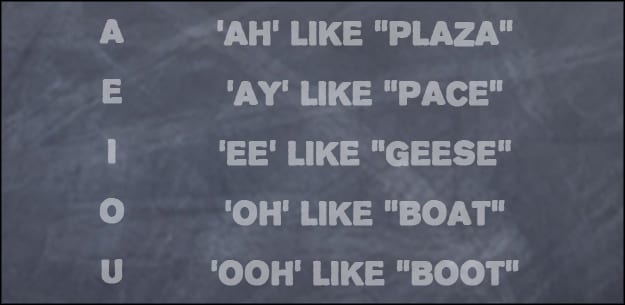


Some practice…
Intelligentsia Coffee’s Kenya Tegu – “Tay-goo”
Dogwood Coffee’s Kenya Karinga – “Kah-reen-gah”
Coffee Shrub’s Ethiopia Yirga Cheffe Shakiso – “Yeer-gah cheh-feh Shah-kee-soh”
See? No big whoop!
Here’s a couple more tricks to bear in mind. In Swahili, there are no dipthongs, aka double vowel sounds. In English, these are things like “I” and “boy”, pronounced “ai” and “boi”. So, when there are two adjacent vowels in a Kenyan name, pronounce them individually:
Stumptown’s Kenya Kagumoini – “Kah-goo-moh-ee-nee”, as opposed to “Kah-gu-moy-nee”.
Another handy tip: If there is an ‘m’ or an ‘n’ before a ‘b’, ‘d’, or ‘g’ at the beginning of a word, you should probably just forget about it. The ‘m’ or the ‘n’ “nasalizes” these consonants, which is pretty tricky for most English speakers, so only the snarkiest barista is going to call you out for it, and even then, they’re probably doing it wrong too.
Example:
Stumptown Coffee’s Kenya Ngunguru – “Goon-goo-roo”
One last thing…
There’s no “th” sound in Swahili (except for Arabic borrowings, but who’s counting?). The “th” represents an “aspirated t.” All “t”s in English are aspirated. Say “television,” “telephone,” “party,” and hold your hand in front of your mouth. That puff of air when you say a “t” is aspiration, which need not be an inspiration for perspiration. Now say “tortellini” with a goofy Italian accent (“t”s are not aspirated in Italian). See? No mouth breathing. Really, don’t put too much thought into it – just say “tat” instead of “that.”
Sight Glass Coffee’s Kenya Kiandu – Kee-ahn-doo