







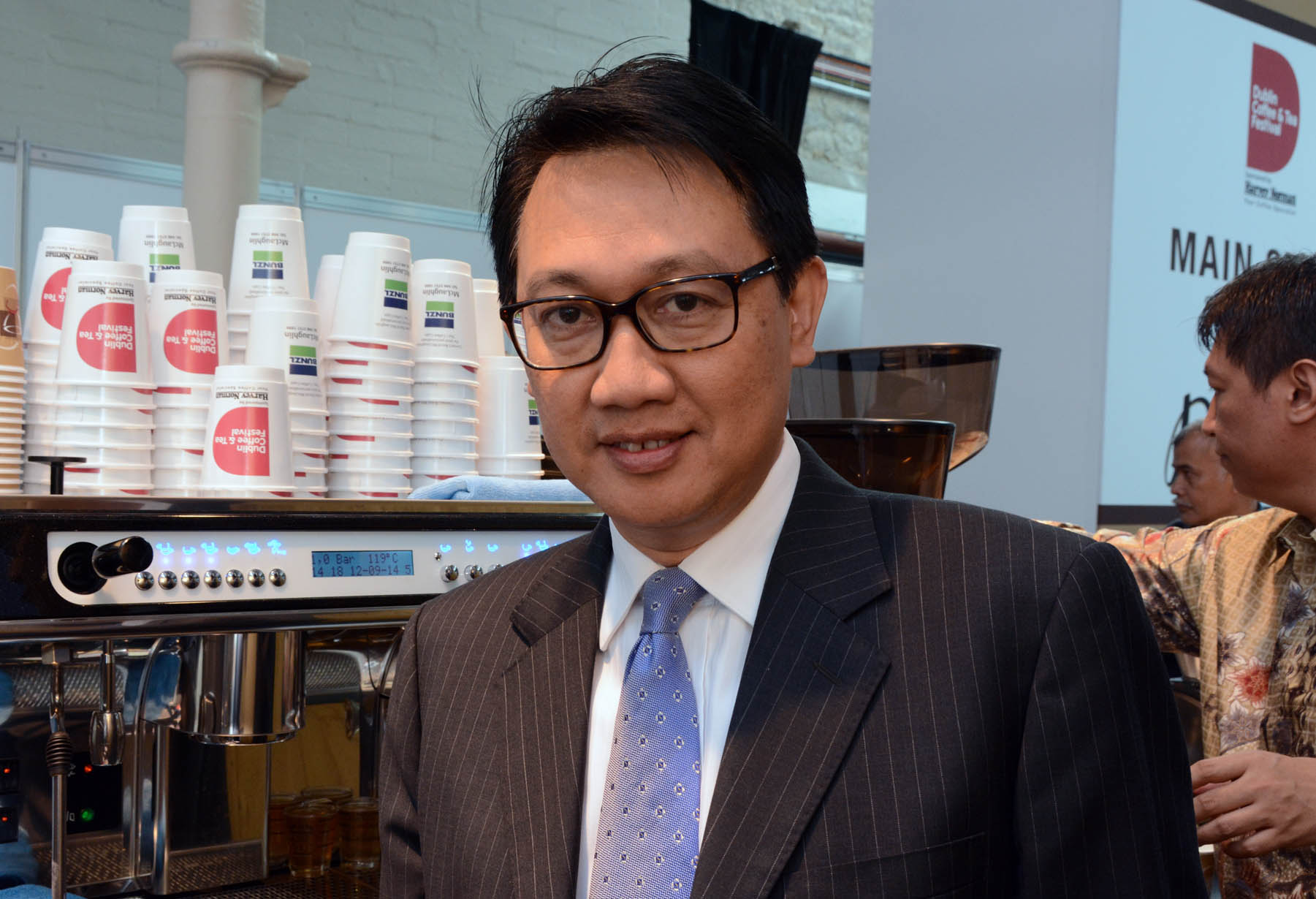
No two days of producing Sprudge are ever the same, and so it was that on one particular day–September 12th, 2014–I attended and participated in the inaugural Dublin Coffee and Tea Festival in Dublin, Ireland. Sprudge’s involvement there included panel hosting, speaker introductions, and the opportunity to interview a variety of international figures attending the event. One such person was Arif Havas Oegroseno, Indonesian Ambassador to the European Union, whose home nation of Indonesia had a considerable presence at the event as part of their efforts to promote Indonesian specialty coffee to the European market.
Originally from Java, Ambassador Havas is a graduate of the Harvard Law School, and has served his nation in the EU for the past four years. He’s a career diplomat with quite a CV, but he is also, like many people from Indonesia, an avowed lover of coffee, and spoke eloquently with me about how important coffee is to his home country. What follows is an interview with Ambassador Havas, conducted on the floor of the Dublin Coffee & Tea Festival.
Give us an overview of coffee in Indonesia from your perspective.
Coffee is part of our culture and history. The word “java” means coffee, and comes from Indonesia. The story went that the Dutch tried to steal the coffee bean from the Arabs and grow it in Europe, but it didn’t grow. So they then tried to grow it in Java and the first time around it was successful. They marketed it in the 1800s as “coffee java”—that’s where it comes from.
Today we are the third largest coffee producer in the world, after Brazil & Colombia—basically you have two types of coffee generally in Indonesia. One is for bulk, big industrial purposes, and the other is specialty.
The specialty is normally grown by farmers from a small specific area. Today we brought two farmers so people here in Europe can see that the coffee here you drink comes from this particular farmer. You can see it directly.
Every year now, our production of coffee is over a million tons. 80% is exported, and then some is kept. Consumption domestically is going up as well.
How much coffee is being brought to Europe?
Europe is our biggest market today for exports. After that, the United States, and then Asia—Japan, specifically, is a big market.
The Japanese, they particularly like coffee from Toraja. Culturally the tourists, they go to Bali, or Sulawesi. They get stuck from the taste of the coffee from Sulawesi mainly. But there is a Japanese investment in Toraja, and they market it big time in Japan.
Whereas the European market it normally comes from Java, and from the Dutch colonial history. And also the Sumatran.
How is coffee playing a role in forest conservation in Indonesia?
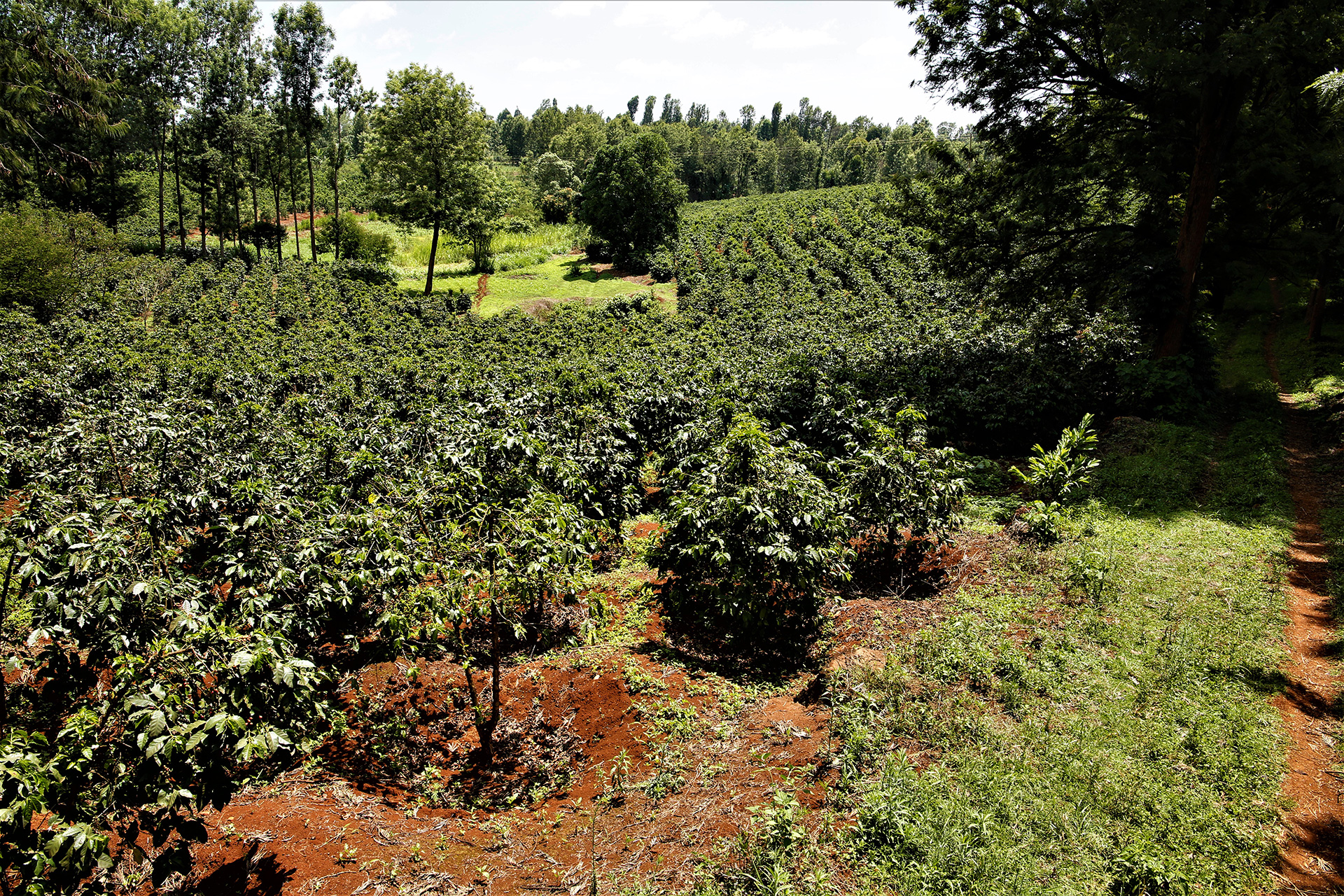
Some of the coffee traditions, especially related to specialty coffee, they are in the mountains, bordering the forests. Sometimes some of the animals go into the coffee plantations. We want to maintain a balance between farmers and nature. It’s very important for the farmers to understand that they must be part of conservation. Having a plantation near the forest, and an awareness of the farmers—not planting into the forest—it’s important. Because they will see the benefit of the fertility aspect in the forest coming into their grounds.
The most important thing is not the quantity, but the quality—if you have a very good coffee, and know how to deal with it, you can have a small amount of production with a very high quality and a very high price. The government is starting to realize that.
Aceh is a very particular project for us. It used to be a very troubled area politically. There was a lot of conflict there, an armed clash, but that ended in 2005—and then the unfortunate tsunami, 550,000 people died—that was a very difficult time on our country.
But for those farmers, those people who live in the area—we want to support them, but also remind them, “Don’t destroy the forests. Protect it.” I think it’s going very well, but this is a classic problem, between human needs and nature. We are trying to do this: maintain the coffee plantations that are small, but keep the quality high.
That’s the reason why we developed GI protection—Geographic Indication—it means a particular product that is unique in nature. Think about like the green grapes grown in Champagne—those same grapes grow in Australia or California, and you call it sparkling wine. So we have a lot of coffee like that—in Aceh, in Bali, in Java—all the different coffees from different regions have a specialty value. We want to educate the farmers that it’s a high quality of coffee, and it’s worth a lot.

Talk to me a little bit more about Indonesian coffee culture.
The particular cultures of Indonesia are very interesting. People like different stuff—there’s not necessarily certain consumptions that are the same across the board for coffee. Some cultures mix the coffee bean and corn—you roast the corn, put it with the roasted coffee, and grind it together, and drink it. (laughs) There’s also another culture in Indonesia—when you use the corn leafs for the kretek (clove cigarette) rolling papers.
What things do the United States and Indonesia have in common?
We have 250 million people living in Indonesia now—USA has 350 million. The diversity of our peoples, it’s a strength.
Another element I think is—there are so many centers of economic activity in the US. You have New York, Boston, Chicago, San Francisco, Los Angeles—so many different places. Indonesia is like that too. We have so many different cities with different economic powers. It’s much more spread. That’s why the people are so much more resilient. Economic development in the US it’s 2.5, 3%—Europe is going down.
In America, the power and money is so spread out in major cities across the country. But imagine France—Paris, Lyon, where? From a strategic point of view, if you attack Paris, France is finished.
Is the coffee being served in Indonesia only coming from in the country? Do you have access to coffees from Africa or Latin America?
It is primarily just Indonesian coffee served in Indonesia. Coffee from outside that comes in is pretty much just by Starbucks or a global brand.
Speaking of which, I have a message for Starbucks: They have a speciality coffee project in Sumatra. They don’t say Sumatra, Indonesia—they just say Sumatra! I wish they did. Even a big brand like Starbucks goes into the detail of a region in Sumatra.
Sumatra is not just representing Sumatra, but Indonesia in general. It is something that I wish would change.
People will say “ahh this is Sumatran coffee”, and they won’t click that it’s Indonesian as well. These coffees—Sumatra, Java, Toraja, some very fine coffees from across the country—they are from Indonesia!
Photos by David O’Shea for Sprudge.com